Class capacity
Class capacity is the maximum number of clients allowed in a class or session, based on available space, equipment, or instructor limits.
It helps studios control attendance, maintain quality, and ensure a smooth experience for both clients and staff.
What is class capacity and how does it work?
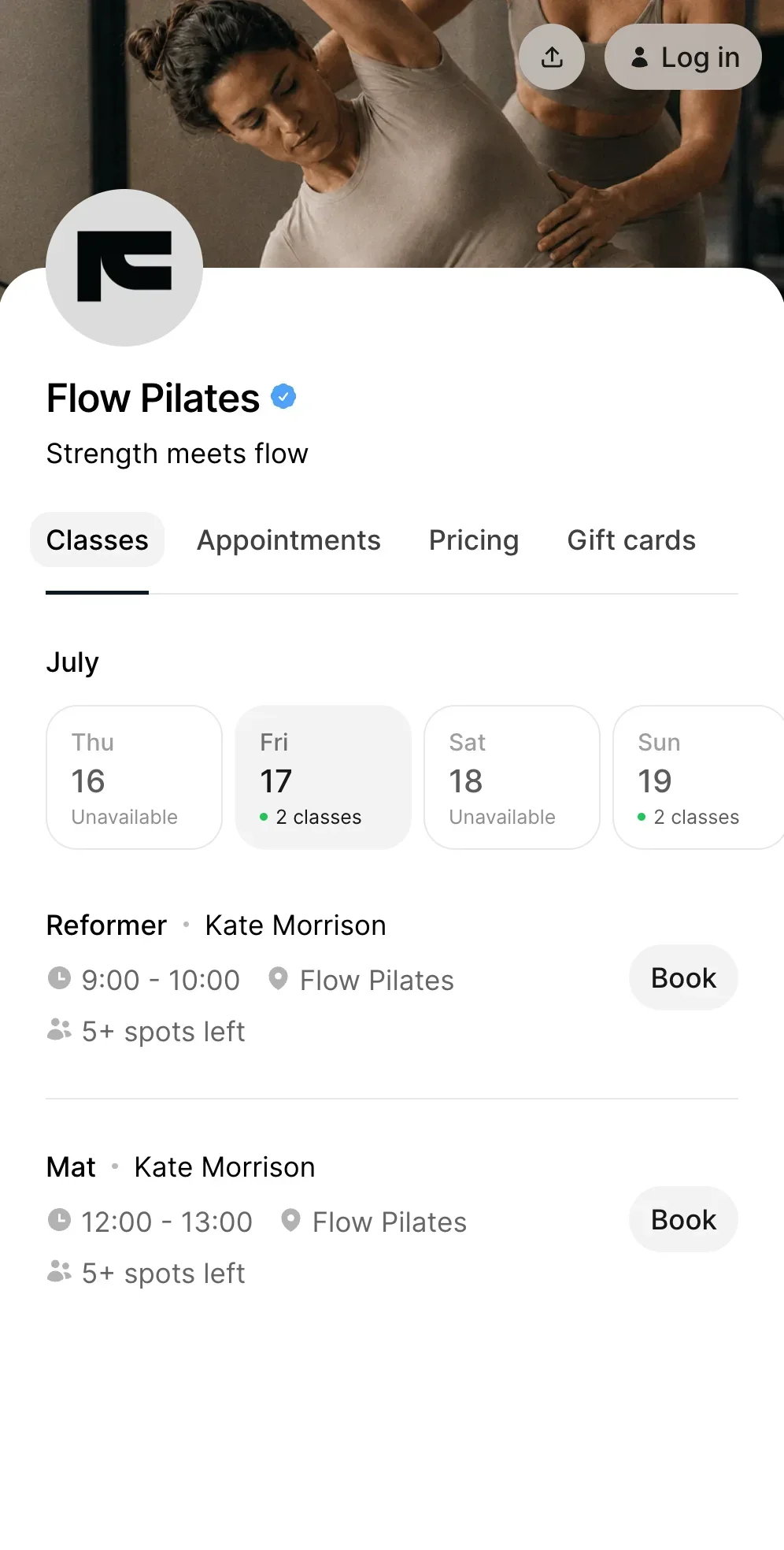
Class capacity is a limit set for each class to control how many clients can attend.
In a typical class booking system, it works like this:
- A studio defines how many spots are available
- Clients can book until capacity is reached
- Once full, no more bookings are allowed
- Additional clients can join a waitlist
Class capacity in booking systems ensures that classes stay organized and do not exceed available resources. It works together with class scheduling and an online booking system to manage availability in real time.
Why class capacity is important for studios
Setting the right class capacity is essential for both operations and client experience.
It helps:
- Avoid overcrowded classes
- Ensure enough equipment or space
- Maintain a better client experience
- Allow instructors to manage sessions effectively
For example, a reformer Pilates class is limited by the number of machines, while a yoga class is limited by room size and comfort.
Studios that optimize fitness class capacity often see higher attendance and fewer empty spots.
Example of class capacity in action
A Pilates studio has 10 reformer machines.
- The class capacity is set to 10
- Clients can book until all spots are filled
- Once full, new clients cannot book
- They can join a waitlist instead
If someone cancels, the system frees up a spot and can automatically fill it from the waitlist.
Class capacity vs class booking
Class capacity and class booking are closely related but serve different roles.
- Class capacity defines how many clients can attend
- Class booking is the process of reserving a spot
Capacity controls availability, while booking fills those available spots. Together, they ensure that classes are both organized and fully utilized.
How class capacity connects with booking and attendance
Class capacity is a core part of managing group sessions.
A class booking system ensures that:
- Clients cannot exceed the set capacity
- Cancellations open up spots
- Waitlists help fill empty spots
This creates a balanced system where classes stay full without becoming overcrowded.
Benefits of setting class capacity
- Better class experience Clients have enough space and attention during sessions.
- Improved organization Studios can manage schedules and attendance more effectively.
- Maximized attendance Waitlists help ensure classes stay full.
- Reduced chaos No risk of overbooking or last-minute confusion.
Who needs to manage class capacity?
Class capacity is important for any business offering group sessions, including:
Any business with limited space or equipment benefits from setting clear capacity limits.
What to consider when setting class capacity
Choosing the right class size limit depends on several factors:
- Available space
- Number of equipment units
- Instructor availability
- Class format (group vs small group)
- Comfort and safety
Many studios adjust capacity over time to find the right balance between client experience and revenue.
Key takeaway
Class capacity is a fundamental part of running group classes. It controls how many clients can attend, ensures a better experience, and helps studios stay organized.
When combined with booking and waitlist systems, it keeps classes full without overcrowding.
Frequently asked questions
Class capacity is the maximum number of clients allowed to book and attend a class.
Once a class is full, no additional bookings are allowed. Clients can usually join a waitlist.
Class capacity is based on available space, number of equipment units, and how many clients an instructor can manage safely.
Yes. Setting the right capacity helps maximize attendance while maintaining a good experience, leading to better retention and more consistent bookings.
Yes. Studios can adjust capacity at any time based on demand, space, or scheduling needs. Learn more here.
Class capacity with Time2book
Time2book helps you manage class capacity automatically, so you never overbook and your schedule stays organized.