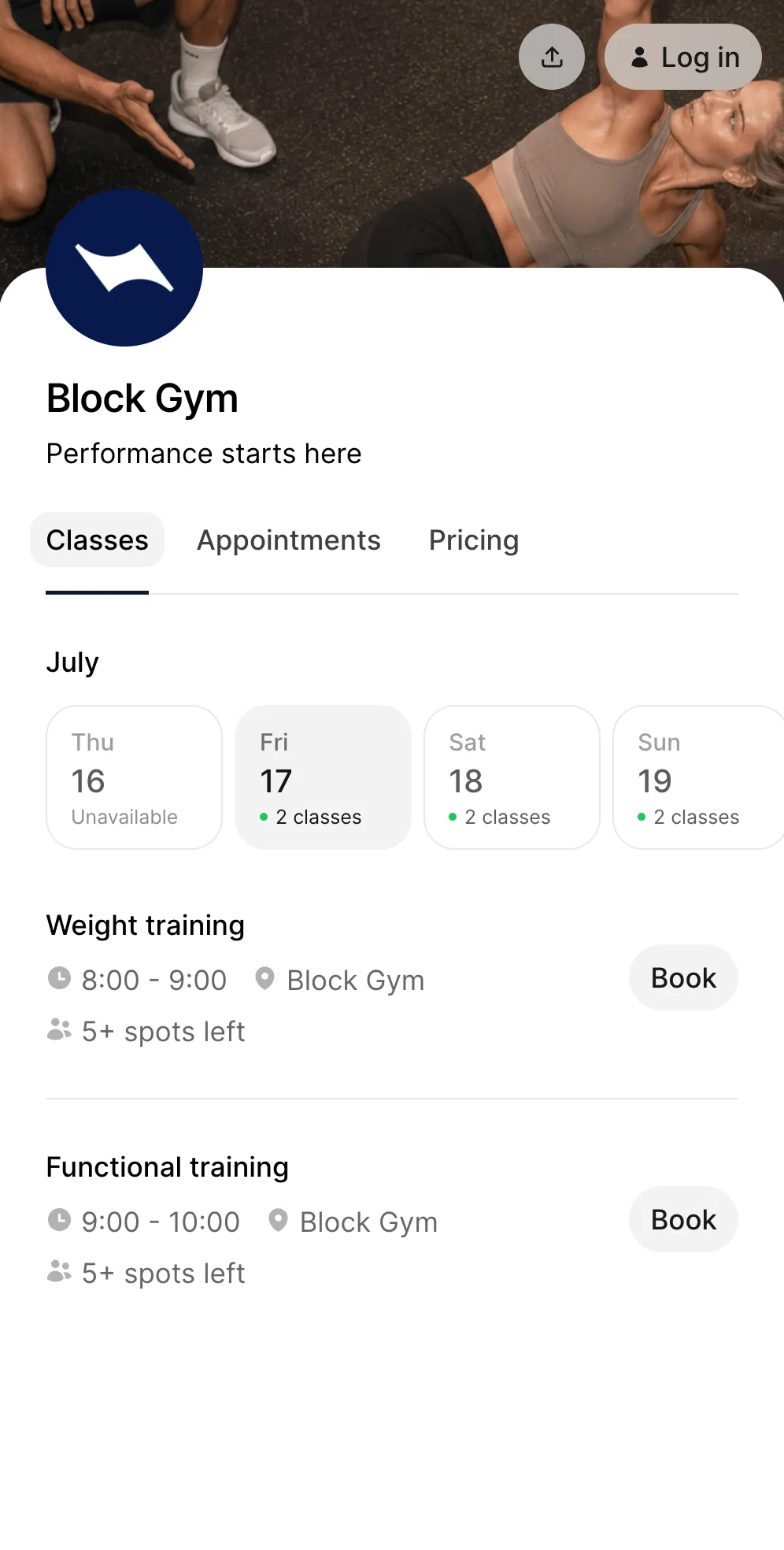
Most gyms already have their best marketing channel: a list of people who have booked, bought, or signed up before. Email reaches them directly, costs almost nothing per send, and does not depend on social media algorithms.
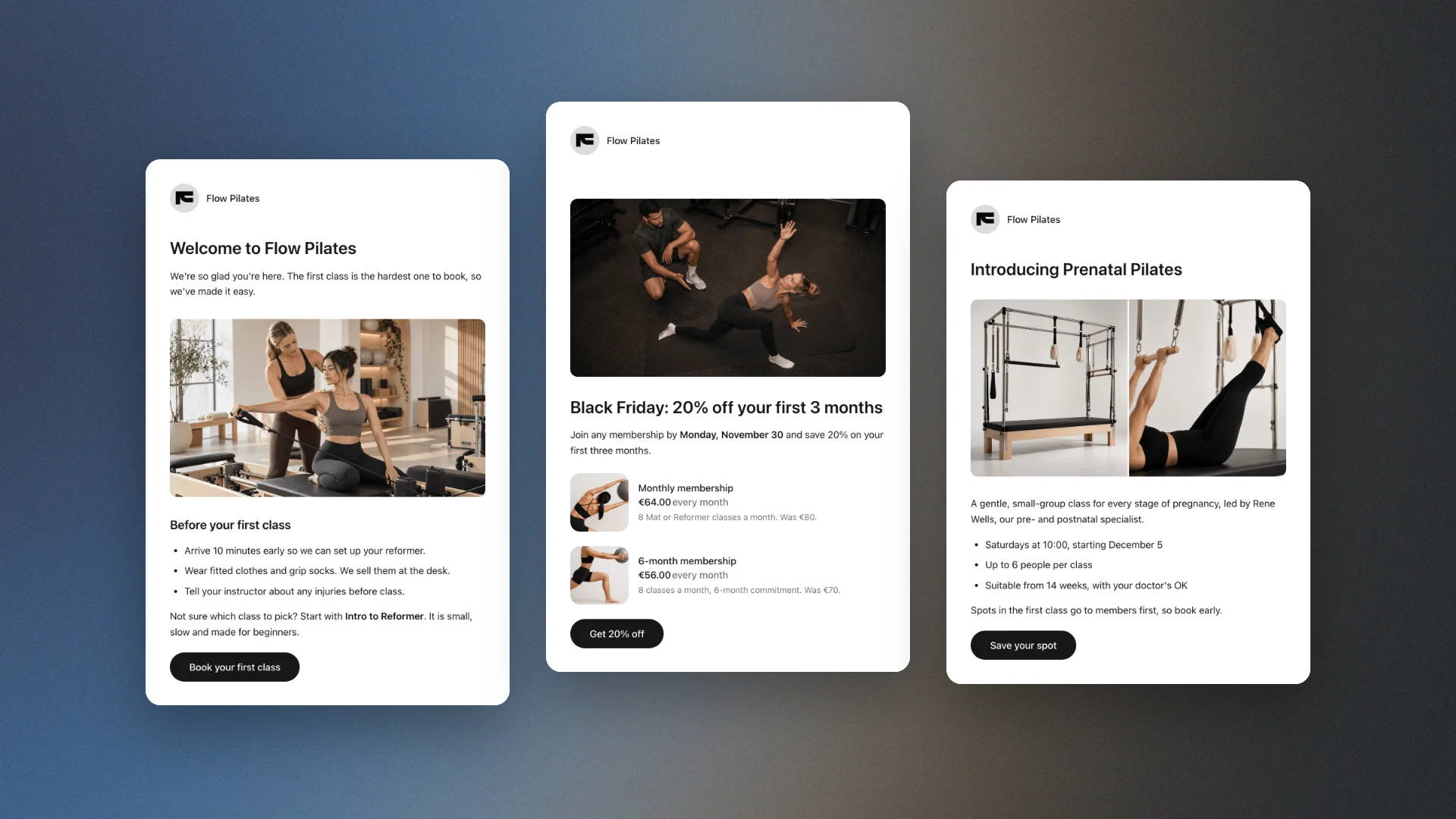
The hard part is knowing what to send. This guide covers 10 gym email marketing ideas, each with a ready-made template, a subject line, and who to send it to. Every template below was built in Time2book's email marketing editor for a sample studio called Flow Pilates. Swap in your own classes, prices, and photos and they work for any gym or fitness studio.
What Is Gym Email Marketing?
Gym email marketing is using email to turn leads into members and keep members coming back. It covers the whole member journey:
- New leads: intro offers and first class reminders
- New members: welcome emails and "what to expect" guides
- Regular members: class schedules, new programs, and upgrades
- Inactive members: win-back emails
- Everyone: seasonal sales, holiday hours, referrals, and review requests
Unlike social media, you own your email list. Nobody can change the algorithm or limit your reach. If someone signed up to hear from you, your email lands in their inbox.
Why email marketing works for gyms
- It's cheap. Sending to 500 members costs the same effort as sending to 50.
- It drives bookings. A good email has one button that goes straight to your schedule or pricing page.
- It helps retention. Most members don't quit in one day. They book less, then stop. A well-timed email can catch them before they leave.
- It's targeted. You can send different emails to leads, new members, and people who haven't been in for a month.
If you're looking for wider ideas beyond email, see our guide to marketing for gyms.
Before You Send: Build Your Gym Email List
Your email list grows every time someone books a class, buys a pass, or signs up online. A few ways to grow it faster:
- Online booking: every client who books through your gym booking software becomes a contact.
- Free trial or intro offer: ask for an email in exchange for a first class.
- Front desk: ask walk-ins to sign up on a tablet.
- Website and Instagram bio: link to your schedule, not just your homepage.
Only send marketing emails to people who agreed to receive them. Keep an unsubscribe link in every email. It's required in most countries, and people who don't want your emails won't buy from you anyway.
10 Gym Email Marketing Ideas (With Templates)
Each idea below includes when to send it, who should get it, and a template you can copy.
1. Welcome email for new members
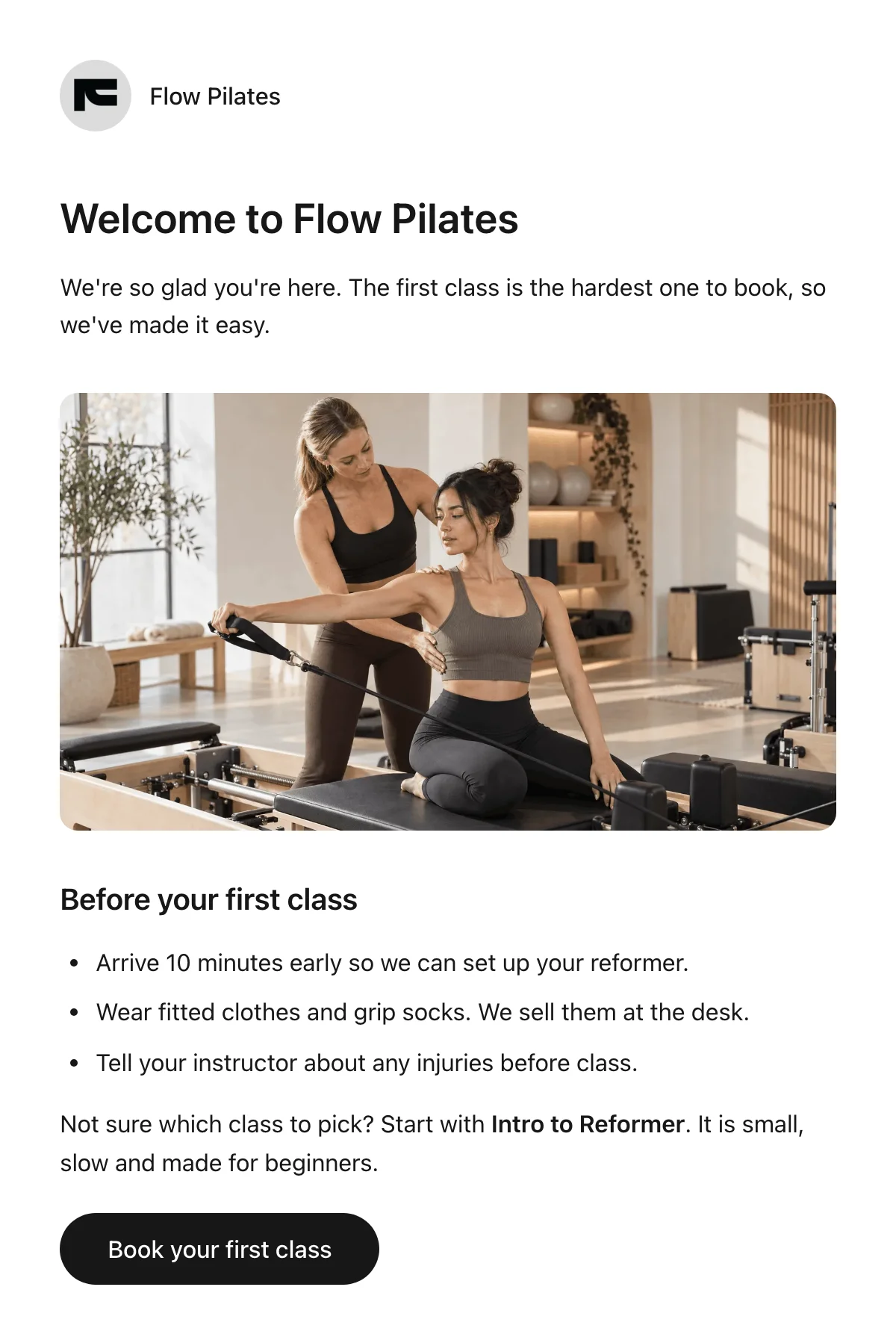
The welcome email is the most important email your gym sends. A new member is excited, but also a bit nervous about their first visit. Your job is to make the first class feel easy.
What to include:
- A short, warm hello
- A photo of your studio or trainers, so the place feels familiar
- What to bring and when to arrive
- Which class beginners should book first
- One button: Book your first class
When to send: within 24 hours of someone signing up.
Welcome to Flow Pilates: how to get started
To: Clients who joined in the last 7 days
2. Intro offer email for leads
Some people sign up but never book. They're interested, but something holds them back: price, nerves, or just being busy. An intro offer gives them a low-risk reason to start.
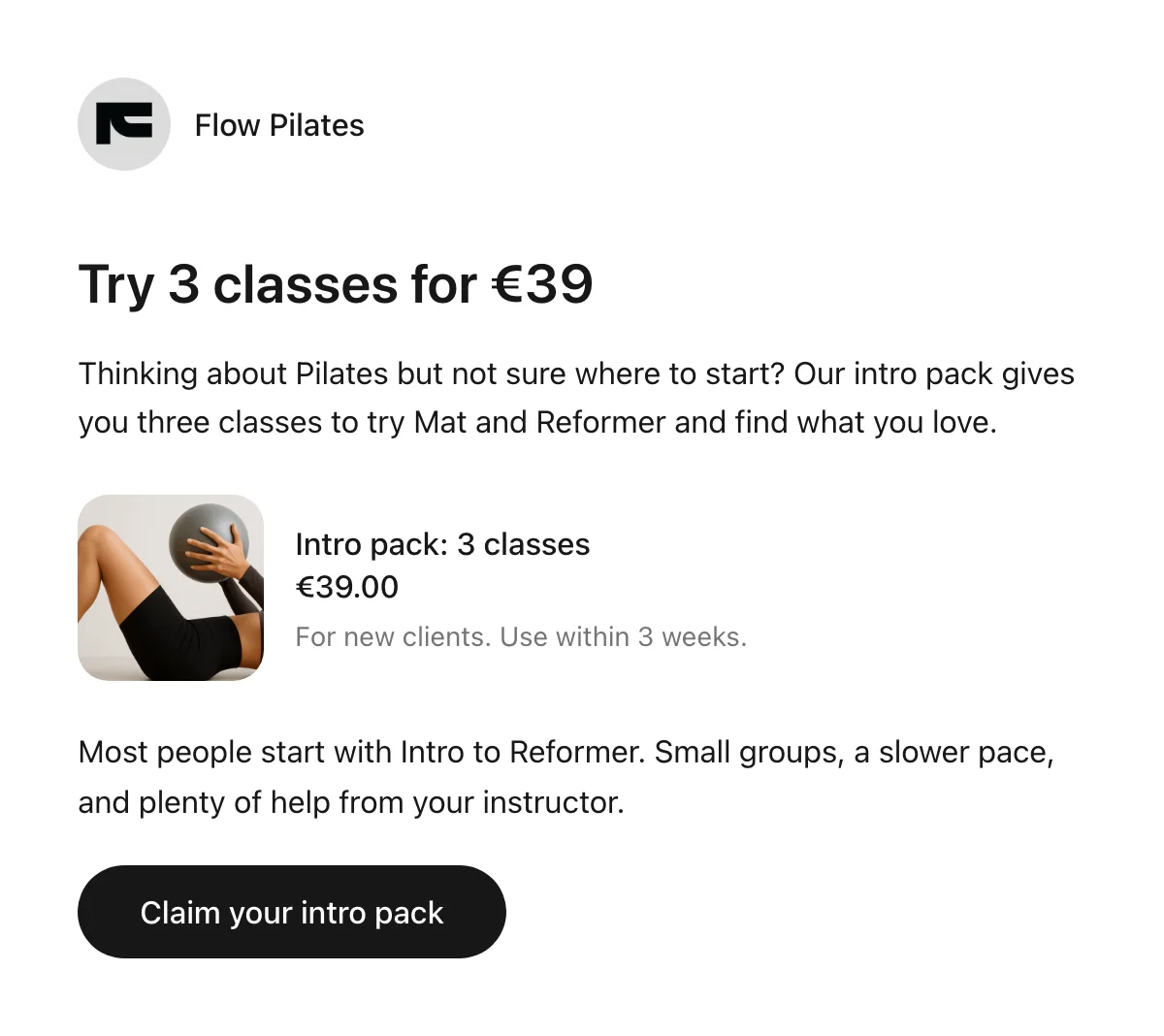
Keep the offer simple. "3 classes for €39" is easier to understand than "20% off your first month on selected plans".
Tips:
- Show the offer as a pricing card, so the price and what's included are clear at a glance.
- Recommend one beginner class.
- Add an end date if the offer is limited.
Need offer ideas? See our list of intro offer ideas.
Your first 3 classes for €39
To: Leads who have never booked
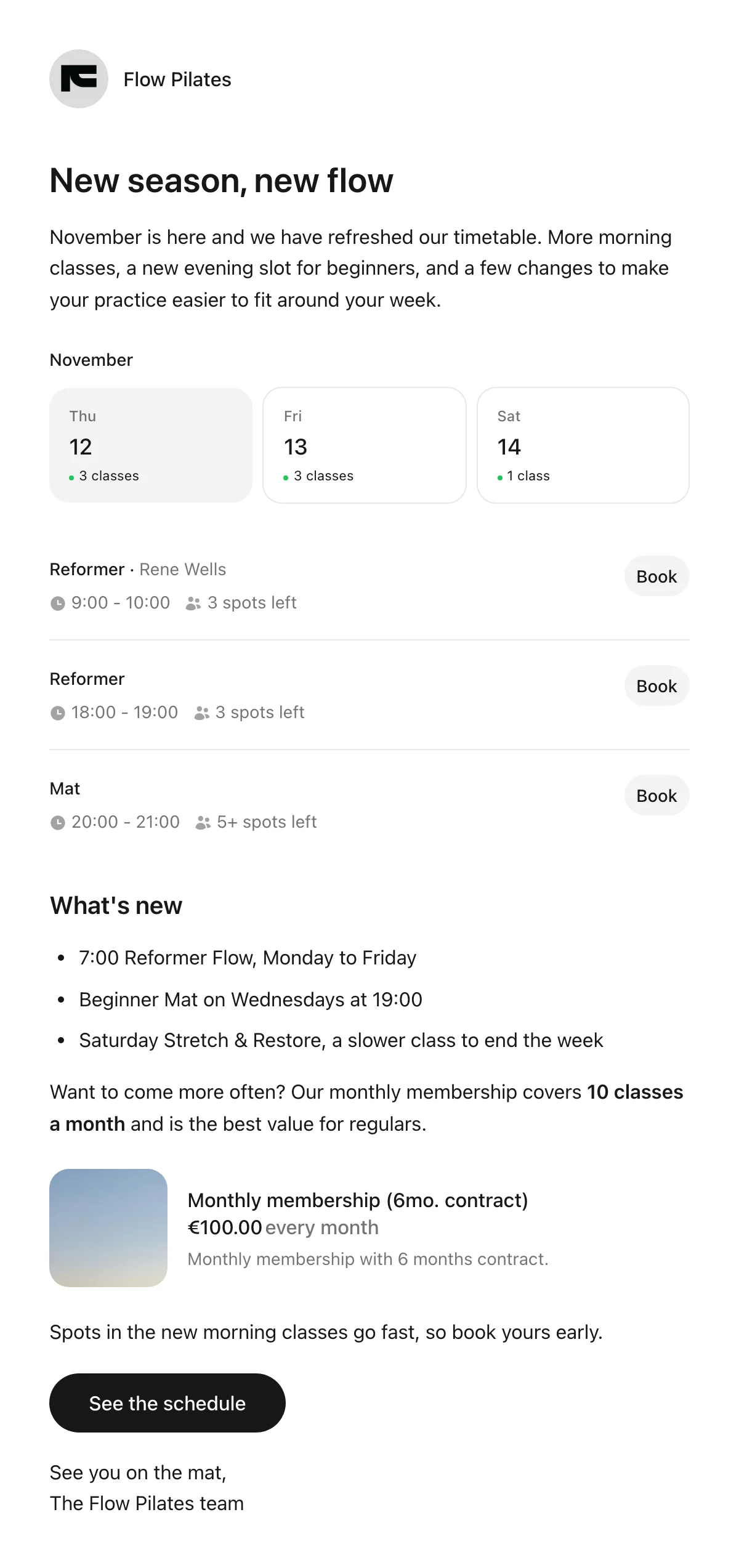
3. Weekly class schedule email
A weekly schedule email is the gym newsletter that actually gets used. Instead of a long list of news, show the classes coming up this week with open spots and a Book button next to each one.
What to include:
- The next few days of classes, with times and instructors
- How many spots are left (this creates natural urgency)
- One or two short updates, like a new class time
- A link to the full schedule
When to send: the same day every week, such as Sunday evening or Monday morning, so members get used to planning their week with it.
New season, new flow: our November timetable
To: All subscribed clients
4. Class pack or membership upgrade email
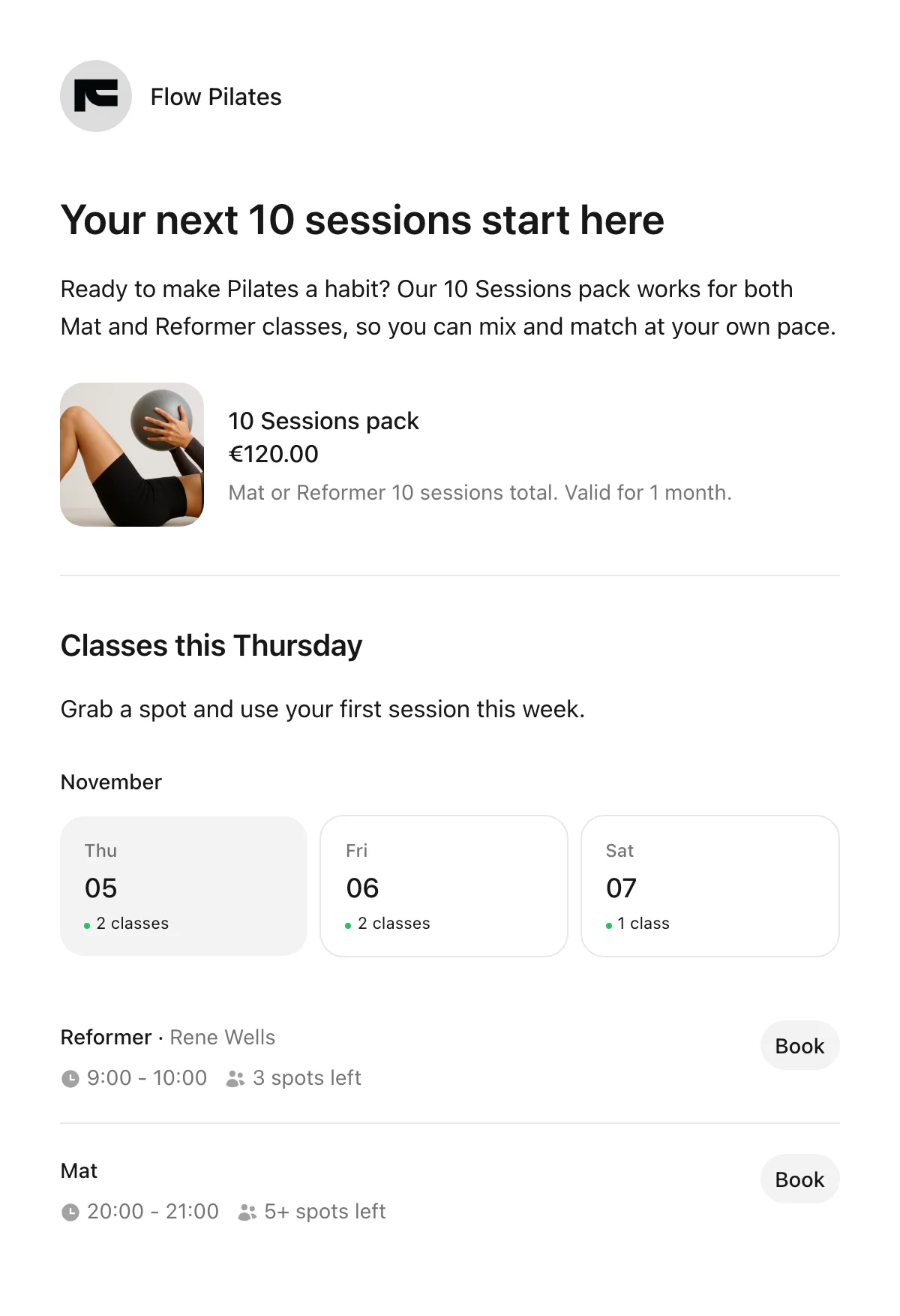
Clients who have been in once or twice are your easiest sales. They already like your gym. Now show them the plan that makes coming back easy.
Who to send it to: clients who booked once, or who keep buying drop-in classes. Paying per class adds up, so a class pack or membership is often better value for them.
Tips:
- Feature one plan, not your whole price list.
- Pair the offer with this week's schedule, so they can use their first session right away.
Your next 10 sessions start here
To: Clients who have booked exactly once
5. Win-back email for inactive members
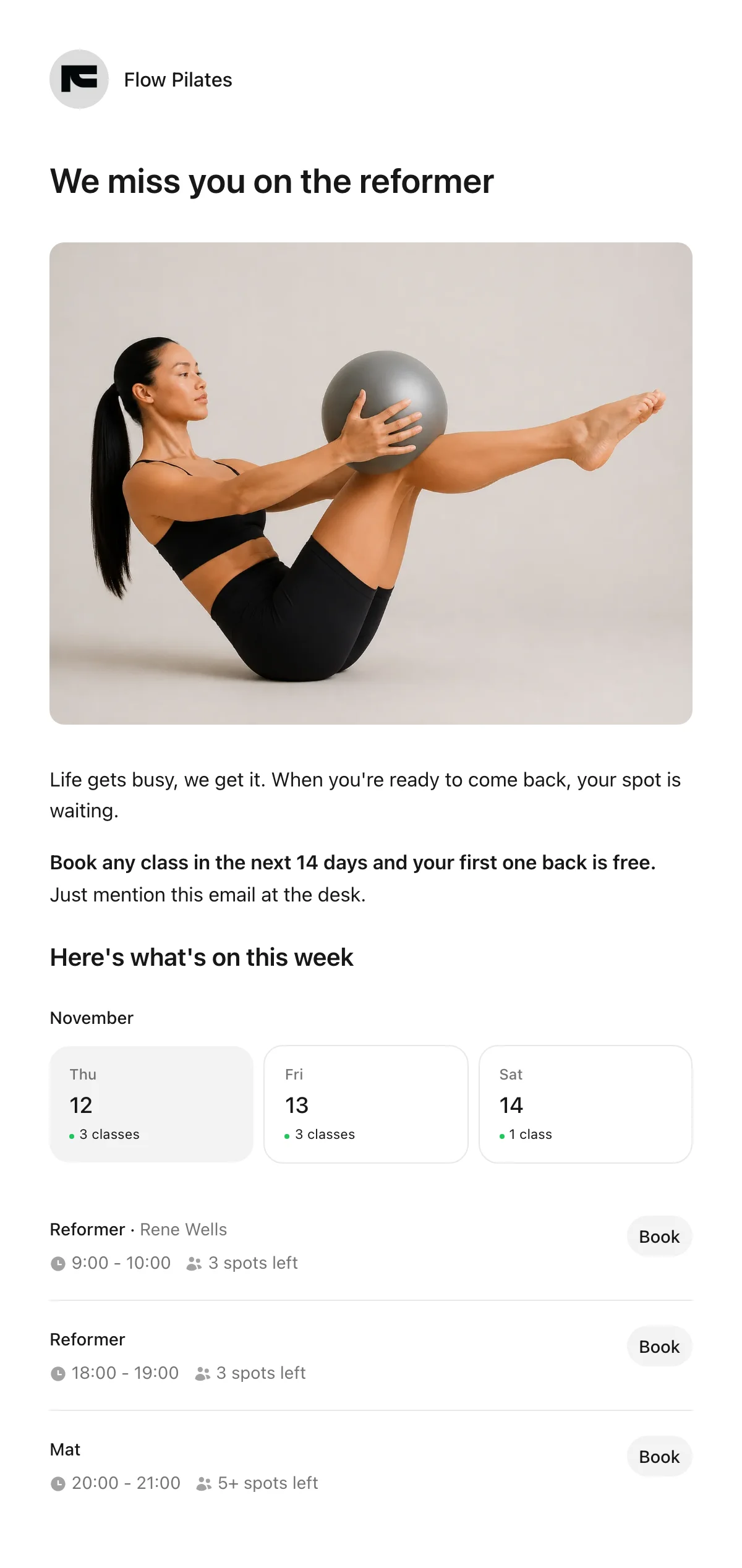
Members rarely announce that they're quitting. They just stop showing up. A win-back email reaches them while they still remember why they joined.
What to include:
- A friendly, guilt-free tone ("Life gets busy, we get it")
- A reason to come back, like a free class
- This week's classes, so booking is one tap away
Who to send it to: members whose last booking was more than 30 days ago. Send a second, shorter follow-up a week later if they don't book.
For more on keeping members, read how online booking helps client retention.
We miss you on the reformer
To: Clients with no booking in the last 30 days
Send your first email campaign
Pricing cards, class schedules and client filters, built into your booking software. Try Time2book free for 7 days.
6. New class or program launch email
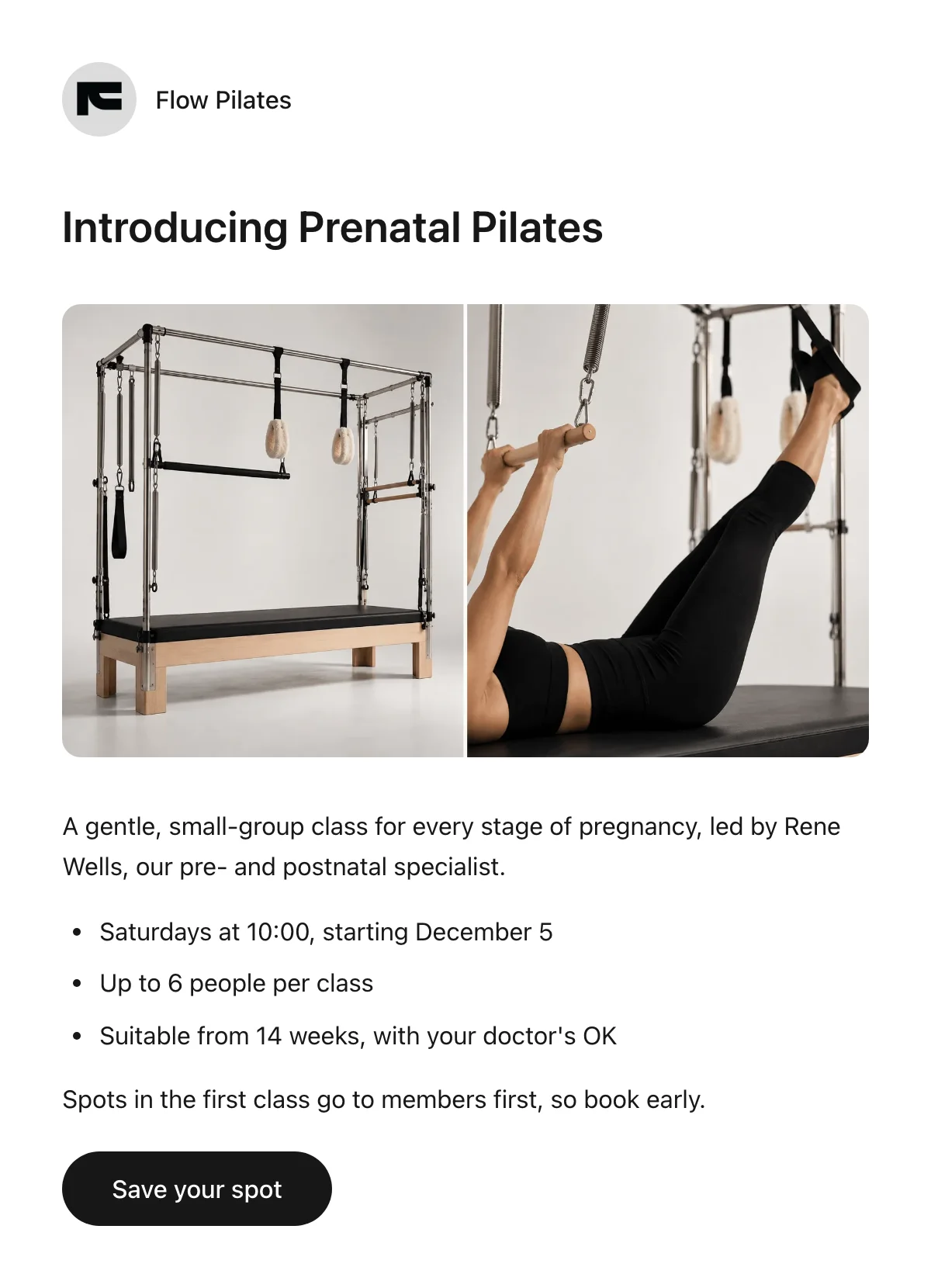
Launching a new class, workshop, or 6-week program? Email your members before you post it anywhere else. Members like being first, and early bookings make a new class look popular from day one.
What to include:
- A clear name and start date
- A photo
- 2 to 3 short facts: day and time, group size, who it's for
- One button: Save your spot
Who to send it to: everyone, or only clients who booked a related class. For example, send a new advanced program only to members who already booked the beginner version.
New: Prenatal Pilates starts December 5
To: All subscribed clients
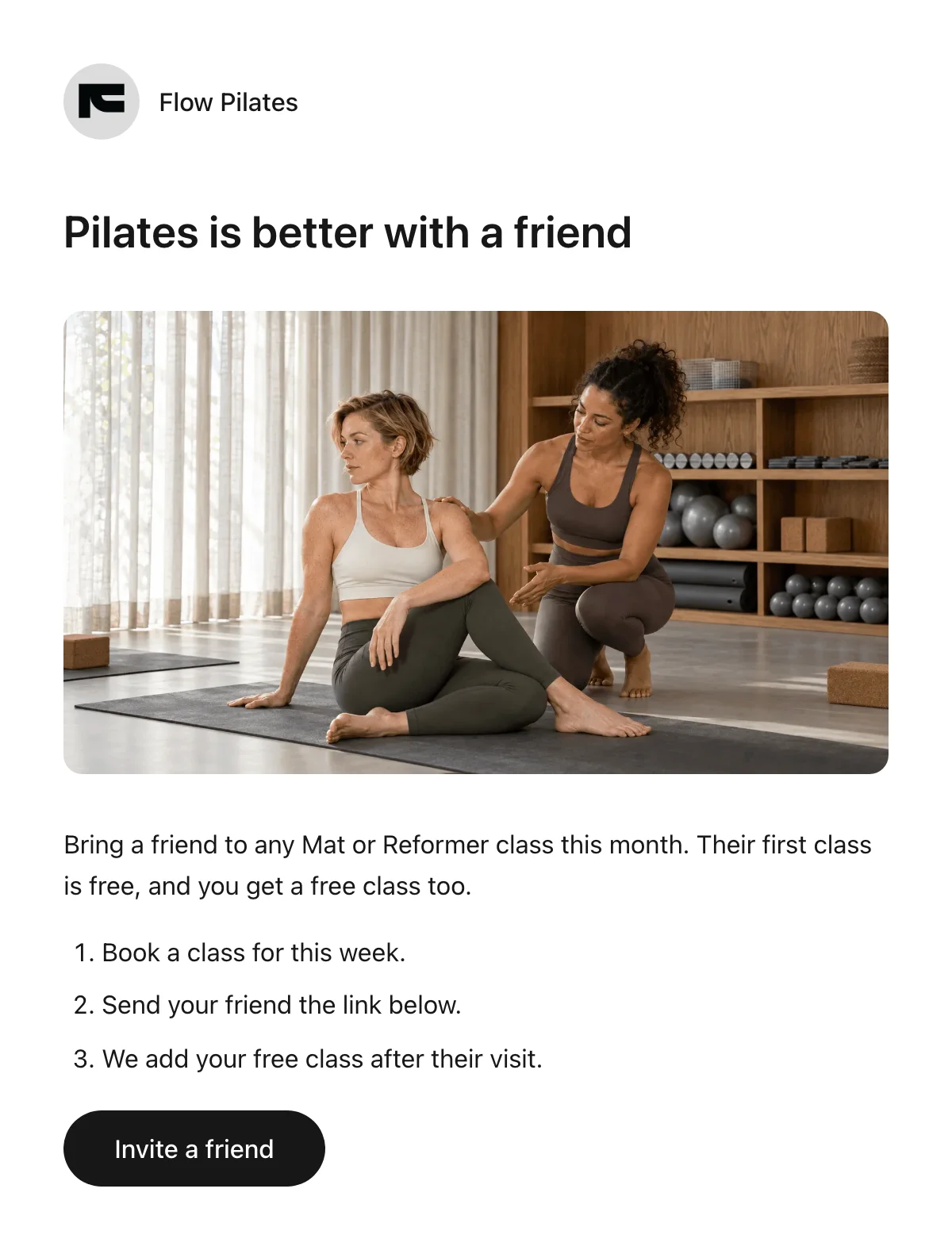
7. Referral email
Your members' friends are your best leads. They already trust the person recommending you. A referral email turns that trust into bookings.
Tips:
- Reward both people. "You both get a free class" feels generous, not salesy.
- Explain how it works in 3 numbered steps.
- Send it to your most regular members, since they're the ones talking about your gym.
Bring a friend, you both get a free class
To: Clients with more than 5 bookings in the last 90 days
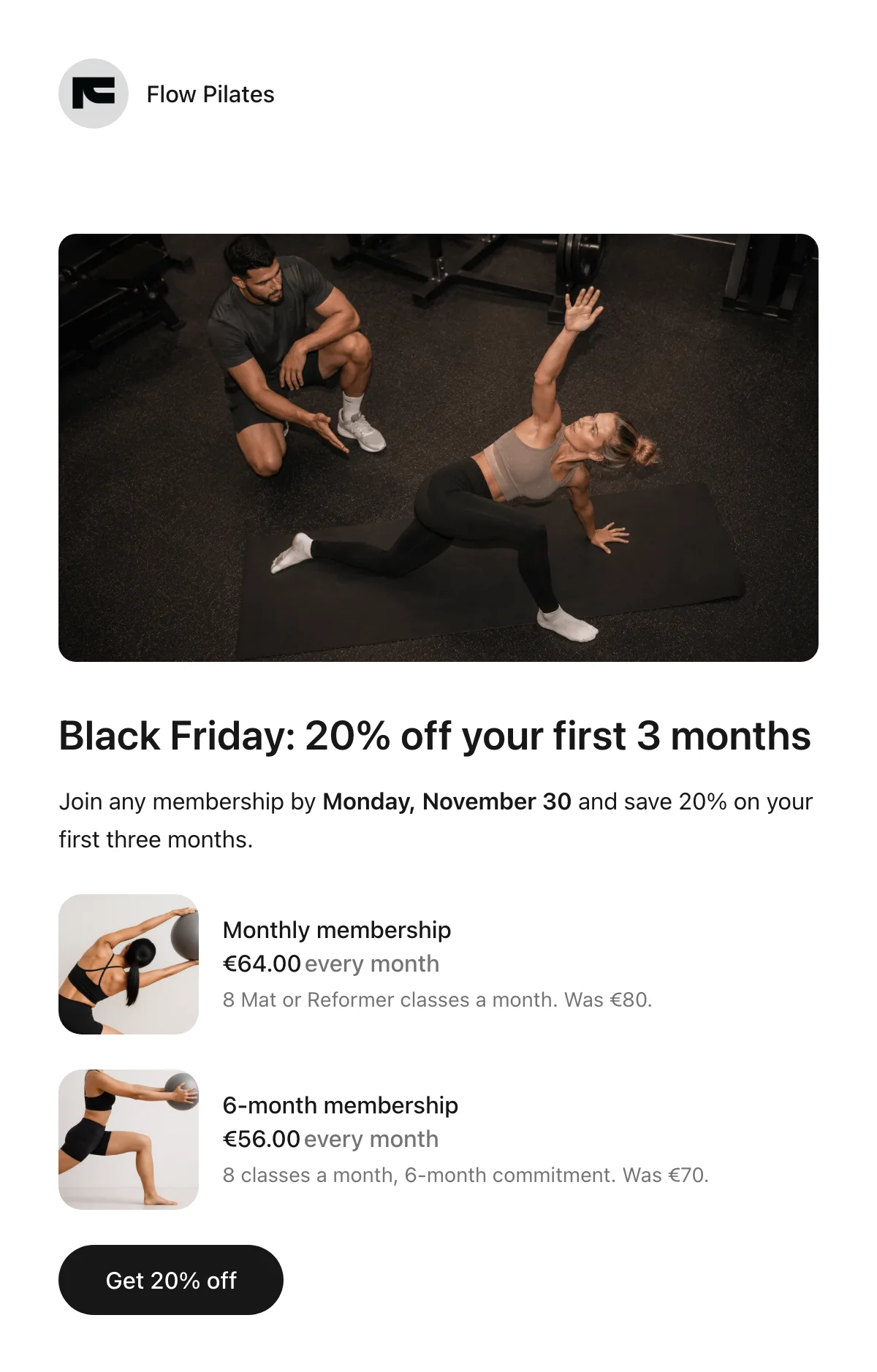
8. Black Friday and seasonal promotion email
Black Friday, New Year, and back-to-school are the busiest times for gym sign-ups. People are already thinking about deals and fresh starts, so a clear offer works well.
What to include:
- The discount and the deadline in the heading
- The plans it applies to, shown as pricing cards with the old price
- One button that goes to checkout
Who to send it to: leads and inactive members. Your current members may feel left out by a new-member deal, so consider a separate thank-you offer for them, like a discounted gift card.
Black Friday: 20% off memberships, this weekend only
To: Leads and inactive clients
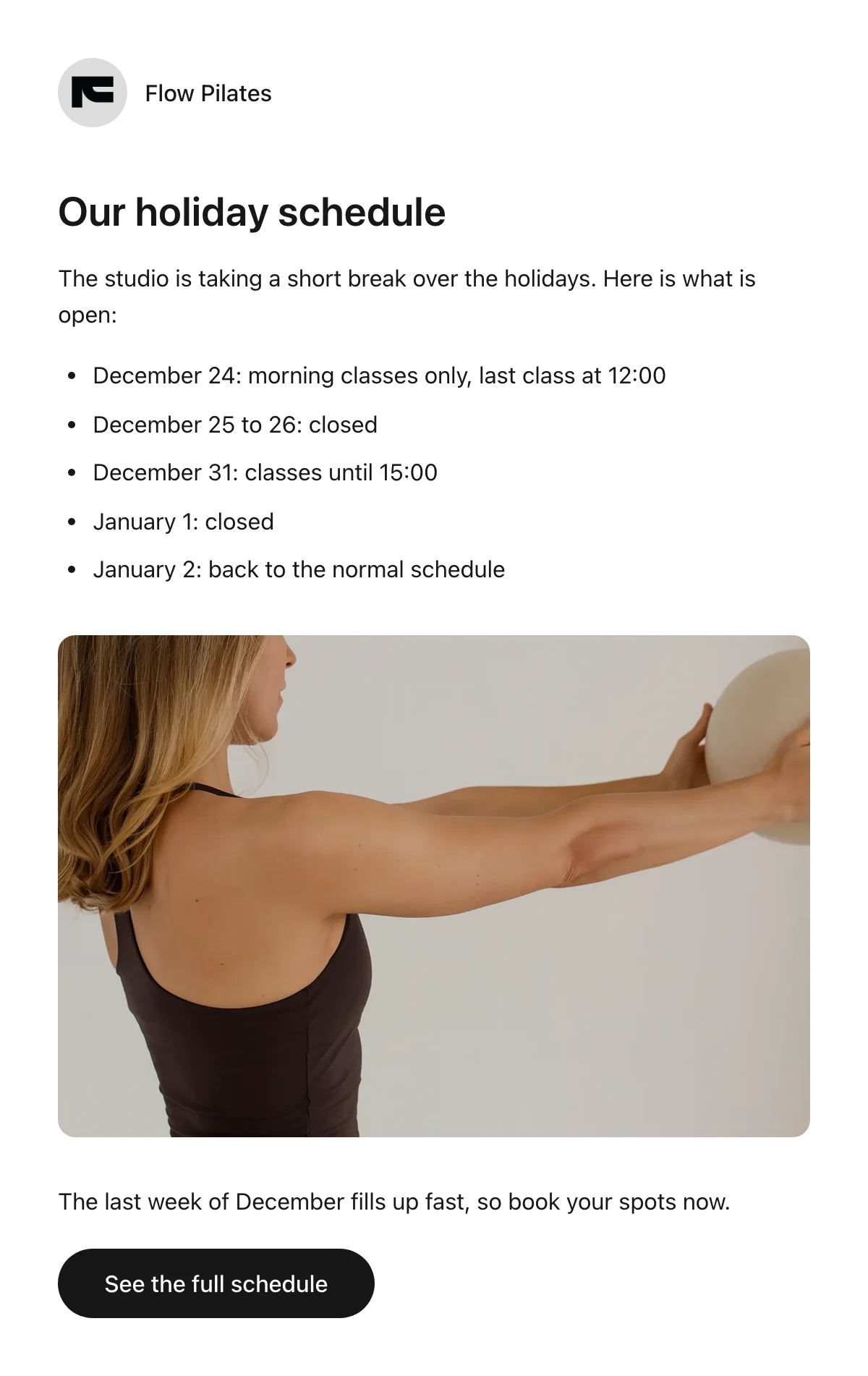
9. Holiday hours email
Not every email has to sell. A clear holiday schedule saves your front desk a lot of questions and shows members you're organized.
When to send: 2 to 3 weeks before the holidays, and again a few days before.
Tips:
- Use a simple list of dates, not a paragraph.
- Remind members that the last classes before a closure fill fast.
Our holiday schedule (and the last classes of 2026)
To: All subscribed clients
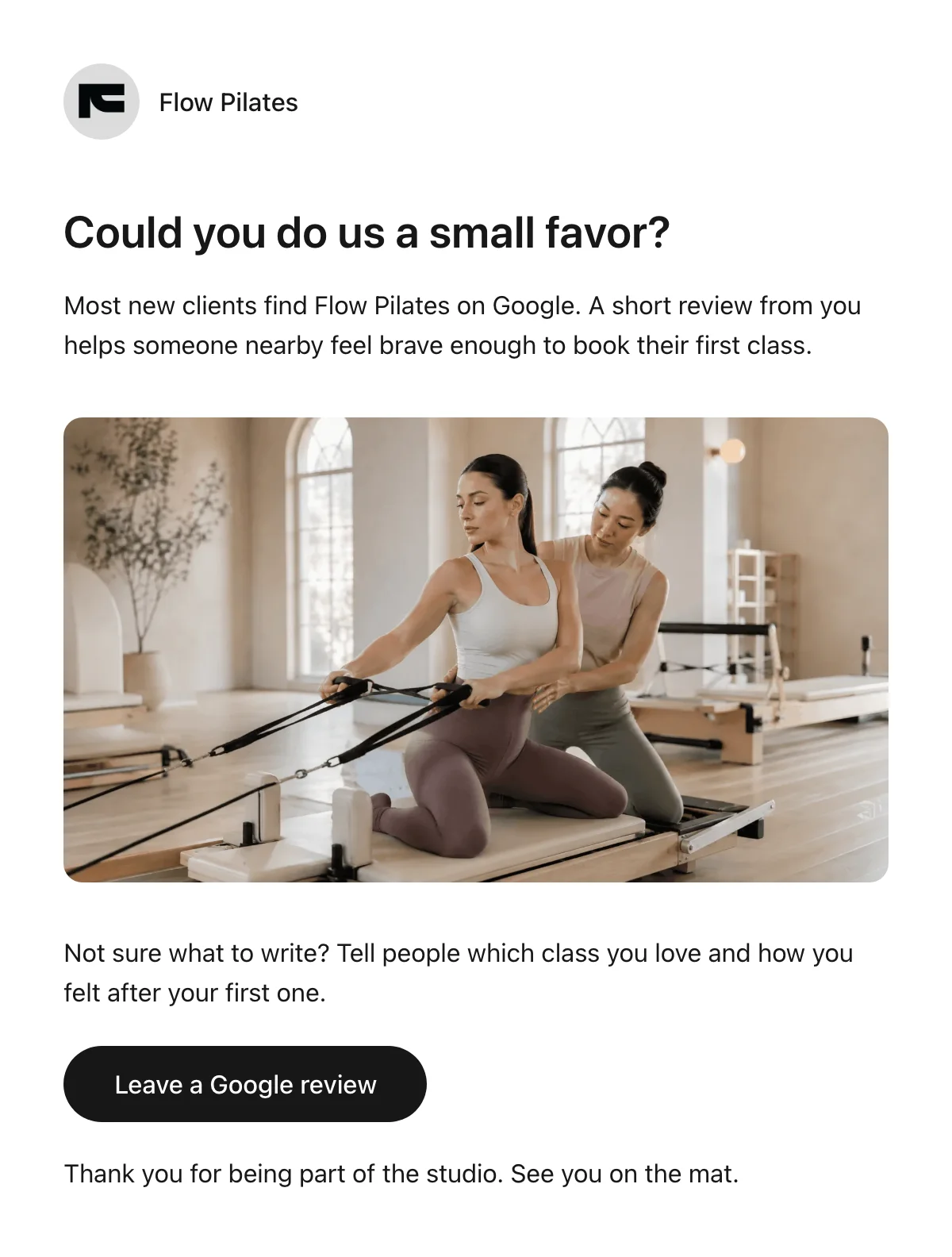
10. Review request email
Most people choose a gym after reading Google reviews. Your happiest members are glad to help, but they won't think of it unless you ask.
Tips:
- Explain why it matters ("It helps someone nearby book their first class").
- Make it easy: tell them what to write about.
- Link straight to your Google review page.
Who to send it to: regular members, such as clients with more than 5 bookings. They've had enough classes to write something useful.
Got 30 seconds? We would love your review
To: Clients with more than 5 bookings
Gym Email Subject Lines That Get Opened
Your subject line decides whether anyone sees your email. Keep it short, specific, and clear about what the reader gets.
Welcome and onboarding
- Welcome to [Gym name]: how to get started
- Your first class: what to bring
- See you on Monday?
Offers and promotions
- Your first 3 classes for €39
- Black Friday: 20% off memberships, this weekend only
- Last day to get your intro offer
Schedules and updates
- This week at [Gym name]: 4 spots left in Saturday HIIT
- New: Prenatal Pilates starts December 5
- Our holiday schedule
Win-back and community
- We miss you on the reformer
- Your next class is on us
- Bring a friend, you both get a free class
- Got 30 seconds? We would love your review
Avoid ALL CAPS, lots of exclamation marks, and vague lines like "Newsletter #12" or "Big news!".
A Simple Gym Email Marketing Calendar
You don't need to send every email every week. Here's a calendar a small team can keep up with:
| How often | Send to | |
|---|---|---|
| Every week | Class schedule | All subscribed clients |
| Every week | Welcome email | Clients who joined in the last 7 days |
| Every 2 weeks | Intro offer | Leads who have never booked |
| Every month | Class pack or membership upgrade | Clients who booked once |
| Every month | Win-back | Clients with no booking in 30+ days |
| Every quarter | Referral campaign | Regular members |
| Every quarter | Review request | Clients with more than 5 bookings |
| As needed | New class launch | All clients, or clients of a related class |
| Seasonal | Black Friday, New Year, summer offers | Leads and inactive clients |
| Seasonal | Holiday hours | All subscribed clients |
Gym Email Marketing Best Practices
- One email, one goal. Every email should have one main button. If you ask people to do five things, they'll do none.
- Write like a person. Short sentences. No corporate language. Sign off from the owner or a coach.
- Design for phones. Most people read email on their phone. Use one column, big buttons, and short paragraphs.
- Show, don't just tell. A pricing card or a live class schedule gets more clicks than a paragraph describing them.
- Segment your list. A welcome email sent to a 3-year member feels careless. Filter by client status, sign-up date, or last booking.
- Measure bookings, not opens. Open rates are unreliable. Look at how many bookings and purchases came after each email.
- Keep it legal. Send marketing only to subscribed clients and include an unsubscribe link.
How to Send Gym Marketing Emails With Time2book
Every template in this guide was made with Time2book email marketing, which is built into the booking software. Because your classes, prices, and clients are already there, an email takes minutes:
- Write your email. Add text, images, buttons, pricing cards for your memberships and packs, and class schedules with live Book buttons.
- Choose your audience. Send to all subscribed clients or pick a saved segment, like "Leads who never booked" or "No booking in 30 days". Segments update as clients book.
- Review and send. Check the subject, recipients, and a preview of the email, then send it.
Only subscribed clients receive marketing emails, and every email includes an unsubscribe link.
Use these gym email templates
Sign up for Time2book and send your first email in minutes. Free for 7 days.
Frequently Asked Questions About Gym Email Marketing
Gym email marketing means sending emails to your leads and members to get more bookings, sell memberships, and keep people coming back. Common gym emails include welcome emails, intro offers, weekly class schedules, win-back emails for inactive members, referral campaigns, and seasonal promotions.
Most gyms do well with one regular email a week, such as a class schedule or update, plus a few targeted emails a month for specific groups like new clients or inactive members. Send less often if your unsubscribe rate climbs, and only send when you have something useful to say.
Send a welcome email within a day of someone joining. Tell them what to bring, when to arrive, and which class to book first, and finish with one clear "Book your first class" button. If they still haven't booked a week later, follow up with an intro offer.
Send a win-back email to members who haven't booked in 30 to 60 days. Keep it short and friendly, show this week's classes, and give them a simple reason to return, such as a free class. Filter your client list by last booking date so only inactive members get it.
Good gym subject lines are short, specific, and say what the reader gets. For example: "Your first 3 classes for €39", "We miss you on the reformer", or "New: Prenatal Pilates starts December 5". Avoid all caps and vague lines like "Newsletter #12".
The best email marketing software for gyms is one connected to your booking system, so your class schedule, prices, and client activity are already there. Time2book includes email marketing with pricing cards, live class schedules, and client filters, so you can send the right email to the right members without exporting lists to another tool.
Yes. Only send marketing emails to people who agreed to receive them, and include an unsubscribe link in every email. Rules differ by country (for example GDPR in the EU and UK, and CAN-SPAM in the US), so check what applies to your gym. Time2book only sends marketing emails to subscribed clients and adds an unsubscribe link automatically.
Final Thoughts on Gym Email Marketing
Gym email marketing doesn't need to be complicated. Start with three emails: a welcome email for new members, a weekly class schedule, and a win-back email for people who stopped coming. Once those run smoothly, add intro offers, referrals, and seasonal promotions.
Keep every email short, give it one clear button, and send it to the people it's meant for. Do that consistently, and email will become one of your most reliable sources of bookings.