Dance studios are expensive spaces to operate. Rent, utilities, insurance, cleaning, flooring, mirrors, sound equipment, and maintenance continue costing money whether your studio is full or sitting empty between classes.
That makes dance studio rental an attractive additional revenue stream. Instead of leaving the studio unused on weekday mornings, afternoons, or weekends, you can rent the space to independent dance instructors, choreographers, photographers, fitness professionals, rehearsal groups, or workshop organizers.
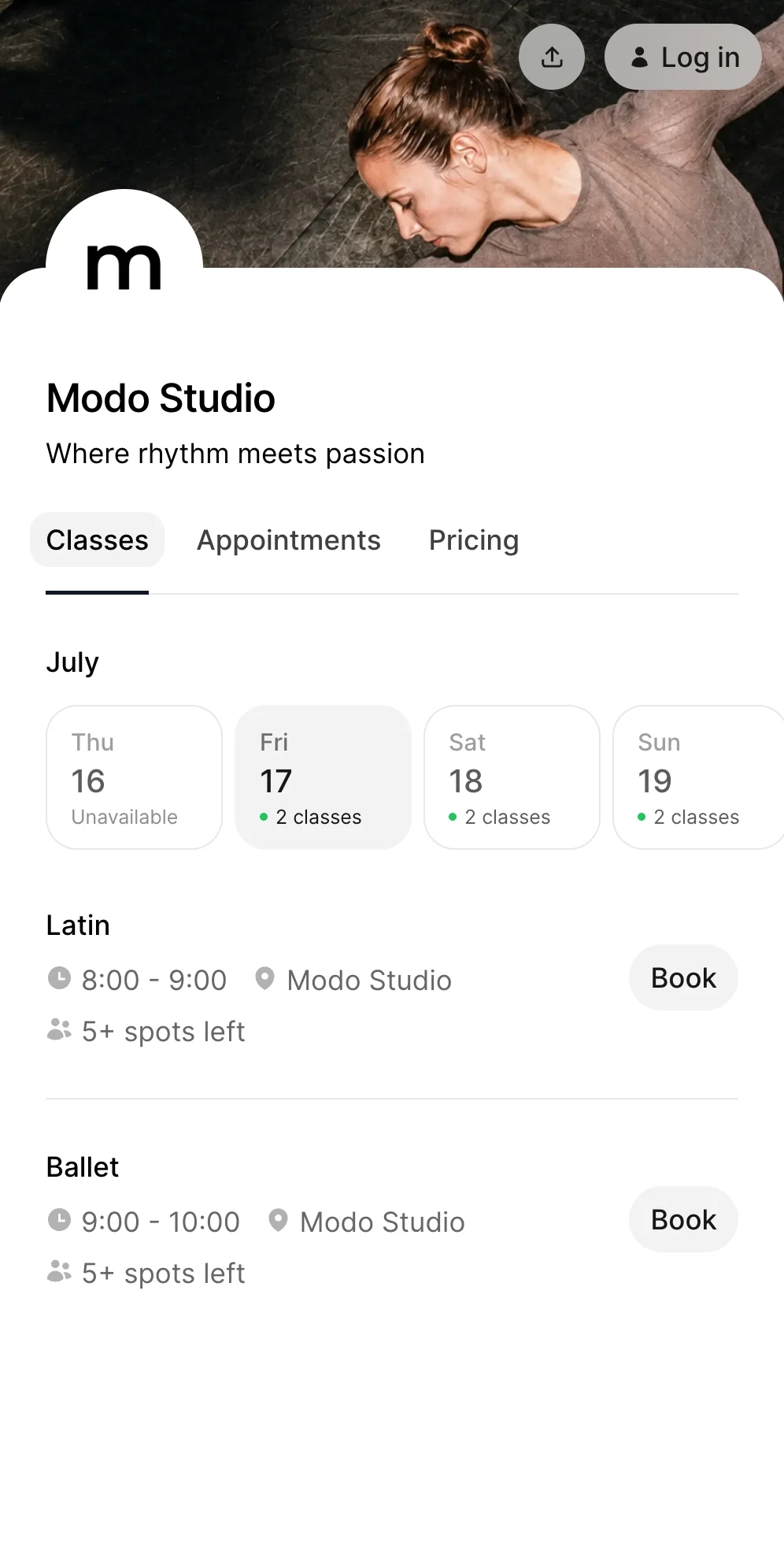
The important part is setting the right price and making rentals easy to manage. With studio management software such as Time2book, you can keep your own classes, appointments, clients, and payments organized while building a more efficient schedule around the hours your space is actually being used.
In this guide, we’ll break down how to rent out your dance studio space in 2026, how much to charge, what should be included in the rental price, and how to turn empty studio hours into predictable additional revenue.
Why Rent Out Your Dance Studio Space?
The biggest advantage is simple: you already pay for the space.
If your lease costs the same whether your studio is occupied for 20 hours or 50 hours each week, filling unused hours can improve the economics of the business without requiring another location.
For example, imagine your dance studio normally operates:
- Monday–Friday from 4:00 PM–9:00 PM
- Saturday from 9:00 AM–2:00 PM
- Closed on Sunday
That leaves a considerable amount of potentially rentable time during weekday mornings, early afternoons, evenings after classes, and Sundays.
Even filling another 10 hours per week at $50 per hour generates roughly $2,165 in gross rental revenue per month.
Studio rental can also introduce entirely new audiences to your business. Someone might first visit your space for an independent instructor's workshop, rehearsal, photo shoot, or yoga class and later become aware of the classes your studio offers.
Who Can Rent a Dance Studio?
Your renter does not necessarily need to run another dance school.
Potential dance studio renters include:
- Independent dance instructors
- Choreographers
- Professional dancers
- Dance companies
- Wedding dance instructors
- Ballet teachers
- Yoga and Pilates instructors
- Personal trainers
- Theatre groups
- Audition organizers
- Photographers
- Videographers
- Content creators
- Workshop organizers
- Small fitness groups
The best renters are generally activities that fit naturally into your existing space without requiring major setup, cleaning, or equipment changes.
How Much Should You Charge for Dance Studio Rental?
There is no universal dance studio rental rate. Location, studio size, flooring, equipment, availability, renter type, and intended use all affect what someone is willing to pay.
Current marketplace data gives studio owners a useful starting point. Peerspace reports typical dance studio rentals averaging around $30–$55 per hour, although rates vary substantially by city. Its recent city data ranges from around $38 per hour in Atlanta to more than $100 per hour in markets such as Washington, D.C. and San Francisco.
London shows a similar spread. Tagvenue currently reports an average dance studio hire rate of roughly £38–£40 per hour, with many listings between approximately £27 and £60 per hour.
These averages should be treated as market references rather than prices you should copy directly.
Typical Dance Studio Rental Prices
| Rental type | Example hourly range |
|---|---|
| Solo practice or rehearsal | $20–$40/hour |
| Small rehearsal or private lesson | $30–$60/hour |
| Standard dance class | $40–$80/hour |
| Large group class | $60–$120/hour |
| Workshop or masterclass | $60–$150/hour |
| Audition | $60–$150/hour |
| Photo or video shoot | $75–$200+/hour |
| Private event | $100–$300+/hour |
| Regular weekly renter | Often 10–25% below one-off rate |
These are broad benchmarks rather than fixed industry rates. A 400-square-foot practice room in a suburban location should not be priced the same as a 2,000-square-foot studio with sprung floors, professional lighting, changing rooms, parking, and a central-city address.
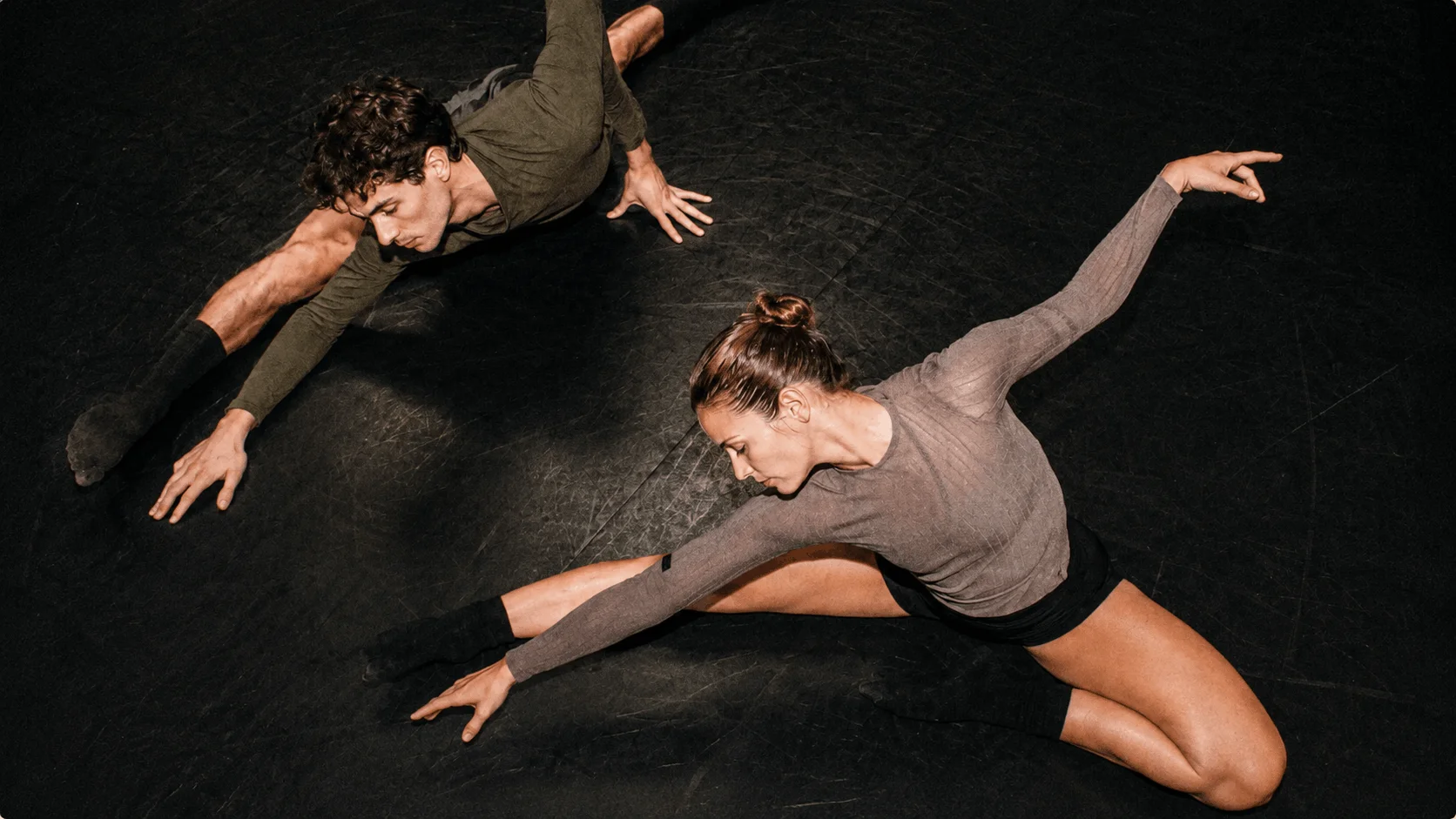
[IMAGE: Dance studio being used for a rehearsal rental
Alt: Dance studio rental space being used for rehearsal]
What Affects Dance Studio Rental Pricing?
Before publishing a price, look at the characteristics that actually make your studio valuable.
Studio Size and Capacity
Larger rooms generally command higher rental prices because they allow instructors to accommodate more paying students.
A small room suitable for six dancers might rent for $30 per hour, while a large studio capable of comfortably accommodating 30 dancers could justify $70–$100+ per hour.
Do not base pricing only on square footage. The amount of usable movement space matters more than the total size of the premises.
Flooring
Proper dance flooring is a significant advantage.
A sprung floor, Marley surface, maintained hardwood floor, or another dance-specific surface can justify higher pricing than a generic room with concrete or standard commercial flooring.
For ballet, contemporary dance, jazz, and other movement-intensive activities, flooring may be one of the renter's most important requirements.
Mirrors and Barres
Full-height mirrors immediately make the room more useful for rehearsals, teaching, auditions, and choreography.
Ballet barres can further increase the value of the studio for ballet, conditioning, and technique-focused instructors.
Sound System
Renters will normally expect a reliable way to play music.
Clearly explain whether the rental includes:
- Bluetooth speakers
- AUX connection
- Professional sound system
- Microphone
- Mixer
- Piano
- Audio cables or adapters
Removing uncertainty makes the studio easier to book.
Location
A centrally located studio close to public transport can usually charge more than an equivalent space in a difficult-to-reach location.
Parking can work in the opposite direction. A suburban studio with free parking may be more attractive to instructors running children's classes, workshops, or groups where participants typically drive.
Changing Rooms and Facilities
Showers, changing rooms, lockers, reception areas, toilets, kitchens, waiting rooms, and storage can all increase rental value.
They become particularly important for workshops or longer bookings rather than simple one-hour rehearsals.
Intended Use
One of the biggest pricing mistakes is charging everyone exactly the same hourly rate.
An individual rehearsing choreography creates a very different commercial value and risk profile than an instructor charging 25 students to attend a workshop.
Established dance organizations already use this approach. Alonzo King LINES Ballet, for example, currently lists different rates for rehearsals, ongoing classes, workshops, commercial use, auditions, and photography rather than offering one universal studio rate.
Create Different Dance Studio Rental Rates
Instead of publishing a single number, create a simple pricing structure.
1. Personal Practice Rate
This should generally be your lowest price.
It can apply to:
- Solo dancers
- Duets
- Small choreography rehearsals
- Students practicing independently
For example:
Personal rehearsal: $30/hour
You can limit the rate to a maximum of two or three people and prohibit commercial teaching.
2. Instructor or Class Rate
If someone is earning money from teaching inside your studio, charge a commercial class rate.
For example:
Classes and private teaching: $50/hour
A renter charging 15 students $20 each could generate $300 from the hour, so paying more for the room is reasonable.
3. Workshop Rate
Workshops typically bring larger groups, require more preparation, and generate more revenue for the organizer.
For example:
Workshops: $70/hour with a two-hour minimum
You can also include setup and cleanup time within the reservation.
4. Photo and Video Rate
Production bookings can justify higher pricing because they may involve more people, equipment, furniture movement, lighting, or additional setup.
For example:
Photo/video production: $90/hour
Current commercial studios frequently separate photography and commercial production pricing from normal rehearsal rentals.
5. Event Rate
Birthday parties, performances, community events, launches, and private celebrations generally create more cleaning, risk, and wear.
For example:
Private events: from $120/hour with a three-hour minimum
Instead of automatically accepting every event, consider requiring approval before confirming these bookings.
Use Peak and Off-Peak Dance Studio Rental Pricing
Not every studio hour has equal value.
Tuesday at 11:00 AM might normally sit completely empty. Tuesday at 6:00 PM could be one of your most valuable class slots.
Your rental pricing should reflect that.
One current studio rental example in Singapore charges S$110/hour off-peak and S$176/hour during peak periods for its larger dance studio, showing how significant the difference can be when demand changes by time of day.
A simpler model for your studio might look like this:
| Time | Rental price |
|---|---|
| Weekdays before 4 PM | $40/hour |
| Weekdays after 4 PM | $55/hour |
| Saturday | $60/hour |
| Sunday | $50/hour |
Your actual rates will depend on when your regular dance program operates.
The goal is not necessarily to maximize the price of every empty hour. An otherwise unused Tuesday morning can still be profitable at a lower price, while giving away a prime Thursday evening slot cheaply could prevent you from running your own higher-margin class.
Offer Discounts for Recurring Studio Rentals
Reliable recurring renters are particularly valuable.
Imagine an instructor wants every Wednesday from 10:00 AM–12:00 PM for the next six months. Instead of searching for a different renter every week, you know that the same two-hour block generates revenue consistently.
You might offer:
- Standard rental: $55/hour
- 4+ hours per month: $50/hour
- 8+ hours per month: $47/hour
- Long-term fixed weekly slot: $45/hour
Discounting recurring rentals makes sense when they fill hours that would otherwise remain empty.
Avoid heavily discounting high-demand periods simply because someone commits long term. That same slot may eventually be more valuable for your own classes.
Set a Minimum Booking Time
A one-hour rental does not always require only one hour of work.
Someone has to:
- Open the studio
- Answer booking questions
- Prepare the room
- Check the space afterward
- Clean if necessary
- Process the payment
- Handle any schedule changes
That can make very short rentals inefficient.
Consider setting a 90-minute or two-hour minimum for workshops, events, commercial productions, or first-time renters.
Peerspace recommends using a minimum booking duration alongside the hourly rate, particularly when a venue needs a minimum total value to make a booking worthwhile.
A studio wanting at least $100 from each commercial booking could therefore charge $50 per hour with a two-hour minimum.
Include Setup and Cleanup Time
Be explicit about whether setup and cleanup happen inside the booked time.
If someone reserves 6:00 PM–8:00 PM, they should know whether they can arrive at 5:45 PM or whether access begins at exactly 6:00 PM.
A simple policy is:
Your booking time includes setup and cleanup. Please reserve enough time to enter, prepare the studio, complete your session, restore the room, and leave by the end of your reservation.
This prevents the common situation where one renter arrives early while your previous class is still running, or stays 20 minutes beyond their booking because they assumed cleanup was free.
How Much Can Dance Studio Rental Make?
Studio rental probably should not replace your core classes, memberships, or private lessons. Instead, think of it as a way to increase revenue per available studio hour.
Here are three examples:
| Rental activity | Average rate | Hours/week | Approx. monthly revenue* |
|---|---|---|---|
| Light | $45 | 10 | $1,949 |
| Moderate | $60 | 15 | $3,897 |
| High | $75 | 20 | $6,495 |
*Approximate gross revenue using 4.33 weeks per month.
Even relatively modest utilization can make a meaningful difference.
If your studio rents 10 otherwise-empty hours each week for $45, that is almost $2,000 in additional monthly revenue before costs. Over a year, the same utilization represents more than $23,000 in gross rental revenue.
The key phrase is otherwise empty. Replacing a profitable $300 group class with a $60 rental is obviously not good business. Filling Tuesday mornings that previously generated nothing is a very different situation.
What Should Be Included in a Dance Studio Rental?
Create a clear list of what renters receive.
A typical dance studio rental might include:
- Private use of the booked studio
- Mirrors
- Sprung or specialist dance flooring
- Ballet barres
- Sound system
- Heating or air conditioning
- Wi-Fi
- Toilets
- Changing area
- Waiting area
- Tables or chairs
- Basic cleaning
Then list anything that costs extra.
Potential add-ons include:
- Additional equipment
- Lighting equipment
- Extra chairs and tables
- Storage
- Cleaning
- Reception staff
- Extended setup time
- Photography equipment
- Piano use
- After-hours access
Transparent pricing reduces back-and-forth communication and makes it easier for renters to compare your space with alternatives.
Create a Dance Studio Rental Agreement
Even if someone only rents the room for two hours, you should have clear rental terms.
For regular renters, consider a more formal rental agreement and have local legal counsel review it for your jurisdiction.
At minimum, your terms should explain:
Rental Date and Time
Specify when the renter can enter and when they must leave.
Include your overtime policy as well.
Payment Terms
Explain:
- Rental price
- Deposit requirements
- When payment is due
- Accepted payment methods
- Late payment rules
Cancellation Policy
Decide what happens if the renter cancels.
For example:
- 7+ days before: full refund
- 48 hours–7 days: 50% refund
- Less than 48 hours: non-refundable
Your exact policy can be more flexible or stricter depending on demand.
Permitted Activities
Someone booking a rehearsal room should not automatically be allowed to turn it into a 100-person party.
Ask renters to specify their intended use and maximum attendance.
Cleaning
Explain what condition the room should be left in and whether additional cleaning charges can apply.
Damage
The renter should understand their responsibility for damaged mirrors, flooring, speakers, furniture, or other equipment.
Footwear
Dance floors can be expensive to repair.
Define exactly which shoes are permitted, particularly for tap, heels, outdoor shoes, or equipment that could mark your flooring.
Food and Drinks
State whether food is allowed and where drinks can be consumed.
Many studios allow water inside the dance space while restricting other food and drinks to reception areas.
Insurance and Liability
Depending on the rental activity and your jurisdiction, your insurance provider may have requirements for third-party instructors or commercial renters.
Some studios require instructors running classes to carry their own professional liability insurance. For example, Seattle studio SHIFT explicitly requires proof of professional liability insurance for classes held by renters.
Check your own lease, business insurance, local regulations, and legal requirements before opening your space to external renters.
Make Dance Studio Rentals Easy to Book
The easier the booking process, the more likely someone is to rent the space repeatedly.
Avoid managing every request through a combination of Instagram messages, email, text messages, spreadsheets, and bank transfers.
A clear rental workflow could be:
- Renter chooses the type of studio rental.
- They check available times.
- They select a duration.
- They review the studio rules.
- They enter their details.
- They pay online.
- They receive confirmation and access instructions.
If you already use Time2book to manage your dance studio, you can keep your studio schedule, services, appointments, payments, and client information organized in one system rather than manually coordinating every reservation.
This becomes increasingly important once rentals sit alongside regular dance classes, private lessons, workshops, and instructor schedules.
Try Time2book free and simplify your dance studio bookings, payments, and client management.
How to Find People Who Want to Rent Your Dance Studio
Once your pricing and rules are ready, renters need to discover the space.
Create a Dance Studio Rental Page
Create a dedicated page on your website targeting searches such as:
- Dance studio rental in [city]
- Dance rehearsal space in [city]
- Dance studio for rent
- Rehearsal studio rental
- Dance studio hourly rental
Include real photographs, dimensions, maximum capacity, facilities, flooring, prices, availability, parking information, and booking instructions.
Add Your Studio to Rental Marketplaces
Platforms such as Peerspace and Tagvenue can introduce your studio to people already searching for spaces.
The disadvantage is that marketplaces may charge fees and place you next to competing venues. The advantage is immediate access to existing rental demand.
You can test a marketplace first and eventually encourage repeat renters to follow whatever direct-booking arrangements are permitted by the platform's terms.
Contact Independent Instructors
Independent instructors are among the best potential recurring renters.
Look for local professionals teaching:
- Salsa
- Bachata
- Heels
- Contemporary
- Hip-hop
- K-pop
- Wedding dance
- Ballet
- Barre
- Yoga
- Pilates
- Mobility
Many instructors have an audience but do not want the expense of operating their own permanent studio.
Promote Off-Peak Availability
Do not simply advertise that the studio is available.
Be specific:
Dance studio available for recurring weekday rentals — Monday to Friday, 8 AM–3 PM. Mirrors, sprung floor, sound system and changing room included. From $40/hour.
Someone searching for a regular teaching venue immediately knows whether your availability fits their schedule.
Build Local Partnerships
Reach out to nearby:
- Dance companies
- Theatre schools
- Universities
- Performing arts programs
- Photographers
- Production companies
- Personal trainers
- Yoga instructors
- Event organizers
One strong partnership can fill the same otherwise-empty slot for months.
[IMAGE: Empty modern dance studio prepared for rental
Alt: Modern dance studio rental space with mirrors and sprung floor]
Common Dance Studio Rental Mistakes
Charging Too Little
A cheap rate may generate enquiries, but it can also create bookings that barely cover cleaning, administration, utilities, and wear.
Check competing spaces before publishing your price.
Charging the Same Rate for Everything
A dancer practicing alone and a commercial production filming an advertisement should not necessarily pay the same amount.
Use rental categories.
Ignoring Your Prime Class Hours
Your own classes will often have significantly more revenue potential than renting the entire room.
Protect the hours where your main studio business performs best.
Not Charging for Extra Time
Ten minutes here and 15 minutes there quickly create schedule problems.
Your start and finish times should be clear.
Having No Written Rules
Most disputes can be prevented before the booking occurs.
Clearly document cancellation, cleaning, damage, footwear, capacity, equipment, setup, and permitted-use rules.
Making Booking Too Complicated
If every rental requires six emails just to establish availability, both you and the renter lose time.
Make your available hours, rates, and rules easy to understand from the beginning.
Dance Studio Rental Pricing Example
If you're starting from scratch, your first pricing structure does not need to be complicated.
For a medium-sized studio, you might begin with:
| Rental | Off-peak | Peak |
|---|---|---|
| Solo rehearsal | $30/hr | $40/hr |
| Private lesson / small group | $40/hr | $50/hr |
| Commercial class | $50/hr | $65/hr |
| Workshop | $60/hr | $75/hr |
| Photography / filming | $80/hr | $100/hr |
| Private event | From $120/hr | From $150/hr |
Then monitor demand.
If weekday mornings stay empty for three months, you may need a lower off-peak price or better promotion. If Saturday afternoon is booked immediately every time it becomes available, there may be room to increase that rate.
Your first prices do not have to be permanent.
Frequently Asked Questions About Dance Studio Rental
A typical dance studio rental might cost approximately $30–$100 per hour, although prices vary substantially by location, studio size, facilities, and use. Peerspace currently reports an overall average of roughly $30–$55 per hour, while premium spaces and high-cost cities can be considerably more expensive.
Compare similar local studios before setting your final rate. A dance-specific studio with professional flooring, mirrors, sound equipment, changing rooms, and a convenient location can generally charge more than a basic open room.
Basic rehearsal spaces can start around $20–$40 per hour, while typical dance class rentals may fall around $40–$80 per hour. Larger workshops, commercial shoots, events, or premium studios can cost $100–$300+ per hour.
Location is one of the biggest variables. Current London marketplace listings, for example, average approximately £38–£40 per hour.
It can be particularly profitable when you rent hours that would otherwise remain empty. Renting 10 unused hours each week at $45 per hour would generate roughly $1,949 in gross monthly revenue.
The calculation changes if studio rentals displace your own profitable classes. Prioritize filling low-demand hours before renting your prime teaching slots.
A discount of around 10–25% can make sense for recurring renters who commit to the same weekly time, especially during off-peak periods. Regular renters reduce the time you spend finding new bookings and can create predictable monthly revenue.
Requirements depend on your country, insurance provider, lease, and the type of activity being offered. Some dance and fitness studios require instructors who rent their space to provide proof of professional liability insurance.
Check with your insurer and local legal adviser before establishing your rental policy.
Your agreement should cover the rental date and time, price, payment terms, cancellation policy, permitted use, maximum capacity, cleaning expectations, damage, equipment, footwear rules, liability, insurance requirements, and overtime.
For recurring or commercial rentals, having a properly reviewed written agreement is especially important.
Yes. Dance studios are often suitable for yoga, Pilates, barre, mobility, personal training, martial arts, workshops, and other movement-based businesses. However, make sure each activity is compatible with your flooring, equipment, lease, insurance, noise restrictions, and building policies.
Create a dedicated local landing page, publish clear rates and photographs, list your space on rental marketplaces, contact independent instructors, and promote specific off-peak availability. Recurring instructors are particularly valuable because they can turn one empty weekly time slot into predictable rental income for months.
Final Thoughts
Renting out your dance studio can turn one of your biggest fixed costs into an additional source of revenue.
The best approach is not simply to fill every free hour. Start by identifying genuinely underused times, compare local dance studio rental rates, create different prices for different types of use, establish clear policies, and make the booking experience straightforward.
A few recurring renters can make a significant difference. At $40–$60 per hour, even 10–15 additional rental hours each week can generate thousands in extra monthly revenue without adding another location.
At the same time, keep your core dance business organized. Your classes, private lessons, memberships, rental bookings, and payments should not become another collection of spreadsheets and messages.
Try Time2book free today and simplify your studio bookings, payments, and client management.