
The most useful CrossFit gym marketing ideas help nearby people understand your coaching, feel comfortable trying a session, and take a clear next step. Local search, beginner offers, member referrals, and authentic videos are practical places to start. Their value depends on how many suitable members they bring into your gym and keep there.
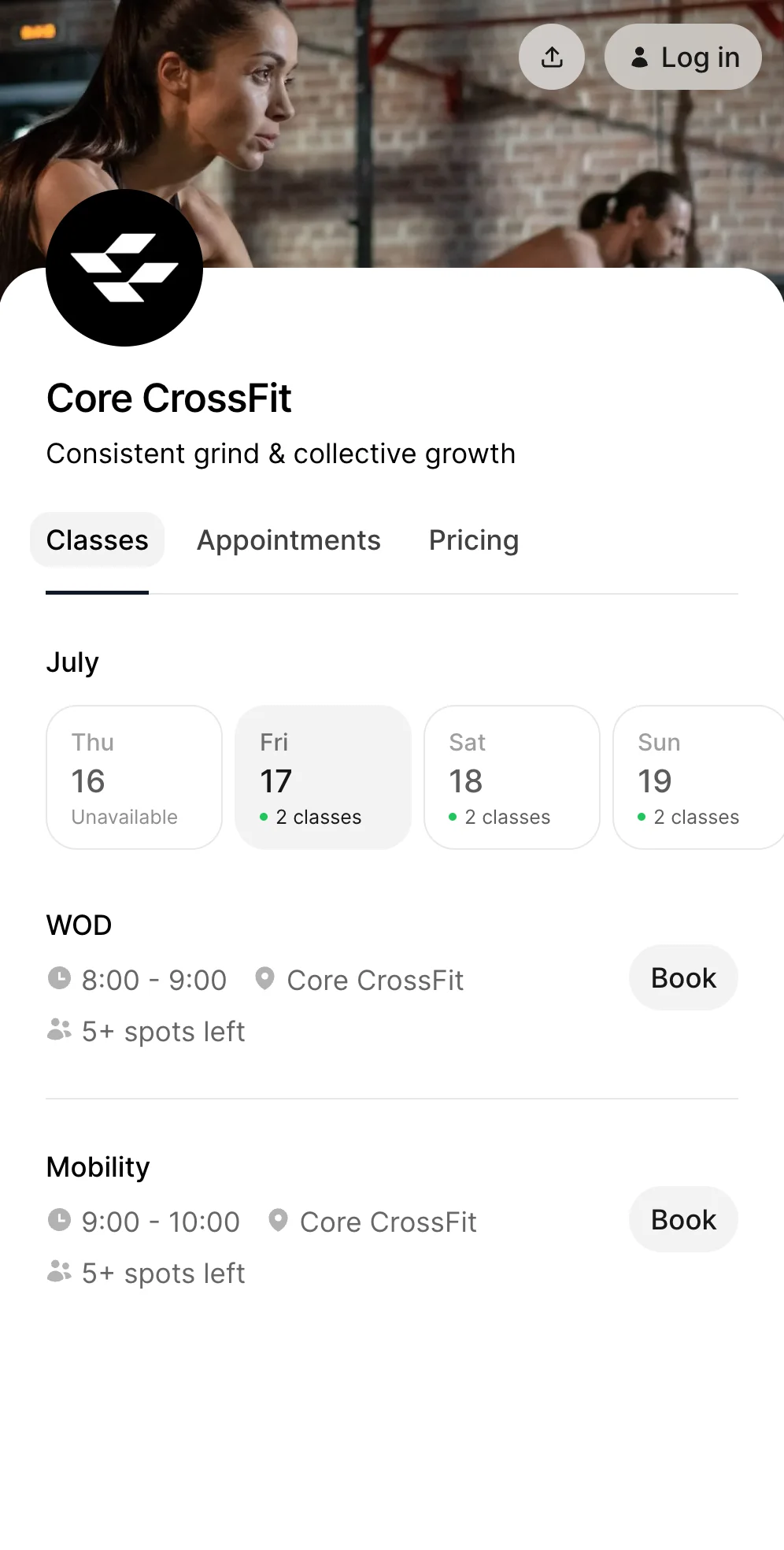
For box owners, the challenge is fitting marketing around coaching, programming, bookings, and payments. A modern platform such as Time2book helps organize the booking and membership side, so an interested visitor has somewhere straightforward to sign up. Explore Time2book for your CrossFit gym and try it free.
In this guide, we’ll break down the best CrossFit gym marketing ideas for 2026 and what to look for when building a strategy that attracts and retains members.
Build Your CrossFit Marketing Strategy Before Choosing Tactics
A CrossFit marketing strategy connects four decisions: who you want to attract, why they should choose your box, what you want them to book, and how you will measure results. Start with these decisions before adding more channels.
Choose a Specific Audience and Offer
An experienced athlete looking for open gym has different questions from someone who has never lifted a barbell. Pick one priority audience for each campaign and match the offer to their experience.
| Audience | Main question | Suitable starting offer |
|---|---|---|
| Complete beginners | Will I be able to keep up? | Coached foundations course |
| Busy professionals | Can this fit my working day? | Early morning or lunchtime intro |
| People returning to exercise | Will someone help me get started? | Coach consultation and gradual introduction |
| Experienced CrossFit members | Does this box suit my training? | Drop-in or introductory visit |
| Nearby workplace teams | Can we train together? | Private team taster session |
Choose an offer you can deliver well, with a clear price, schedule, and description. If an introductory package renews into a membership, explain the renewal terms before purchase.
Check Capacity and Set a Measurable Goal
Identify which classes have room for new members and how many beginner appointments your coaches can handle. Advertising evening sessions when they are already full can create a disappointing first impression.
An illustrative monthly goal could be: “Generate 20 beginner bookings, have 15 people attend, and convert six into memberships.” These figures are planning examples, not industry benchmarks. Use your own results to set the next target.
CrossFit Gym Marketing Ideas for Local Visibility
1. Complete Your Google Business Profile
Someone searching for a nearby box needs accurate information quickly. Update your address, contact details, hours, website, and relevant business category. Add photos showing the entrance, training space, coaches, and an ordinary class.
Google says local results are mainly influenced by relevance, distance, and how well known a business is. Complete information and authentic reviews can support visibility, although no profile update guarantees a particular position. Read Google’s local ranking guidance.
2. Create a Useful Local Landing Page
Build a page around your actual location, such as “CrossFit in [City]” or “CrossFit gym in [Neighborhood].” Explain your coaching approach, beginner process, timetable, membership options, and how to find the entrance.
Include parking or public transport information and a prominent booking button. If you serve several neighborhoods from one box, describe that service area naturally rather than creating many nearly identical pages.
3. Ask Members for Honest Reviews
Create a consistent review request process for members who have experienced your coaching. A short email with a direct review link makes the request easy to act on, and thoughtful replies show prospective members how you communicate.
Ask for honest feedback without directing the rating. Google prohibits review incentives and selectively requesting positive reviews, so keep any referral rewards separate from your review process. See Google’s review policy.
4. Answer Beginner Questions on Your Website
Publish useful answers to questions such as “Do I need to be fit before starting?”, “What happens in my first class?”, and “What does a CrossFit membership include?” Explain how your coaches adapt workouts and introduce movements.
Use photos from your own box and finish with the relevant beginner booking option. These pages should help someone make a decision even if they never see another piece of your marketing.
CrossFit Marketing Ideas for Trials and Referrals
5. Create a Structured Beginner Package
Give newcomers a clear starting point rather than expecting them to choose from an unfamiliar timetable. For example, offer three foundations sessions covering basic movements, class structure, and how to select an appropriate workout level.
List what is included, who coaches it, when it runs, and what happens afterward. A paid introduction can work when the value is clear; a free consultation may suit prospects who need to discuss their goals first.
6. Run a Bring-a-Friend Session
Schedule a session designed for members and their guests, with accessible movements and enough coaching attention for newcomers. Explain the format in advance so members know who they can invite.
Give guests a booking link and ask whether they would like information about getting started. Record guest attendance separately from membership purchases so you can see whether the event creates lasting interest.
7. Offer a Simple Referral Reward
Make the referral process easy to explain. An illustrative offer might give an existing member a €25 account credit after their friend buys an eligible membership and completes the first paid month.
State eligibility, when the reward is issued, and whether offers can be combined. Track referrals consistently, and compare the reward cost with the contribution generated by those members.
8. Host a Beginner Open House
Offer a gym tour, coach introductions, a short demonstration, and time for questions. A visitor who is unsure about training may find this easier to book than a full workout.
Keep the group manageable and give attendees a specific next step before they leave. If you collect inquiries, assign a coach to respond rather than leaving the contacts in an event spreadsheet.
9. Build Partnerships With Nearby Businesses
Approach businesses whose customers or employees could realistically attend your box. Running shops, cafés, coworking spaces, and nearby employers may be suitable places to discuss a joint introduction event.
Start with one concrete proposal, such as a private workplace taster session. Use a dedicated booking link or source question to identify the partnership’s results before committing more time.
10. Make Drop-In Booking Straightforward
Experienced visitors may discover your box while traveling or moving into the area. Publish your drop-in price, eligible classes, experience requirements, and arrival instructions.
Keep this journey separate from beginner onboarding where necessary. A clear drop-in experience can introduce your gym to future local members and give visiting athletes a reason to recommend it.
CrossFit Social Media Marketing Ideas
11. Show What a First Session Looks Like
Film a short walkthrough from arriving at reception to meeting the coach and joining the warm-up. Explain unfamiliar terms in plain language and show how someone gets help during class.
Pair the video with one booking action. A beginner should understand where to start without searching through several posts or sending a message to ask for the schedule.
12. Feature Member Stories With Context
With permission, share why a member started, what initially worried them, and how training fits their week. Stories about consistency, confidence, and learning a movement can make your gym easier to relate to.
Use specific, accurate details and let members approve sensitive personal information. Avoid presenting one person’s experience as a result everyone will achieve.
13. Introduce Coaches and Their Teaching Approach
Show a coach explaining how they support a newcomer, adapt an exercise, or organize a class. Include relevant qualifications and a short introduction to the person behind the coaching.
This gives prospects useful evidence about the service they will receive. End with an invitation to meet the team through your consultation or foundations offer.
14. Use a Repeatable Content Schedule
Build a manageable weekly schedule around the material your team can produce consistently. For example, publish one beginner explanation, one member story, and one post showing available starting sessions.
CrossFit affiliates can also use the official Affiliate Marketing Kit, which includes customizable campaigns and creative assets. Combine those resources with local photos and details so the content represents your own box.
[IMAGE: Coach introducing a beginner to a CrossFit class]
Alt text: CrossFit gym marketing ideas showing a coach welcoming a beginner to a group training session.
CrossFit Advertising Ideas to Test
15. Run Google Search Ads for Local Booking Intent
Start with searches that suggest someone wants a gym nearby, such as “CrossFit [City],” “CrossFit gym near me,” and “beginner CrossFit classes [City].” These are example keyword themes, not verified search-volume figures.
Send visitors to a page matching the offer. Review search terms and exclude irrelevant traffic, such as equipment or jobs searches, when appropriate. For a local membership campaign, consider Google’s presence setting, which focuses on people likely to be in or regularly in your target area. Check Google’s location options.
16. Test a Beginner Video on Instagram and Facebook
Use footage showing a coach supporting an ordinary beginner, followed by a clear explanation of your introduction offer. Choose a realistic local service area based on where members actually travel from.
Start with one offer and a small number of creative variations. Track attended introductions and memberships alongside inquiries, since an inexpensive lead may still be unlikely to visit.
17. Advertise Classes That Have Space
Promote available morning or lunchtime sessions with a message about convenience and coached training. Include the actual days and times so prospects can judge whether the offer fits their routine.
This can be more useful than generating demand for already full classes. Check that the advertised sessions are appropriate for the experience level of the people you are trying to attract.
18. Use Local Posters With Trackable QR Codes
Place a simple poster in an approved partner location or your own window. Include the neighborhood, the starting offer, and a QR code leading directly to the relevant page.
Use a tagged link or campaign-specific code to identify responses. Keep print runs small initially so you can revise the message and placement after seeing which visitors attend.
CrossFit Advertising Examples
Adapt these examples to offers your gym actually provides. The sample prices are illustrative.
| Campaign | Example headline | Example supporting copy | CTA |
|---|---|---|---|
| Beginner search ad | Start CrossFit in [City] | Three coached foundations sessions. Meet the team, learn the basics, and find your starting point. | View beginner sessions |
| Social video | Your First CrossFit Session, Explained | See how a class works and how our coaches help you get started. | Book an introduction |
| Lunchtime classes | Coached Training on Your Lunch Break | Join our 12:15 classes on Tuesdays and Thursdays in [Neighborhood]. | See the timetable |
| Partner poster | Try CrossFit Near [Landmark] | Meet your coach and try our three-session beginner package for €49. | Scan to book |
Keep the price, availability, and terms consistent between the advertisement and the booking page.
CrossFit Marketing Ideas for Retention
19. Follow Up With New and Inactive Members
Make the first month feel organized. Explain booking, help newcomers choose their next sessions, and check whether their schedule or experience is creating difficulties.
If a regular member stops booking, a personal check-in can help you understand why. Treat booking activity as a prompt for a conversation rather than proof of attendance or disengagement.
20. Keep Members Connected With Clear Updates
Share timetable changes, workshops, community events, and bring-a-friend dates where members can easily find them. Give each update a clear action and enough information to participate.
Time2book’s client announcements let you publish updates, optionally notify clients by email, and receive replies. Use those conversations to understand which events and class times your members want.
A 30-Day CrossFit Marketing Plan
Choose a few connected activities you can deliver well. This example combines one beginner offer, local visibility, member referrals, and a single advertising test.
| Week | Priority | Actions | What to record |
|---|---|---|---|
| 1 | Prepare the booking journey | Choose the offer, confirm capacity, update the local page and Business Profile | Starting traffic and bookings |
| 2 | Activate existing relationships | Invite members to a guest session and approach one local partner | Guest bookings and referral sources |
| 3 | Test one paid channel | Launch search ads or a beginner video campaign | Spend, inquiries, bookings, and show-ups |
| 4 | Review and improve | Follow up, compare sources, and fix the largest drop-off | Memberships sold and acquisition cost |
Keep organic content running throughout, using the same offer and booking destination. At the end of the month, review what brought suitable people into the box before expanding.
How to Measure CrossFit Marketing Results
Measure the journey from inquiry to paid membership, then revisit retention once the new members have had time to settle in. Record the acquisition source at booking or signup and use a consistent attribution method.
| Metric | Calculation | What it helps you assess |
|---|---|---|
| Inquiry-to-booking rate | Intro bookings ÷ inquiries × 100 | Offer clarity and follow-up |
| Intro show-up rate | Attended intros ÷ booked intros × 100 | Readiness and booking communication |
| Intro-to-member conversion | New memberships ÷ attended intros × 100 | Intro experience and offer fit |
| Paid media cost per new member | Ad spend ÷ members attributed to the ads | Advertising efficiency |
| Fully loaded acquisition cost | Total acquisition costs ÷ new members | Overall acquisition economics |
| 90-day cohort retention | Members still active at day 90 ÷ members in the starting cohort × 100 | Whether new members stay |
For an illustrative example, €400 in advertising that produces 20 intro bookings, 15 attendees, and five paying members has a paid media cost of €80 per new member. The show-up rate is 75%, and intro-to-member conversion is approximately 33%.
That €80 excludes coaching time, creative work, referral rewards, and other acquisition costs. Decide whether the campaign is sustainable using the contribution those members generate after service costs and how long they stay.
Frequently Asked Questions
Start with a complete Google Business Profile, a clear beginner offer, honest member reviews, and a bring-a-friend session. These connect local discovery with an understandable way to try your gym. Track which activities lead to attended introductions and paid memberships.
Choose a target audience, define your starting offer, check available coaching and class capacity, and set a measurable goal. Then select a few channels that bring people to the same booking journey. Review bookings, show-ups, membership conversion, and retention before expanding.
Local Google Search ads and beginner-focused social videos are practical starting tests. Search ads can reach people looking for nearby classes, while videos can explain the experience to newcomers. Choose one channel initially and compare results using attended introductions and paid memberships.
Set your budget using available capacity, member contribution, and an acquisition cost you can afford. There is no single amount that suits every box. Start with a controlled test and include advertising, creative work, referral rewards, and staff time when reviewing the total cost.
Explain what happens in the first session, how coaches adapt workouts, and how someone can start without knowing the terminology. Show ordinary members and supportive coaching in your photos and videos. Offer a specific foundations course or introduction with clear pricing and next steps.
Yes. Time2book supports online class bookings, memberships, class packs, payments, and client management. A clear booking link gives prospects a practical next step after seeing your marketing. Use separate campaign records alongside your booking data to track acquisition sources and advertising results.
Turn CrossFit Marketing Ideas Into a Consistent System
A useful CrossFit marketing strategy makes your box easier to discover, explains why someone should try it, and supports them after they join. Start with the largest gap in that journey, then test a manageable number of ideas and review the results.
Time2book brings bookings, payments, memberships, and client management together in a simple, modern platform. Try Time2book free today and simplify your studio bookings, payments, and client management.