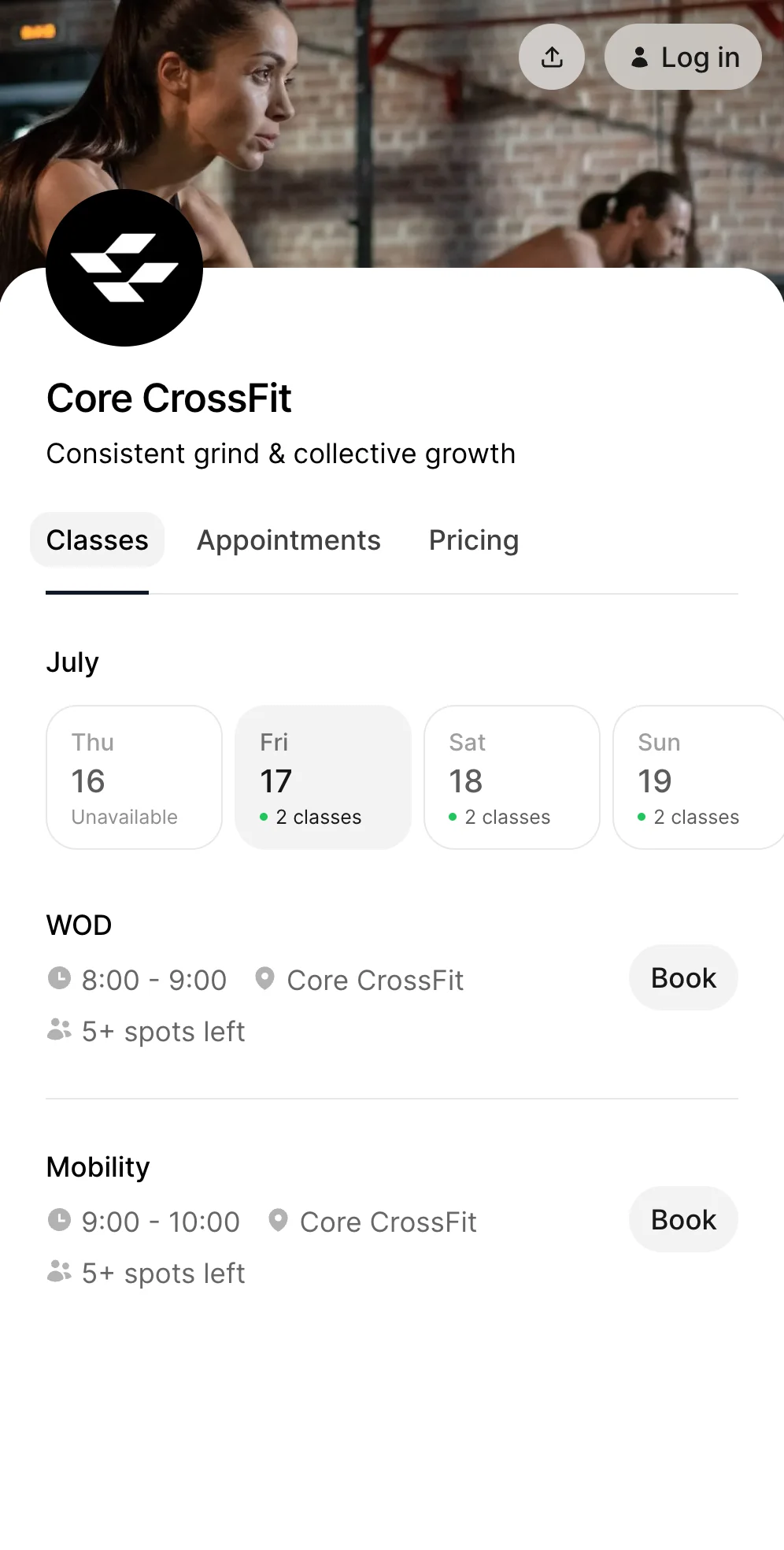

Opening a CrossFit gym in 2026 is one of the most realistic ways to build a profitable fitness business—but only if you truly understand the numbers behind it.
A lot of coaches go in thinking: “I just need a space and some equipment.” But the reality is different. The cost to open a CrossFit gym includes rent, buildout, insurance, software, marketing, and ongoing operations. Miss one of these—and your margins disappear fast.
At the same time, CrossFit remains one of the leanest gym models you can start. With the right setup, you can launch faster, spend less, and reach profitability sooner than traditional gyms.
Tools like Time2book also simplify operations from day one—handling bookings, memberships, and payments in one place—so you avoid costly admin mistakes early on.
In this guide, we’ll break down:
- how to open a CrossFit gym
- how much it costs to open a CrossFit gym
- what you need to open a CrossFit gym
- and how to build a simple but profitable business plan
What does it take to open a CrossFit gym?
Before talking about money, let’s answer the real question. At its core, you need five things:
1. A functional training space
CrossFit gyms don’t need premium retail locations. In fact, most successful boxes are in industrial areas. What matters is space, ceiling height, and flexibility—not foot traffic.
2. The right equipment (not all equipment)
You don’t need everything on day one. You need enough to run group classes efficiently.
3. Coaching and certification
At least one CrossFit Level 1 Trainer—or equivalent coaching experience—is essential for credibility and safety.
4. A simple system to run your gym
CrossFit class scheduling, client management, and payments must be seamless. If clients can’t book in seconds, you lose them.
5. A clear offer and pricing model
Unlimited memberships, intro offers, and structured classes are the backbone of CrossFit revenue.
Tip: The biggest mistake new owners make is focusing on gear instead of systems and retention.
How much does it cost to open a CrossFit gym?
Let’s answer the main question directly. Most gyms fall into three realistic ranges:
- Lean startup: €30,000 – €50,000
- Standard CrossFit affiliate: €50,000 – €100,000
- Premium setup: €100,000 – €150,000+
The average cost to open a CrossFit gym in 2026 is typically around €60k–€80k.
But here’s what matters more than the number. How you allocate that budget determines your success.
The real cost breakdown (what you’re actually paying for)
Most articles list categories. Let’s go deeper and explain what actually drives each cost.
1. Location: The most important decision
Your location is both your biggest cost—and your biggest opportunity to save. CrossFit gyms don’t rely on walk-ins. They rely on community and retention. That means you can choose cheaper locations without hurting revenue.
What you should look for:
- High ceilings (for rigs, rope climbs)
- Open floor plan
- Industrial or warehouse zoning
- Easy parking
Realistic costs:
- Smaller cities: €1,000–€2,500/month
- Major cities: €2,500–€7,000/month
Hidden costs:
- Deposits (often 2–6 months upfront)
- Minor renovations
- Utility setup
Insight: A slightly worse location with €1,000 lower rent can save you €12,000 per year—which is often the difference between profit and loss.
2. Equipment: Spend smart, not big
Equipment is where most new gym owners overspend.
You do NOT need:
- 1 barbell per member
- full competition setup
- every machine available
You DO need:
- enough equipment to run classes smoothly
What matters:
- durability over brand
- versatility over quantity
- scalability over perfection
Real-world approach:
Start with equipment for 8–12 people per class, even if your long-term goal is 20+.
Typical cost ranges:
- Lean setup: €15,000–€30,000
- Standard setup: €30,000–€60,000
Insight: Many successful CrossFit gyms upgrade equipment only after reaching 100+ members.
3. Renovation: Less is more
Unlike boutique studios, CrossFit gyms benefit from a raw, industrial look.
That’s good news—it saves you money.
What you actually need:
- durable flooring
- good lighting
- clean but simple changing area
- basic branding
What you don’t need:
- expensive interiors
- luxury finishes
- over-designed reception areas
Realistic costs:
- €5,000–€20,000 depending on condition
Insight: Members join for coaching and community—not aesthetics.
4. Certification, affiliation, and legal costs
To open a CrossFit gym legally and professionally, you’ll need:
- Business registration
- Liability insurance
- Coaching certification
Optional but important:
- CrossFit affiliation
Costs explained:
- Level 1 certification: ~€1,000
- Affiliation: ~€3,000/year
- Insurance: €500–€2,000/year
Insight: Affiliation helps with branding—but many successful gyms grow through local reputation instead.
5. Software: The most underrated cost (and opportunity)
This is where most gyms either scale—or struggle.
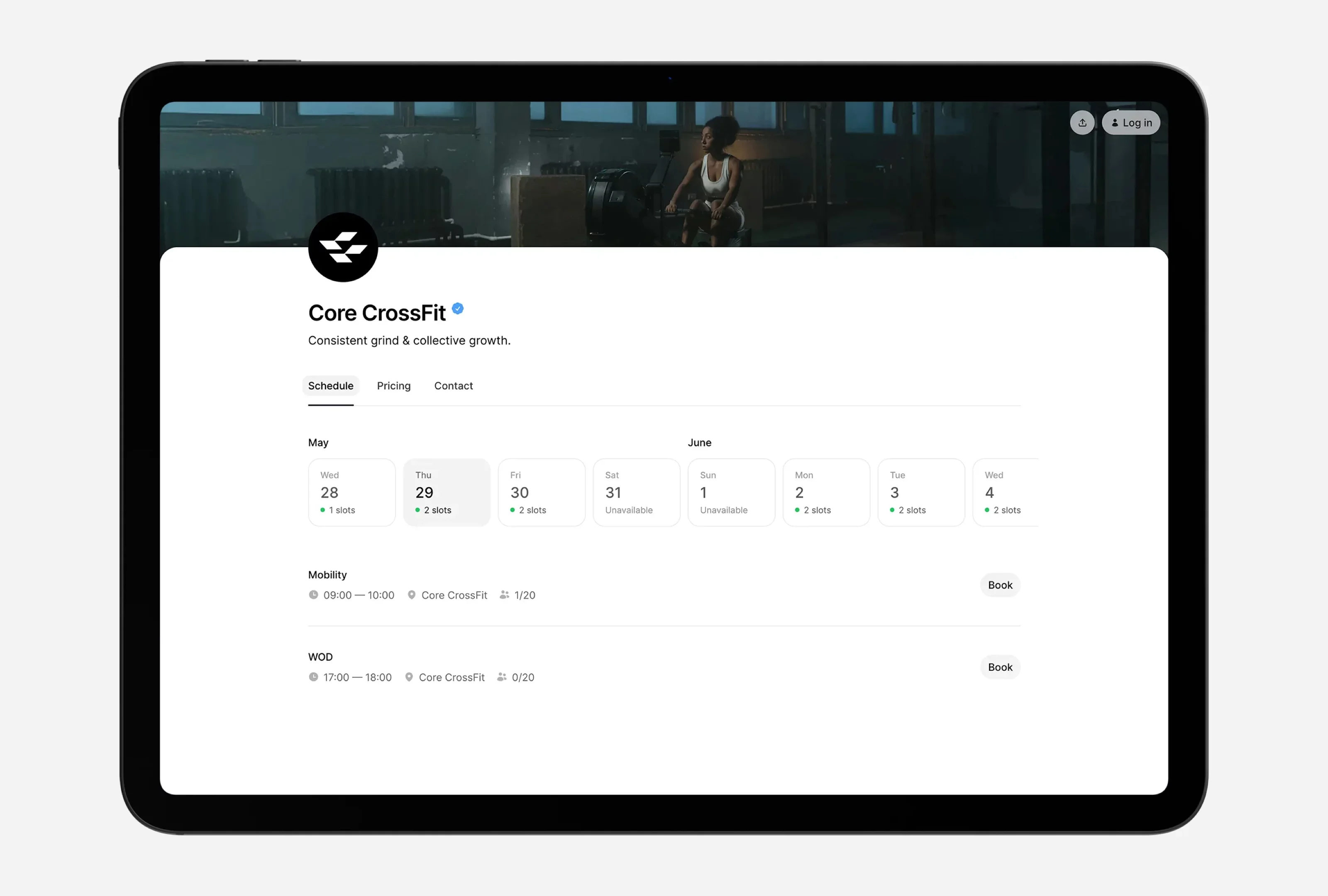
You need:
The mistake:
Using outdated or complex systems that:
- slow down booking
- confuse clients
- reduce conversions
Modern approach:
Use simple, fast tools like Time2book, where clients can:
- book in seconds
- pay instantly (Apple Pay / Google Pay)
- manage memberships easily
Cost:
- From $29/month billed yearly
Insight: Better booking experience = higher conversion = more revenue without extra marketing.
6. Marketing: What actually works in 2026
You don’t need a huge marketing budget—but you need the right strategy.
What works today:
- short-form video (Instagram, TikTok)
- real member transformations
- community-focused content
- referral programs
What doesn’t:
- generic ads
- stock photos
- complicated funnels
Budget:
- €500–€2,000 to start
Insight: The best marketing for CrossFit gyms is visible progress and community energy.
7. Staffing: Keep it lean early
Most CrossFit gyms don’t start with large teams.
Smart approach:
- owner as main coach
- part-time coaches for peak hours
Why:
- keeps costs low
- maintains quality
- builds culture
Costs:
- €15–€50 per class
- €1,500–€3,000/month for full-time
Insight: Culture comes from consistent coaching—not a large team.
Business plan to open a CrossFit gym
You don’t need a 50-page document. You need clarity on three things:
1. Your revenue model
Most CrossFit gyms make money from:
- monthly memberships
- intro programs
- personal training
Typical pricing:
- €80–€150/month memberships
- €100–€200 intro offers
2. Your capacity
Let’s say:
- 12 people per class
- 6 classes per day
- 26 days per month
That gives you ~1,800 monthly spots. Now, if you have: 120 members paying €100/month → €12,000 monthly revenue.
3. Your break-even point
If your monthly costs are €6,000–€8,000. You need: ~60–80 members to break even. Note, that most gyms become profitable between 80–120 members.
Frequently asked questions
The average cost to open a CrossFit gym in 2026 is typically between €50,000 and €100,000, with most new gyms landing around €60k–€80k.
This assumes:
- a medium-sized warehouse space
- essential equipment for 10–15 people per class
- basic renovation (flooring, lighting, branding)
- initial marketing and software setup
If you go lean—buying used equipment, starting smaller, and delaying upgrades—you can realistically launch closer to €30,000–€50,000.
On the other hand, premium builds with larger spaces, full equipment setups, and branding can easily exceed €120,000+.
The key takeaway: It’s not about how much you spend—it’s how quickly you can reach 80–120 paying members, where most CrossFit gyms become profitable.
Opening a CrossFit gym is significantly cheaper than opening a traditional commercial gym.
A standard gym often costs €150,000 to €500,000+, mainly because of:
- large space requirements
- expensive machines (cardio, resistance machines)
- higher buildout costs
- front desk and staffing needs
In contrast, CrossFit gyms:
- use open spaces instead of machines
- rely on group classes instead of walk-ins
- require fewer staff early on
- can operate in industrial locations with lower rent
This is why CrossFit is one of the most popular models for first-time gym owners—it offers a lower barrier to entry and faster path to profitability.
To open a CrossFit gym, you need more than just equipment. The essentials fall into five core areas:
1. Space A functional training space with high ceilings and open layout. Industrial units are ideal.
2. Equipment Rigs, barbells, bumper plates, kettlebells, rowers or bikes, and rubber flooring. You don’t need everything on day one—just enough to run classes efficiently.
3. Certification and coaching At least one qualified coach (CrossFit Level 1 or equivalent). Coaching quality is one of the biggest drivers of retention.
4. Legal and insurance setup Business registration and liability insurance are essential for operating safely and professionally.
5. Booking and payment system This is critical. You need a system that allows clients to:
- book classes easily
- pay online instantly
- manage memberships
Without this, you’ll quickly run into admin issues and lost revenue.
A CrossFit gym can be very profitable—but only if it reaches a stable member base and controls costs.
Here’s a simple example:
- 100 members paying €100/month = €10,000/month revenue
Typical monthly costs:
- rent + utilities: €2,000–€5,000
- coaching: €2,000–€4,000
- software + marketing: €300–€1,000
This leaves €3,000–€6,000+ monthly profit before taxes in many cases.
The key drivers of profitability are:
- member retention (how long people stay)
- class capacity utilization
- pricing structure
- operational efficiency (automation, systems)
Most gyms break even at around 60–80 members and become solid businesses at 100–150+ members.
No—you can open a functional fitness gym without affiliating with CrossFit.
However, affiliation (typically around €3,000/year) gives you:
- the ability to use the CrossFit brand
- credibility with new clients
- access to the global CrossFit network
That said, many successful gyms:
- build their own brand
- avoid affiliation fees
- focus on local community instead
If you’re starting out, affiliation can help with trust—but long-term success depends far more on coaching and experience.
Most CrossFit gyms can be opened within 4 to 12 weeks, depending on how prepared you are.
Typical timeline:
- 1–2 weeks: finding and securing a location
- 2–6 weeks: renovation and equipment setup
- 1–2 weeks: marketing and pre-sales
You can speed this up significantly if:
- the space is already suitable
- you start pre-selling memberships early
- you use ready-to-go tools like Time2book for bookings and payments
Many successful gyms start selling memberships before they even open, which helps fund the final setup.
Yes—and this is more important than most people think.
From day one, you need to:
- manage class schedules
- handle memberships and renewals
- accept payments
- track attendance
Without software, you’ll end up:
- chasing payments manually
- dealing with booking confusion
- losing clients due to friction
Modern tools like Time2book make this simple by allowing clients to:
- book in seconds
- pay instantly (especially on mobile)
- manage everything themselves
In 2026, your booking experience is part of your brand. A slow or confusing system directly costs you revenue
Final thoughts
Opening a CrossFit gym in 2026 is not about spending the most—it’s about building the smartest setup.
The gyms that succeed:
- start lean
- grow with demand
- focus on experience
- make booking and payments effortless
That last part is often underestimated.
Because in 2026, the difference between a full class and an empty one is often just how easy it is to book.
Try Time2book free today and simplify your CrossFit gym bookings, memberships, and payments—all in one place.