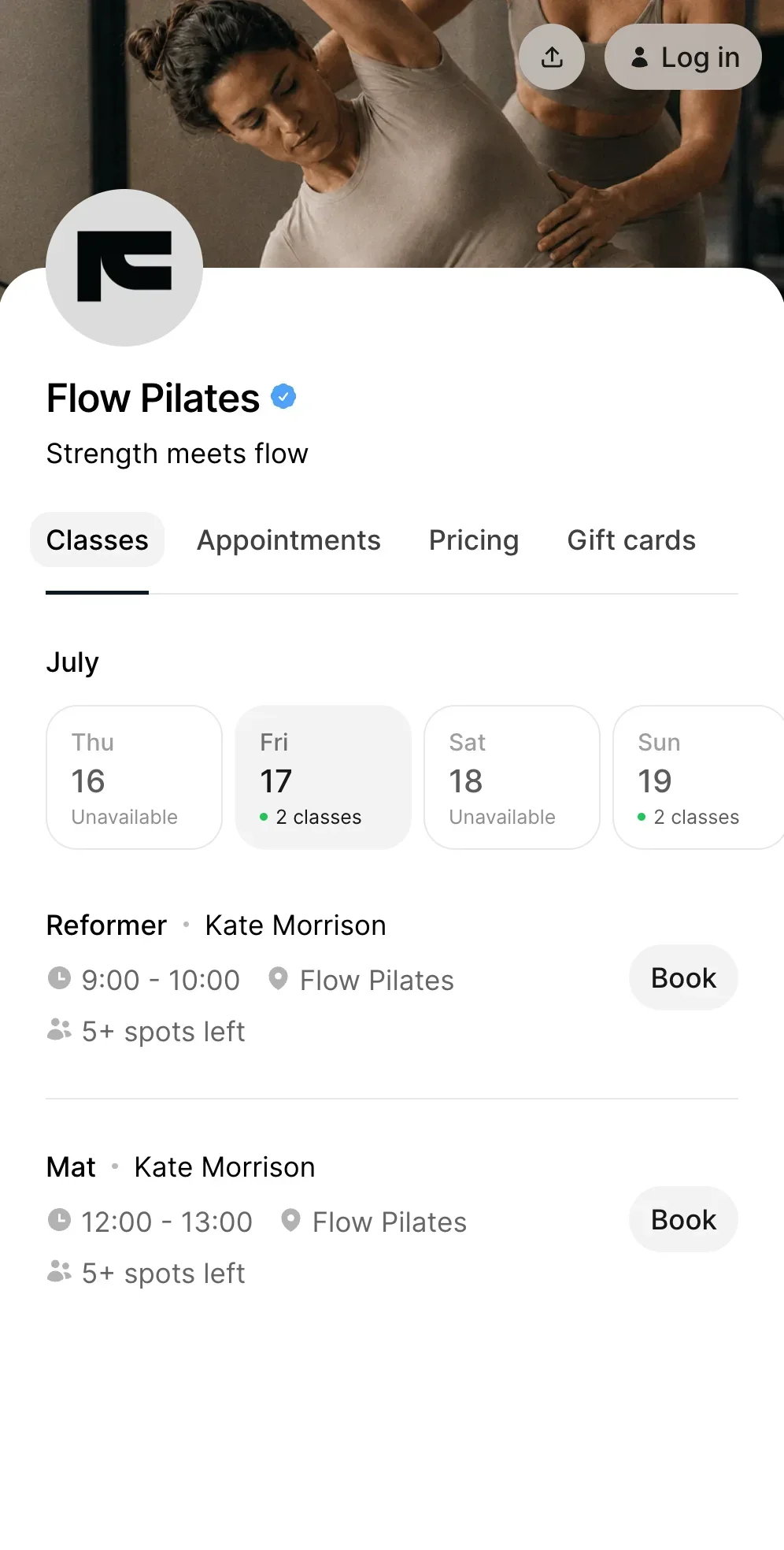
Appointment scheduling
Appointment scheduling is the process of booking one-on-one time slots between a business and a client, usually for services like personal training, consultations, or treatments.
It allows clients to choose available time slots and book appointments without manual coordination.
What is appointment scheduling and how does it work?
Appointment scheduling enables clients to book specific time slots based on availability.
Here’s how it works:
- A business sets available time slots
- Clients view available appointments online
- Clients select and book a time
- The system confirms the booking
- Reminders are sent before the appointment
Appointment scheduling is typically handled through an online booking system and supported by scheduling software.
Why appointment scheduling is important
Managing appointments manually can be time-consuming and inefficient.
Appointment scheduling helps:
- Eliminate back-and-forth communication
- Reduce missed bookings
- Improve time management
- Keep schedules organized
It ensures both clients and businesses know exactly when sessions are booked.
Example of appointment scheduling in action
A personal trainer offers one-on-one sessions.
- Sets availability for the week
- Clients book available time slots online
- The system confirms the appointment
- Clients receive reminders before the session
This removes the need for manual scheduling via messages or calls.
How appointment scheduling supports business operations
Appointment scheduling is a key part of managing service-based businesses.
It helps businesses:
- Organize daily schedules
- Manage availability in real time
- Reduce scheduling conflicts
- Improve overall efficiency
It becomes even more powerful when combined with automation and payments.
How appointment scheduling connects with other systems
Appointment scheduling works together with:
These systems create a seamless booking experience.
Benefits of appointment scheduling
- Time savings Reduces manual scheduling work.
- Fewer conflicts Prevents overlapping bookings.
- Better client experience Clients can book easily online.
- Improved organization All appointments are tracked in one place.
- Higher attendance Reminders reduce missed appointments.
Who uses appointment scheduling?
Appointment scheduling is used by:
- Pilates studios
- Yoga studios
- Gyms
- Dance studios
- Personal trainers
- Spin studios
- Pole dance studios
- CrossFit gyms
- Boxing gyms
Any business offering one-on-one services benefits from it.
What to consider when setting up appointment scheduling
When setting up appointment scheduling, businesses should define:
- Available time slots
- Session duration
- Buffer time between appointments
- Cancellation policies
- Payment requirements
Clear setup helps avoid scheduling issues.
Common mistakes in appointment scheduling
Some businesses struggle with inefficient scheduling setups.
Common mistakes include:
- Not setting buffer times between sessions
- Overbooking or overlapping appointments
- Not using reminders
- Allowing last-minute cancellations without rules
Optimizing these areas improves efficiency.
Key takeaway
Appointment scheduling helps businesses manage one-on-one bookings efficiently, reduce manual work, and improve client experience.
When combined with automation and payments, it becomes a core part of running a service-based business.
Frequently asked questions
Appointment scheduling is the process of booking one-on-one time slots between a business and a client.
Clients select available time slots and book appointments, while the system manages availability automatically.
Yes. Modern systems automate confirmations, reminders, and updates.
Yes. It saves time and improves organization.
Yes. Especially when combined with automated reminders and policies.
Appointment scheduling with Time2book
Time2book lets clients book appointments easily while you manage availability, payments, and reminders in one place.