Mindbody is one of the biggest names in fitness and wellness software. But for many smaller studios, that does not automatically make it the best fit.
If you run a Pilates studio, yoga studio, dance studio, boxing gym, or another class-based business, you may be looking for something simpler, more affordable, and easier for both staff and clients to use.
That is where this guide comes in.
We compared the best Mindbody alternatives in 2026 with a focus on what smaller studios usually care about most:
- clear pricing
- easy setup
- smooth booking experience
- memberships and class packs
- online payments
- client management
- less complexity day to day
As of August 2026, Mindbody says its pricing starts at $79 per month per location in the United States, and its Starter plan includes booking, payments, reporting, website booking tools, and a listing in the Mindbody consumer app.
Mindbody alternatives at a glance
| Software | Best for | Starting price |
|---|---|---|
| Time2book | Small and growing studios that want simplicity | $39/mo or $29/mo annually |
| Momoyoga | Yoga teachers and small yoga studios | Free; Standard €29/mo annually |
| Momence | Studios wanting marketing and online content | Free; Pro $60/mo |
| WellnessLiving | Feature-heavy, growing businesses | From $69/mo |
| Glofox | Larger gyms and fitness brands | From $99/mo |
| Vagaro | A low entry price with add-ons | From $23.99/mo in the US* |
| Arketa | Premium boutique studios | Demo and quote |
| PushPress | Gyms and CrossFit boxes | Free; Pro $159/mo |
| LegitFit | European gyms and studios | Custom quote |
*Limited-time US price. Pricing checked in August 2026 and may vary by country, plan, and add-ons.
Why studio owners look for Mindbody alternatives
Mindbody has a big feature set, but that is not always a good thing for smaller businesses. A lot of studios are not trying to run a large multi-location operation. They just want software that helps them:
- Publish a schedule
- Accept bookings
- Take payments
- Sell memberships and packs
- Track clients
- Reduce admin work
For smaller studios, the biggest complaint is often not that Mindbody lacks features. It is that the software can feel heavier than the business actually needs.
That is why choosing an alternative is usually less about finding a tool with the most features, and more about finding one with the right balance of simplicity and capability.
How we evaluated the alternatives
This comparison is focused on smaller studios, not enterprise chains.
We looked at five practical things:
1. Pricing clarity
Can you actually understand what you will pay before speaking to sales?
2. Ease of setup
Can a studio owner get started without a long onboarding process?
3. Booking experience
Is it easy for clients to book and pay?
4. Core features
Does it cover classes, appointments, memberships, payments, reminders, and client data?
5. Fit for smaller teams
Does it feel built for studios with limited time, limited staff, and a need to move fast?
Best Mindbody alternatives in 2026
1. Time2book
Best for: small studios that want something simple, modern, and easy to run
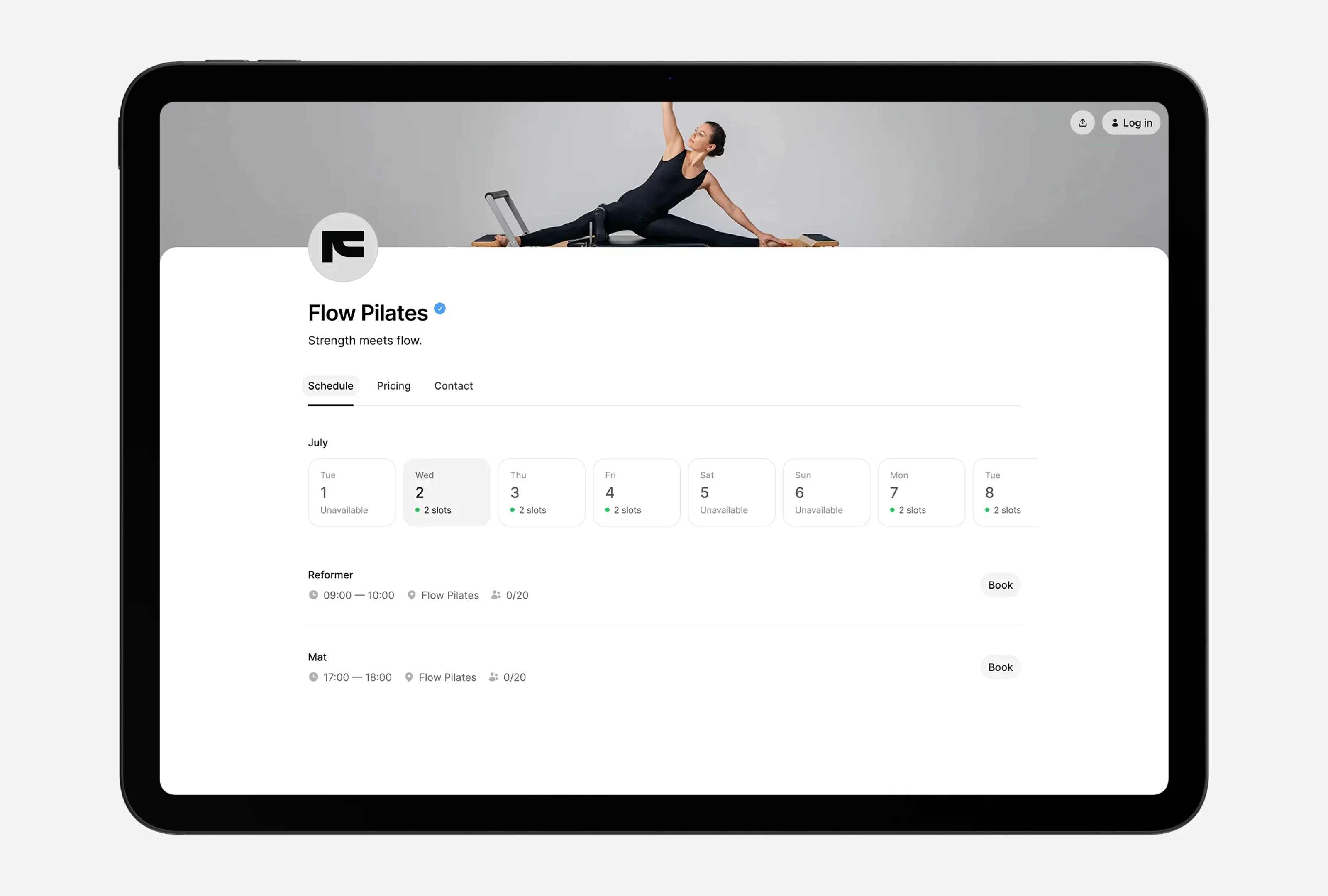
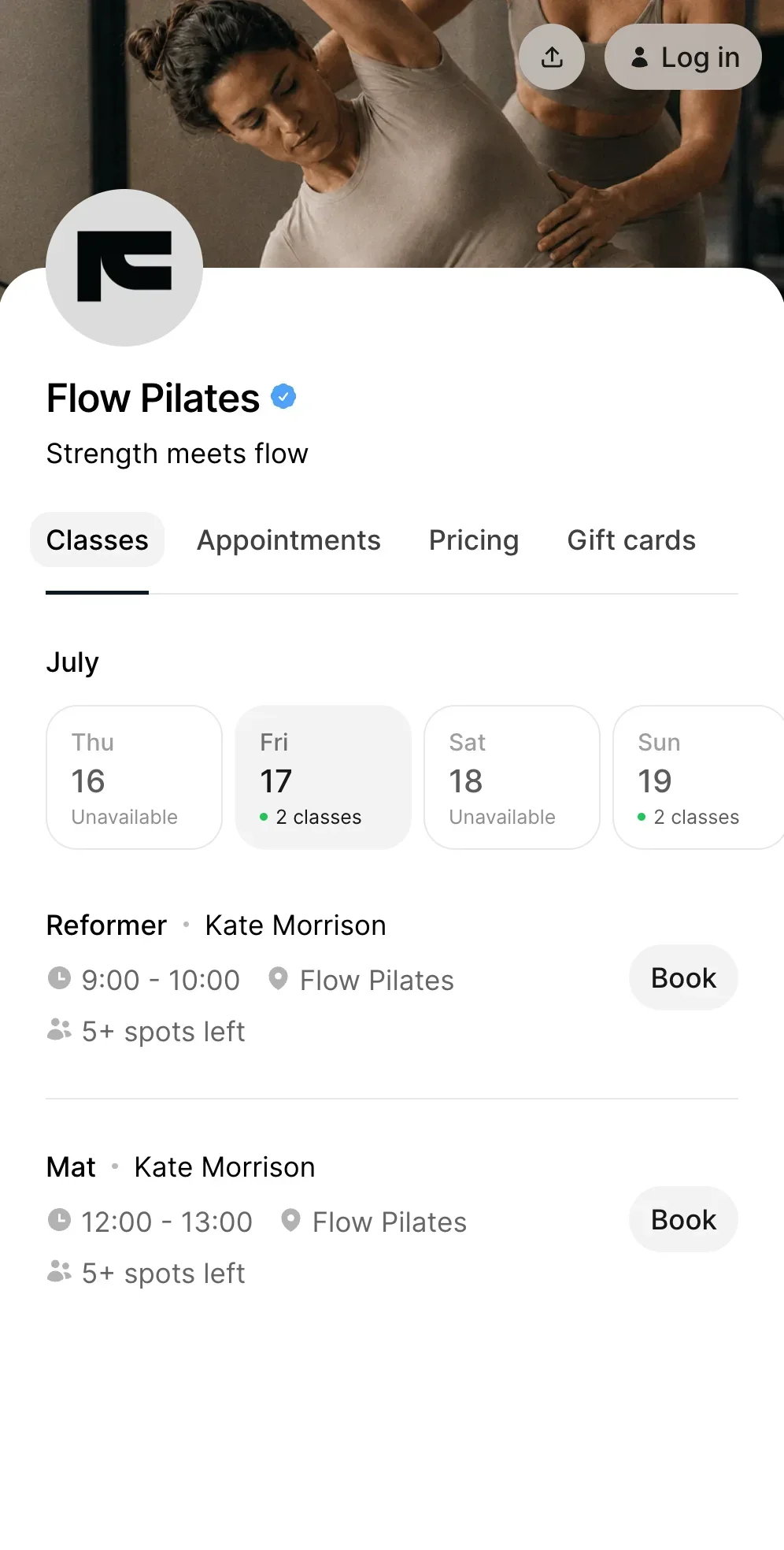
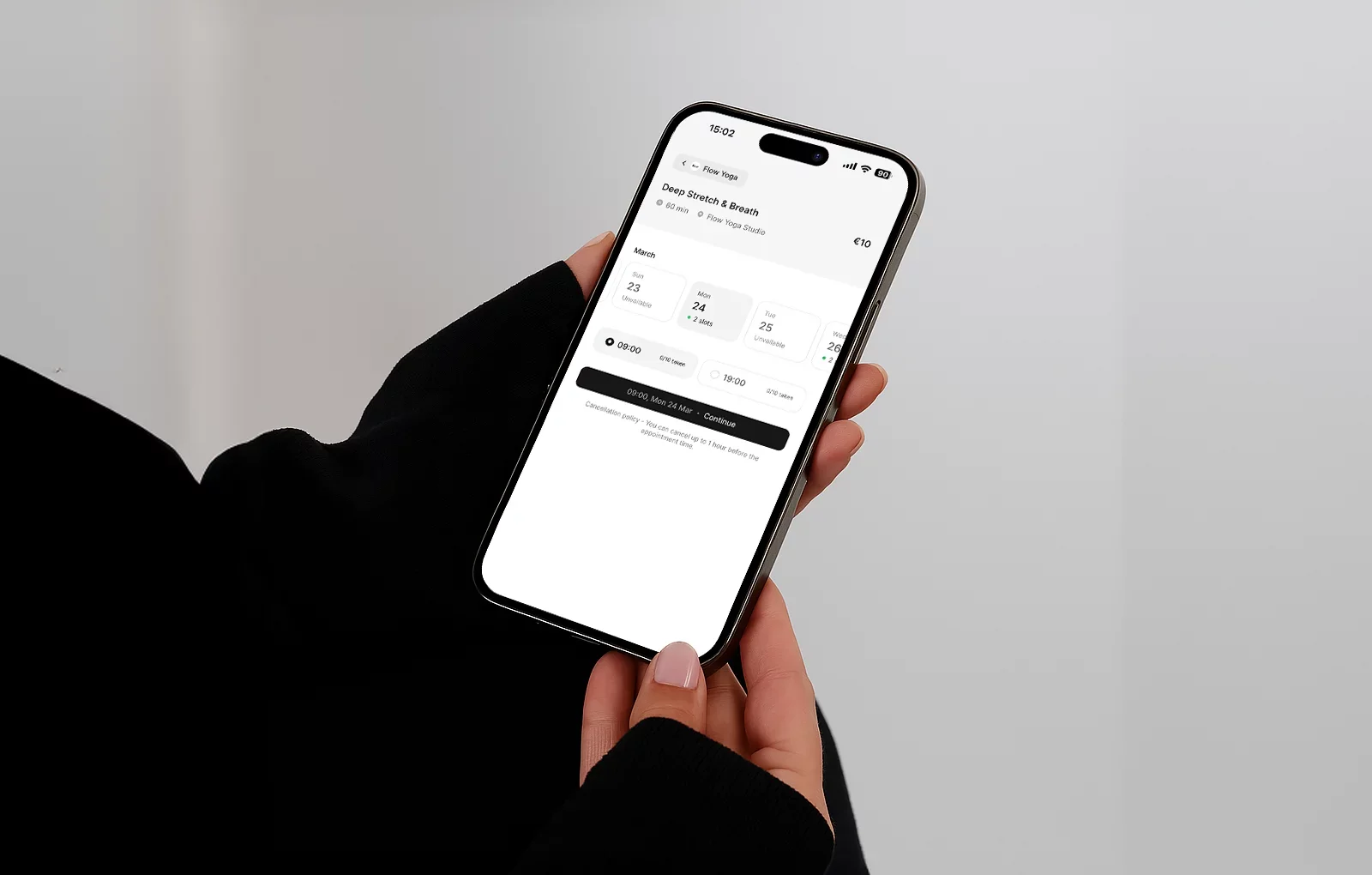
Time2book is a strong Mindbody alternative for smaller studios that do not want to fight with their software every day.
The big difference is the feel of the product. It is built around simplicity. That matters more than many software companies admit. If your staff can learn it quickly and your clients can book without confusion, that alone saves time and protects revenue.
On its pricing page, Time2book offers a free trial and lists plans starting at $29 per month billed yearly or $39 billed monthly for the Starter plan. It also lists Growth at $59 yearly or $79 monthly, Professional at $99 yearly or $129 monthly, and Business at $199 yearly or $259 monthly. All plans include unlimited bookings. Features include class scheduling, client management, online payments, Apple Pay and Google Pay, recurring memberships, waitlist, reminders, analytics, integrations, branded emails, website integration, and more.
Why it stands out
For smaller studios, Time2book feels focused on the essentials that actually matter:
- Online booking
- Payments
- Class packs and memberships
- Client management
- Attendance tracking
- Reminders and notifications
- Clean checkout flow
It is a good fit if your studio wants modern booking software without the weight of a bigger platform.
Pros
- Transparent pricing
- Easy to understand
- Built for small and growing studios
- Modern client experience
- Good balance between features and simplicity
Cons
- Not aimed at large enterprise chains
- Fewer “big platform” layers than some legacy tools
Best fit
Choose Time2book if your studio is saying: “We want less complexity, not more.”
2. Momoyoga
Best for: yoga teachers
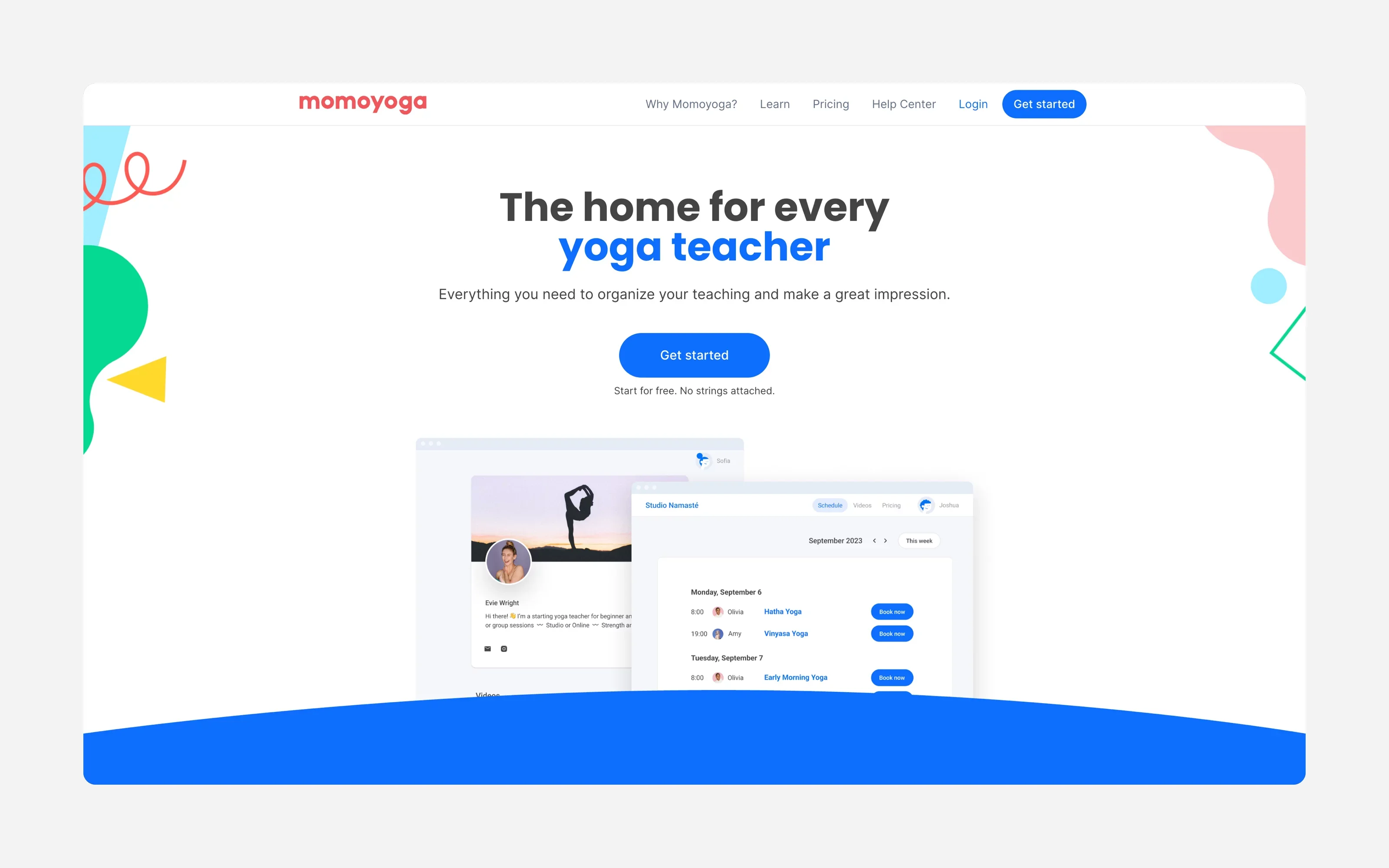
Momoyoga is one of the clearest niche alternatives to Mindbody. It is built specifically for yoga businesses, and that focus is its biggest advantage.
On its official pricing page, Momoyoga lists a Standard plan at €29 per month billed annually, a Plus plan at €59 per month billed annually, and a Custom plan at €179 per month paid yearly. Its Standard plan includes unlimited memberships and class passes, booking and cancellation windows, waitlists, donation payments, and export functionality. The Plus plan adds branding, recurring memberships, promo codes, customizable emails, custom payment integrations, Mailchimp integration, and multiple admin accounts.
Why it stands out
Momoyoga is appealing because it does not try to be everything for everyone. For a yoga studio, that can be a huge plus.
It is more focused and often easier to understand than broader wellness software. If your business mainly runs yoga classes, memberships, passes, and events, the product direction makes sense.
Pros
- Built with yoga teachers in mind
- Clear pricing
- Good feature depth for class-based yoga businesses
Cons
- More niche than broader studio platforms
- Less flexible if you run a wider fitness business outside that focus
Best fit
Choose Momoyoga if you are a yoga teacher that wants software that feels tailored to your business, not generic.
3. Momence
Best for: studios that want more platform breadth and are open to a more layered setup
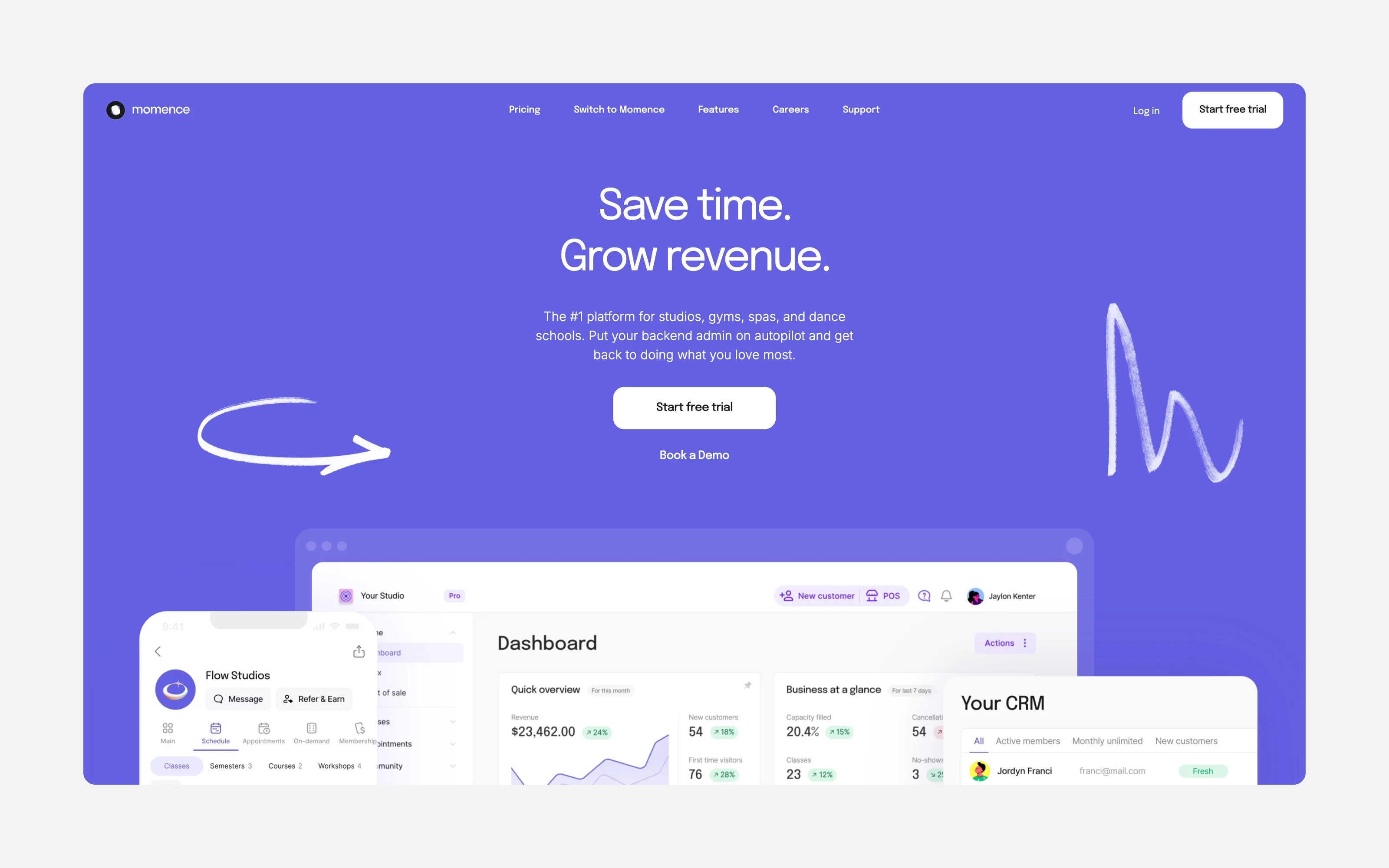
Momence positions itself as a broader platform for experiences and studio operations. Compared with simpler tools, it leans more into platform depth.
On its official pricing page, Momence shows a Custom plan at $199 per month, alongside payment processing fees by country. The page says the Basic plan includes booking management, payments, and 24/7 support, but also says there are no add-ons, no phone number, no inbox, no retail products, no reporting or insights, no staff members, and no locations. The Pro plan is described as for growing businesses, while the Custom plan includes unlimited add-ons, dedicated support, and no fees on payments from Momence itself, separate from standard processing fees.
Momence’s pricing page also lists country-specific processing fees, including 3.9% + $0.30 for online card payments in the U.S. and 2.5% + 20p for online card payments in the U.K.
Why it stands out
Momence can make sense for studios that want more than simple scheduling. It is a better fit when a business wants a broader operating system and is comfortable with more moving parts.
That can be a strength, but it can also be a downside for smaller teams that want speed and clarity more than breadth.
Pros
- Broader platform approach
- More room to grow into advanced needs
- Support for multiple business setups
Cons
- Difficult to setup, requires technical knowledge
- More layered than simpler alternatives
- Pricing can become harder to compare cleanly because fees matter too
- Smaller studios may not need the extra complexity
Best fit
Choose Momence if you want something more advanced and are comfortable spending more time learning the platform.
4. WellnessLiving
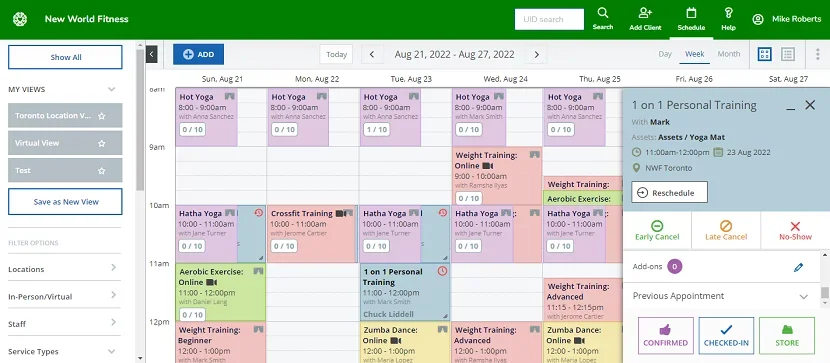
Best for: businesses that want a more full-featured platform and do not mind a more sales-led buying process
WellnessLiving is another major alternative to Mindbody and often comes up in the same conversations. It appears to target businesses that want strong feature coverage and room to scale.
On its official pricing page, WellnessLiving lists Starter at $69 per month, Business at $199 per month, BusinessPro at $349 per month, and Enterprise as custom. It also displays promotional “save” pricing for some plans on the same page, plus a yearly view with different monthly amounts. The feature list includes classes and appointments booking, a client app, a staff app, POS and credit card processing, notifications, rewards and loyalty, event scheduling, email and text marketing, lead management, and free data migration.
Why it stands out
WellnessLiving looks appealing when your business wants a lot inside one system. It is more of a bigger-platform option than a minimal one.
For a smaller studio, the question is not whether it can do enough. It is whether you actually want the additional platform weight that comes with that.
Pros
- Broad feature set
- Good fit for growing operations
- Includes marketing and lead tools
Cons
- Pricing page is more complex to parse because of promo-style pricing
- Likely more than some small studios need
- More “platform” feel than “simple tool” feel
Best fit
Choose WellnessLiving if you want a feature-rich platform and are comfortable with a more substantial system.
5. Glofox
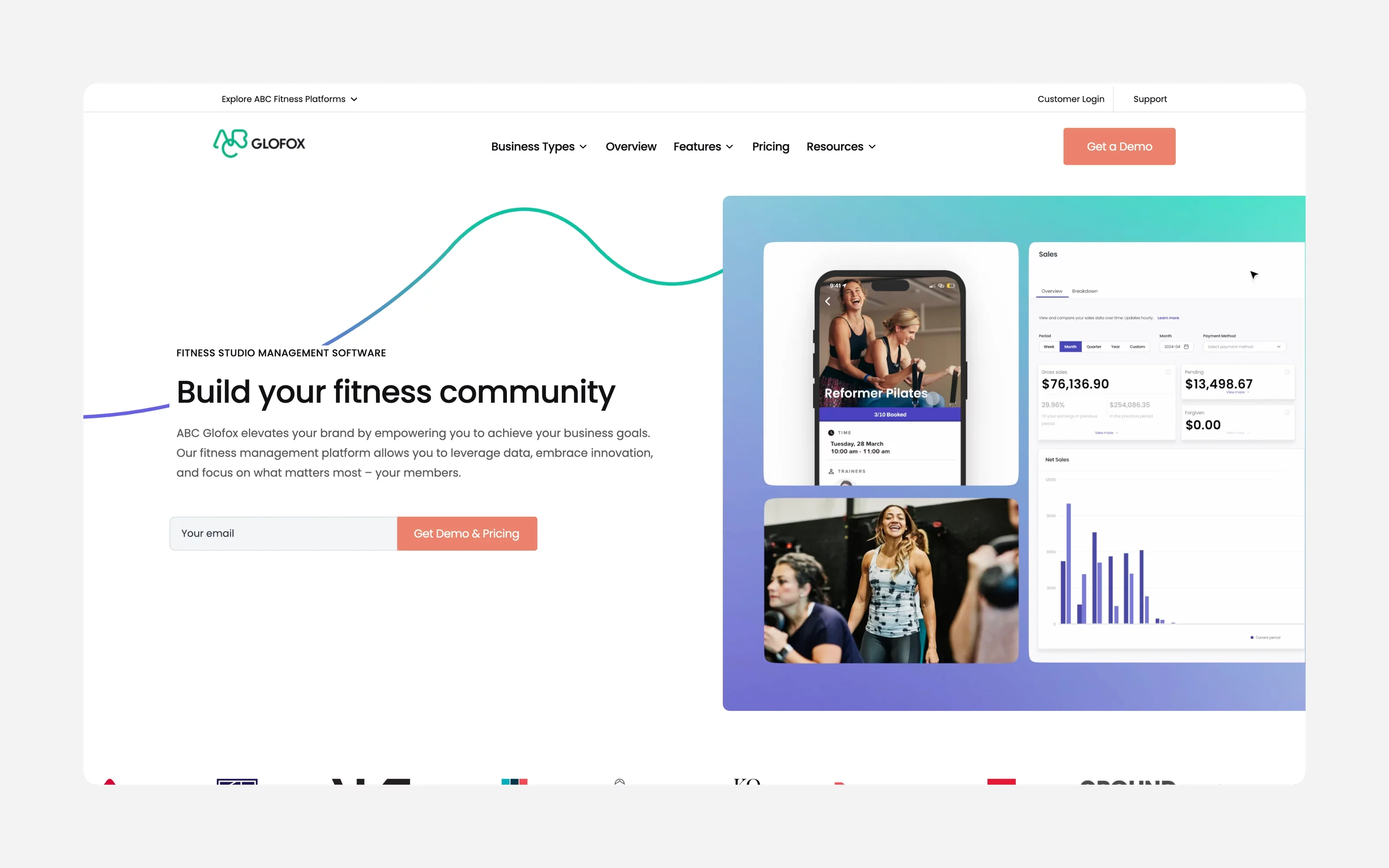
Best for: larger gyms, fitness brands, and businesses thinking about scale
Glofox is more gym and boutique fitness oriented than some of the smaller-studio alternatives here.
On its official site, Glofox says it helps businesses get memberships, bookings, and payments from websites, social media, and mobile apps, and it highlights member engagement through texts, emails, and push notifications. Its plans page says Glofox has a simple monthly price and that pricing is locked for life even as new features are added, though the publicly visible page content does not show a straightforward public plan table in the way some competitors do.
Why it stands out
Glofox feels more aimed at fitness businesses that want a stronger operational and member engagement platform, often at a bigger-business level than a small independent studio.
That makes it a strong option for some, but not automatically the best one for a small studio trying to keep things lean.
Pros
- Fitness-focused
- Strong growth and engagement positioning
- Suitable for larger or more ambitious operations
Cons
- Less transparent public pricing than simpler alternatives
- May be more than a small studio needs
- Not the most obvious “simple and affordable” option
Best fit
Choose Glofox if you are running a more established fitness business and want a platform that feels built for growth, apps, and broader engagement.
6. Vagaro
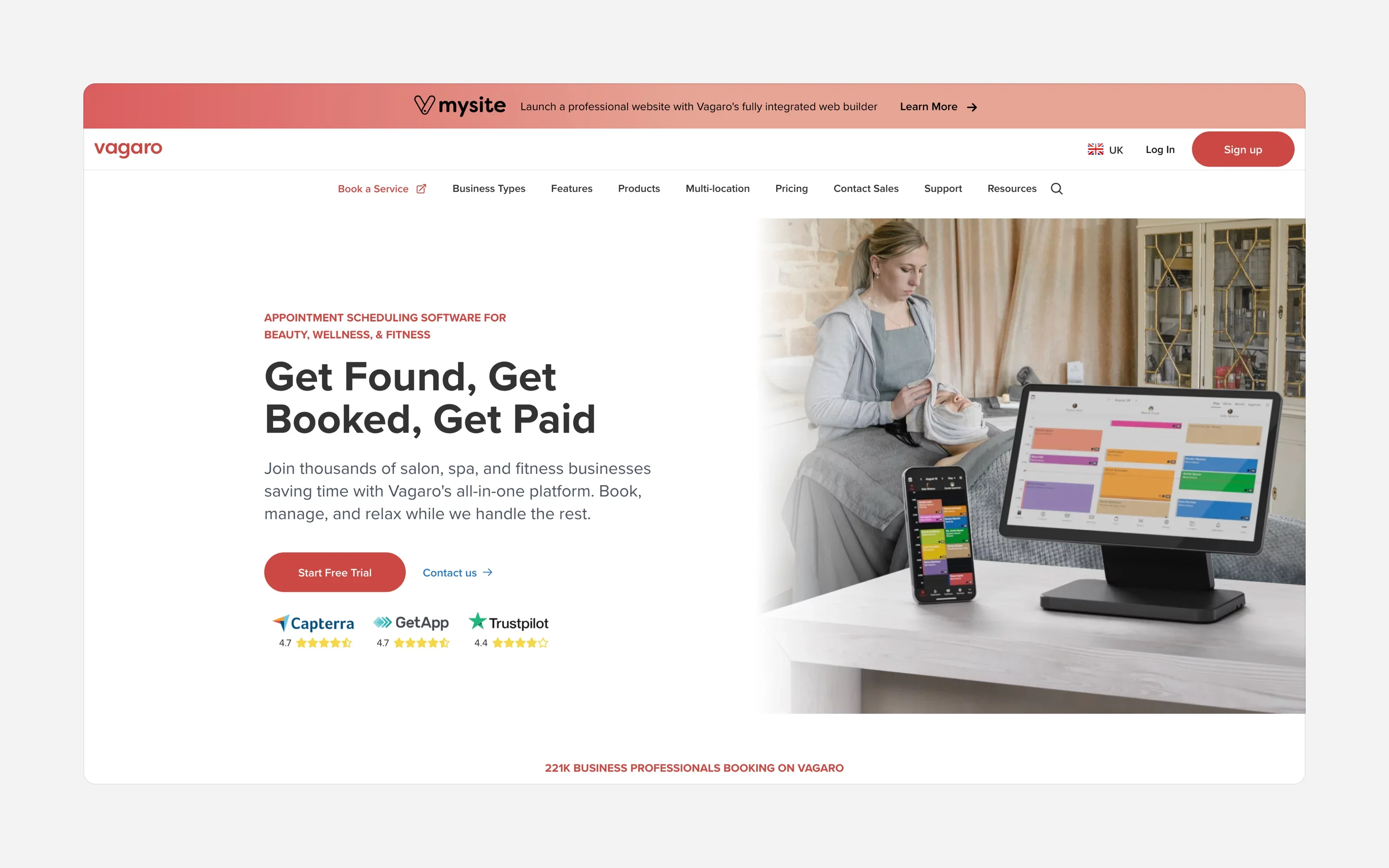
Best for: businesses that want a low entry price and customizable add-ons
Vagaro is widely used across beauty, wellness, and fitness, which makes it more mixed than some fitness-specific tools.
From Vagaro’s own 2026 comparison content, it says pricing starts at $23.99 per month and positions itself as lower-entry, without forcing businesses into strict tiers.
Why it stands out
Vagaro can be attractive if low starting cost matters a lot and you want flexibility through add-ons.
The tradeoff is that low base pricing does not always mean lowest overall cost. With add-on models, total pricing depends more on what your business ends up needing.
Pros
- Flexible structure
- Works across several business types
Cons
- Less focused specifically on boutique fitness
- Add-on style pricing can become harder to compare
- Some studios prefer more modern, simpler UX
Best fit
Choose Vagaro if your top priority is a low entry point and you are comfortable piecing together what you need.
Other Mindbody competitors worth knowing
These platforms also come up when studios compare Mindbody alternatives. They suit more specific needs:
- Arketa: a polished option for premium boutique studios that want a branded website, app, and online content.
- PushPress: built for gyms and CrossFit boxes, with a free starter plan.
- LegitFit: popular with European gyms and studios.
Best Mindbody alternative for Pilates studios
Pilates studios have needs that general gym software often handles poorly: limited reformer capacity, waitlists that fill cancelled spots quickly, and a mix of group classes and private sessions.
For small and growing Pilates studios, Time2book covers these in one system: reformer capacities, waitlists, private and semi-private appointments, memberships, class packs, and payments. Studios that need marketplace exposure or run many locations may still prefer Mindbody, Mariana Tek, or bsport.
For a full comparison, see the best Pilates software in 2026, or read how to run a Pilates studio without Mindbody.
What matters most when switching from Mindbody
This is where a lot of comparison posts stay too shallow. The best software is not the one with the longest feature list. It is the one that makes your business easier to run. When switching from Mindbody, pay attention to these six things:
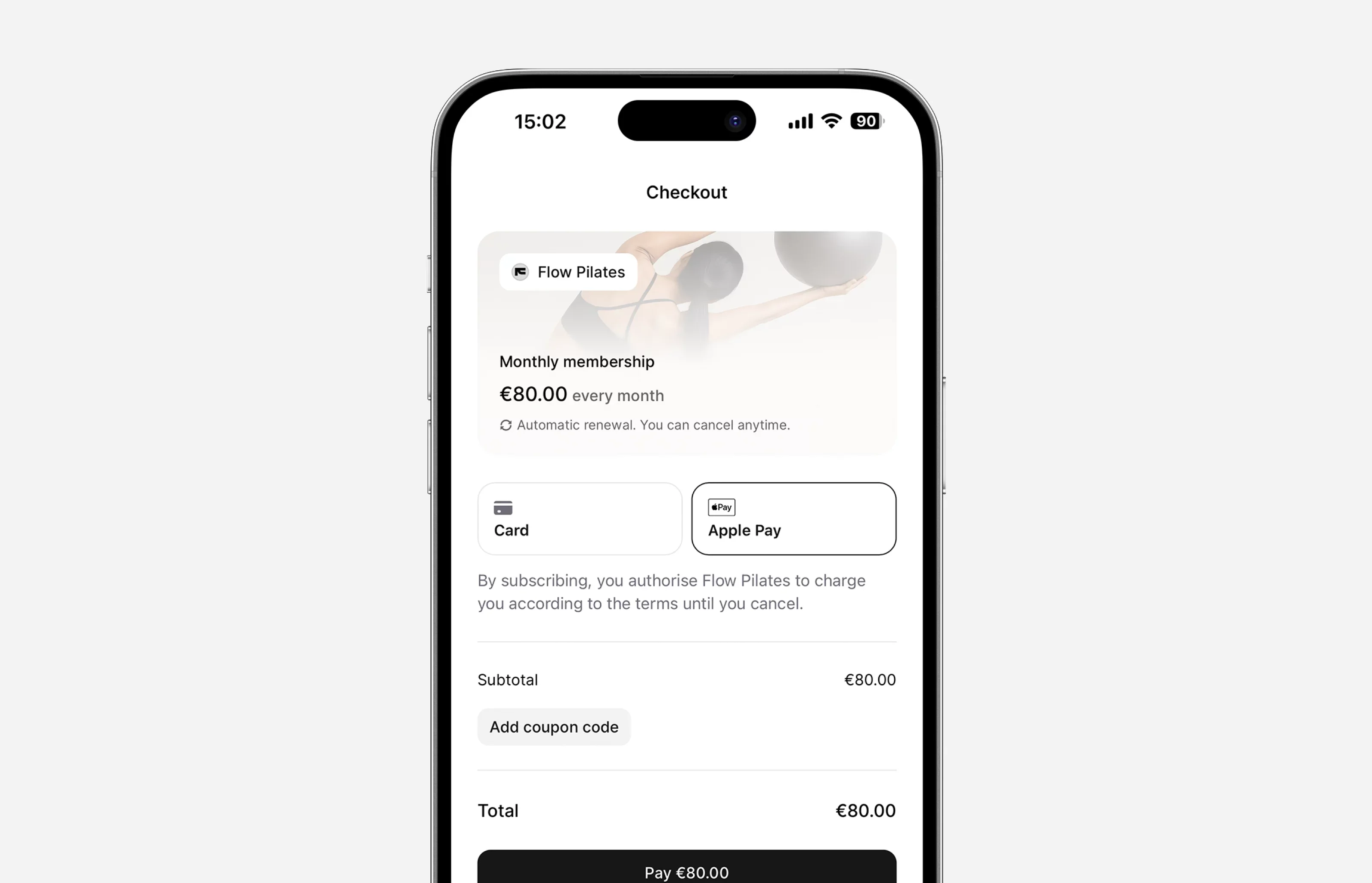
1. How fast can your clients actually book?
A studio can lose bookings when the flow feels slow, confusing, or too heavy. For example, booking a class with Time2book takes about 40 seconds on average.
Look for:
- Fast schedule browsing
- Easy checkout
- Clear pricing plans
- Mobile-friendly booking
- Smooth repeat purchases
2. Are memberships and packs easy to manage?
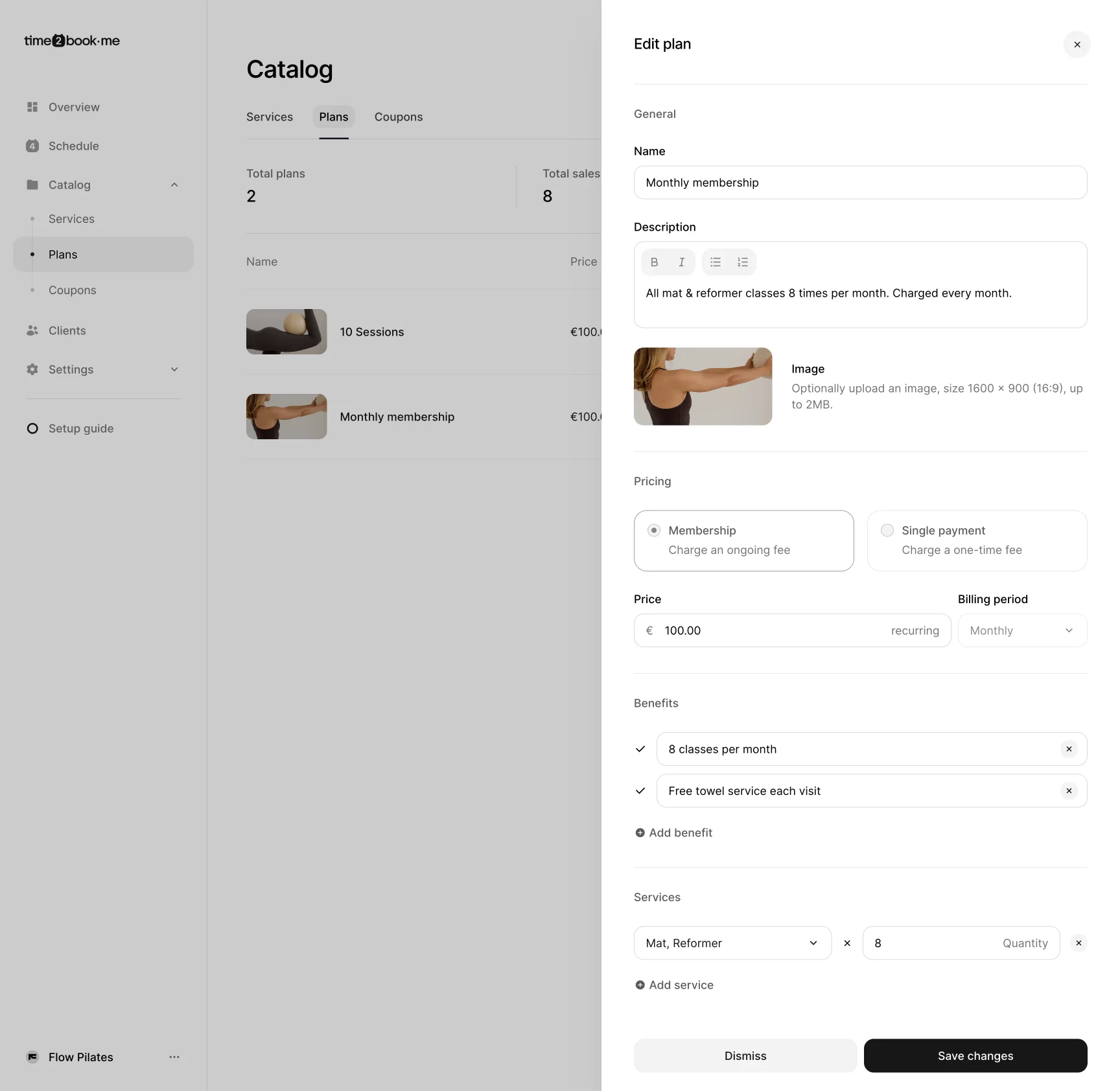
For most studios, revenue is not only about one-off bookings. It is about recurring memberships, class packs, renewals, and simple plan logic.
Look for:
- Recurring memberships
- Packs and passes
- Promo codes
- Renewal controls
- Easy staff-side editing
3. How much admin work does it remove?
The right software should reduce messages, manual edits, and daily cleanup.
Look for:
- Reminders
- Attendance tracking
- No-show visibility
- Simple client notes
- Clear reporting
4. Is pricing actually clear?
A low starting price can look great until payment fees, upgrades, add-ons, or locked tiers start stacking up. Tools like Momence might have additional pricing, that shows up later after setting up. This might grow your costs unexpectedly.
Always ask:
- What is the real monthly cost?
- What is included?
- What costs extra?
- What happens as I grow?
5. Will your staff actually enjoy using it?
This matters more than people think. If the software feels hard to navigate, your team will create workarounds, skip steps, and make mistakes. That hurts operations and client experience.
6. Does it fit your business size?
A solo yoga teacher and a 12-location gym chain do not need the same software. Smaller studios often do better with tools that are focused, lightweight, and easier to manage.
Mindbody migration checklist before you switch
Before moving away from Mindbody, make sure you have these covered:
Export and cleanup
- Client list
- Active memberships
- Class pack balances
- Schedule structure
- Staff accounts
Payments
- Card processing setup
- Payout timing
- Recurring plan logic
- Refund and cancellation rules
Booking flow
- Test class booking
- Test appointment booking
- Test mobile checkout
- Test membership purchase
Messaging
- Booking confirmations
- Reminders
- No-show handling
- Waitlist notifications
Launch plan
- Choose a switch date
- Tell clients what is changing
- Update your website booking buttons
- Test everything before going live
This is often where a simpler platform wins. If setup is clearer, migration becomes much less stressful. If you need help migrating from Mindbody, feel free to contact us.
Final verdict
Mindbody can still make sense for some businesses. But for smaller studios, it is often not the most practical option anymore. A lot of studio owners are not looking for a bigger system. They are looking for a better one.
Here is the simplest way to think about it:
- Choose Time2book if you want simplicity, transparent pricing, and a modern booking experience for a small studio
- Choose Momoyoga if you run a yoga-first business and want a niche fit
- Choose Momence or WellnessLiving if you want more platform depth and can handle more complexity
- Choose Glofox if you are operating at a larger fitness-business level
For most smaller studios, the winning move is usually not “more software.” It is less friction.
FAQ
For many small studios, the best fit is usually the platform that combines easy setup, clear pricing, and a smooth client experience. Time2book stands out most clearly for that kind of use case. Time2book’s pricing starts at $29 per month billed yearly, or $39 billed monthly.
It can be. Mindbody says plans start at $79 per month per location, which may feel reasonable for larger operations but can feel heavy for smaller studios comparing simpler alternatives.
For small and growing studios, Time2book covers reformer capacities, waitlists, private and semi-private appointments, memberships, class packs, and payments in one system.
Yes, but it depends on how organized your migration is. The safest path is to prepare your client data, memberships, payments, booking flow, and launch communication before switching.
The most common reasons are cost once add-ons and fees are included, a steeper learning curve for staff, and a booking flow that can push clients towards the Mindbody app. Smaller studios often want simpler software that covers bookings, payments, memberships, and client management.
Mindbody's main competitors include Time2book, Momence, Glofox, WellnessLiving, Vagaro, Momoyoga, Arketa, PushPress, and LegitFit. Which one fits best depends on your studio's size, the type of sessions you run, and how much complexity your team is willing to manage.