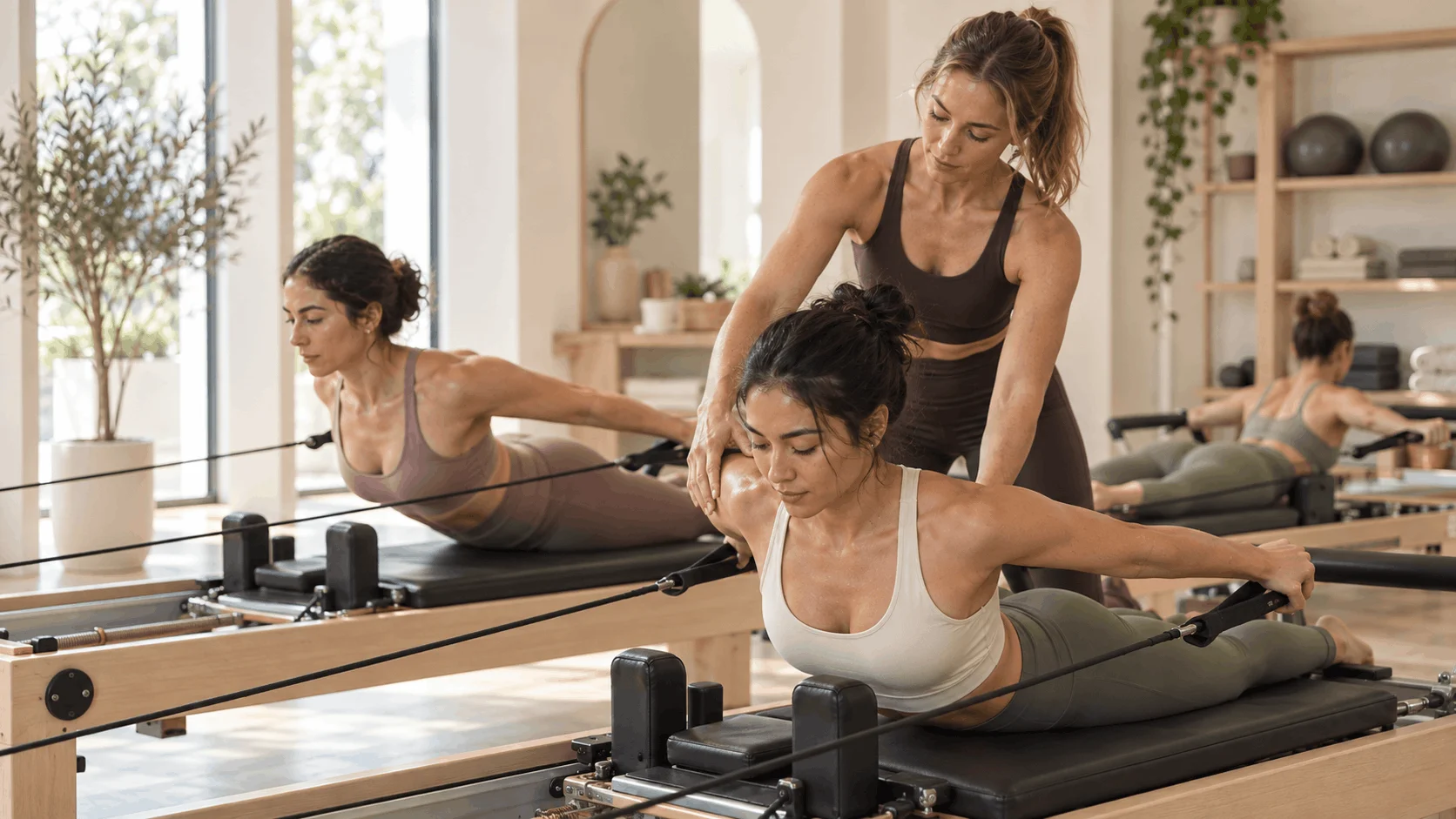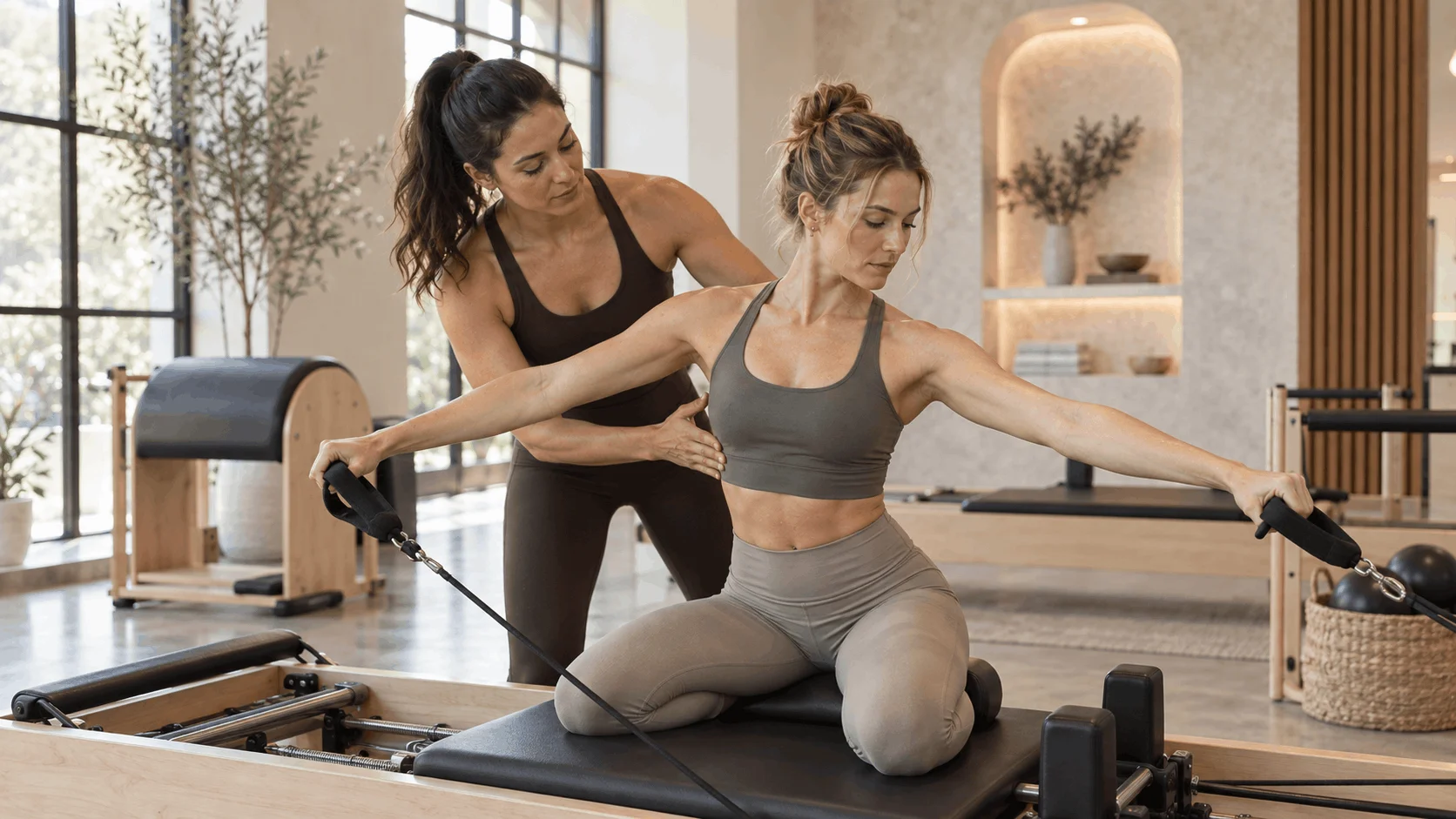
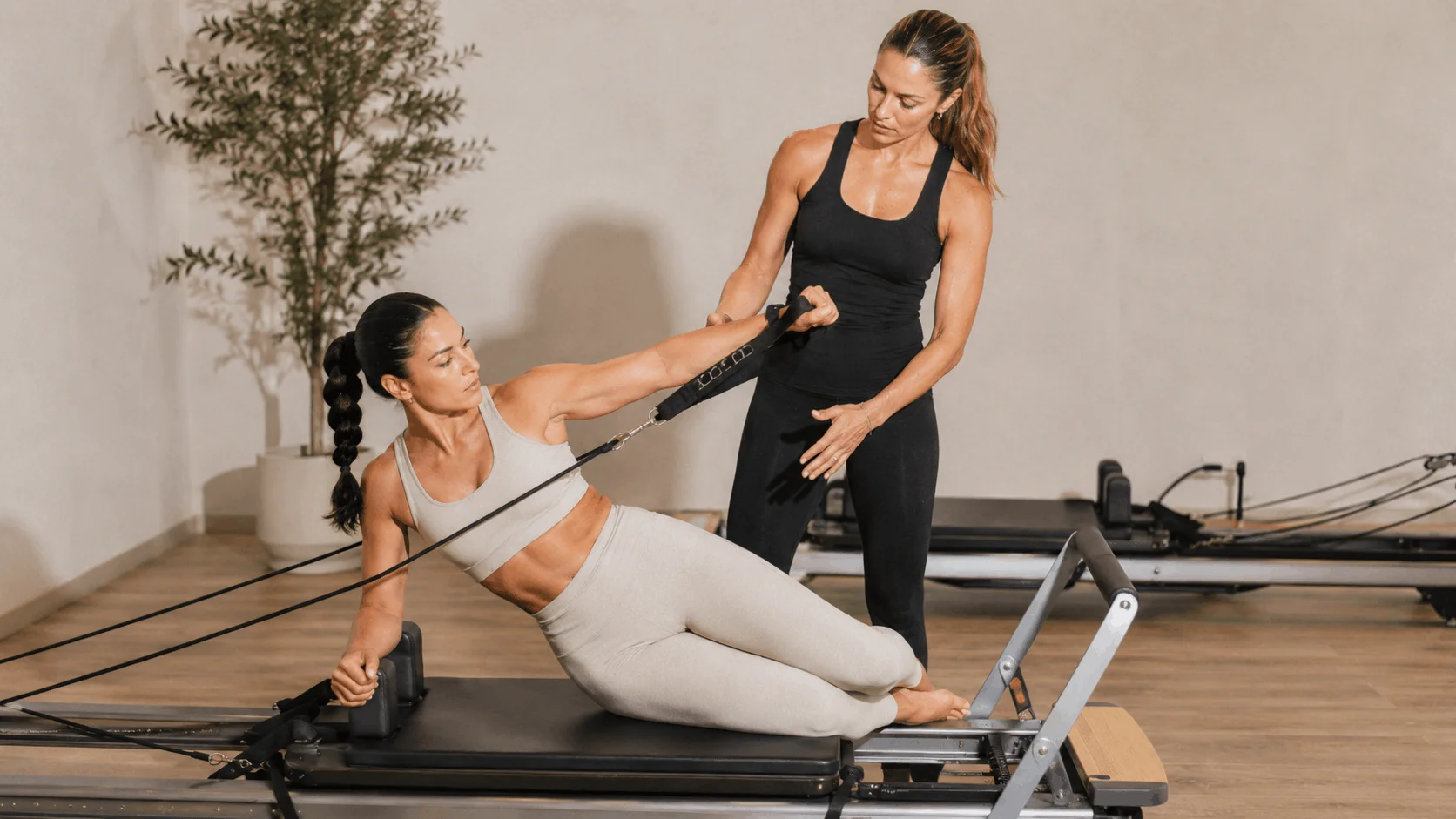
Opening a Pilates studio is an opportunity to introduce your brand, instructors, classes, and community before everyday routines take over. A well-planned launch can help you attract your first clients, sell founding memberships, test your booking process, and create enough content to support your marketing for months.
Interest in Pilates remains strong. ClassPass reported that Pilates was its most-booked workout worldwide for the third consecutive year in 2025, with reservations growing 66% year over year. That popularity creates opportunities for new studios, but it also means new businesses need a clear launch concept to stand out.
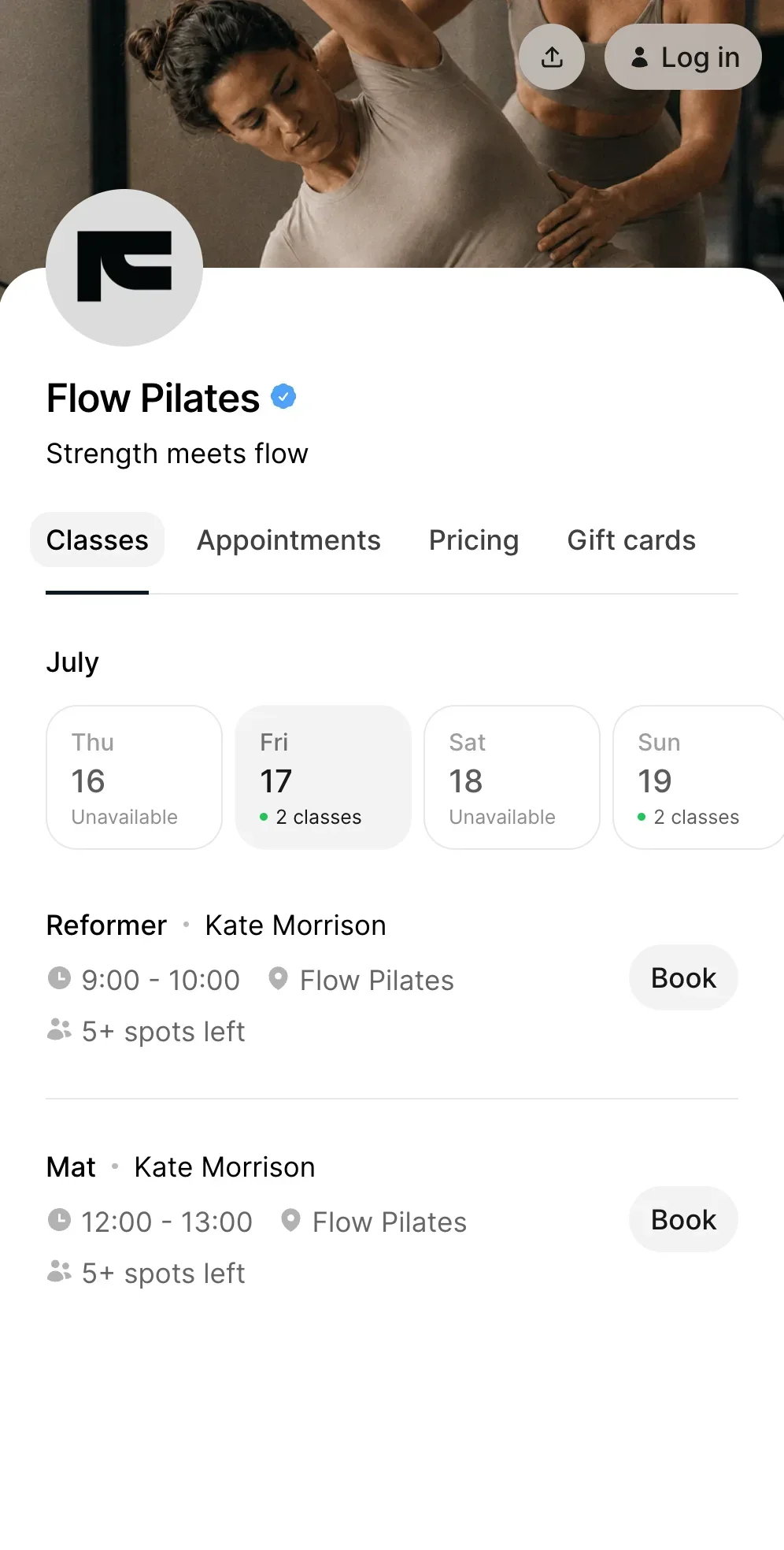
Time2book helps new Pilates studios set up class schedules, online bookings, payments, memberships, class packs, waitlists, and client management before opening day. Instead of collecting reservations through Instagram messages or spreadsheets, you can give potential clients a simple way to book and pay from the beginning.
Try Time2book free today and prepare your Pilates studio bookings, payments, and founding memberships before you open.
In this guide, we’ll break down the best Pilates studio opening ideas for 2026, from pre-launch campaigns and founding offers to open-day activities and post-event follow-ups.
Why Your Pilates Studio Opening Matters
Your Pilates studio opening is more than a one-day celebration. It is the beginning of your relationship with the local community.
A strong launch can help you:
- Build local awareness
- Collect potential client contact details
- Sell memberships before regular classes begin
- Introduce your instructors
- Help beginners feel comfortable with Pilates
- Test your studio systems
- Generate photos and videos
- Build relationships with nearby businesses
- Secure reviews and testimonials
- Fill the first weeks of your schedule
Do not measure the success of your opening only by how many people attend. A smaller event that generates 20 paying members can be more valuable than a crowded party where nobody books a class.
Before planning activities, choose one primary objective.
Your opening goal could be:
- Sell 30 founding memberships
- Collect 100 local leads
- Fill your first two weeks of classes
- Introduce reformer Pilates to beginners
- Generate local social media attention
- Build relationships with nearby businesses
- Test your schedule before the official launch
Every opening idea should support that objective.
For a broader preparation guide, use our Pilates studio startup checklist before planning your launch event.
25 Pilates Studio Opening Ideas for 2026
1. Sell Founding Memberships Before Opening
A founding membership is a limited offer available to clients who join before or during your opening period.
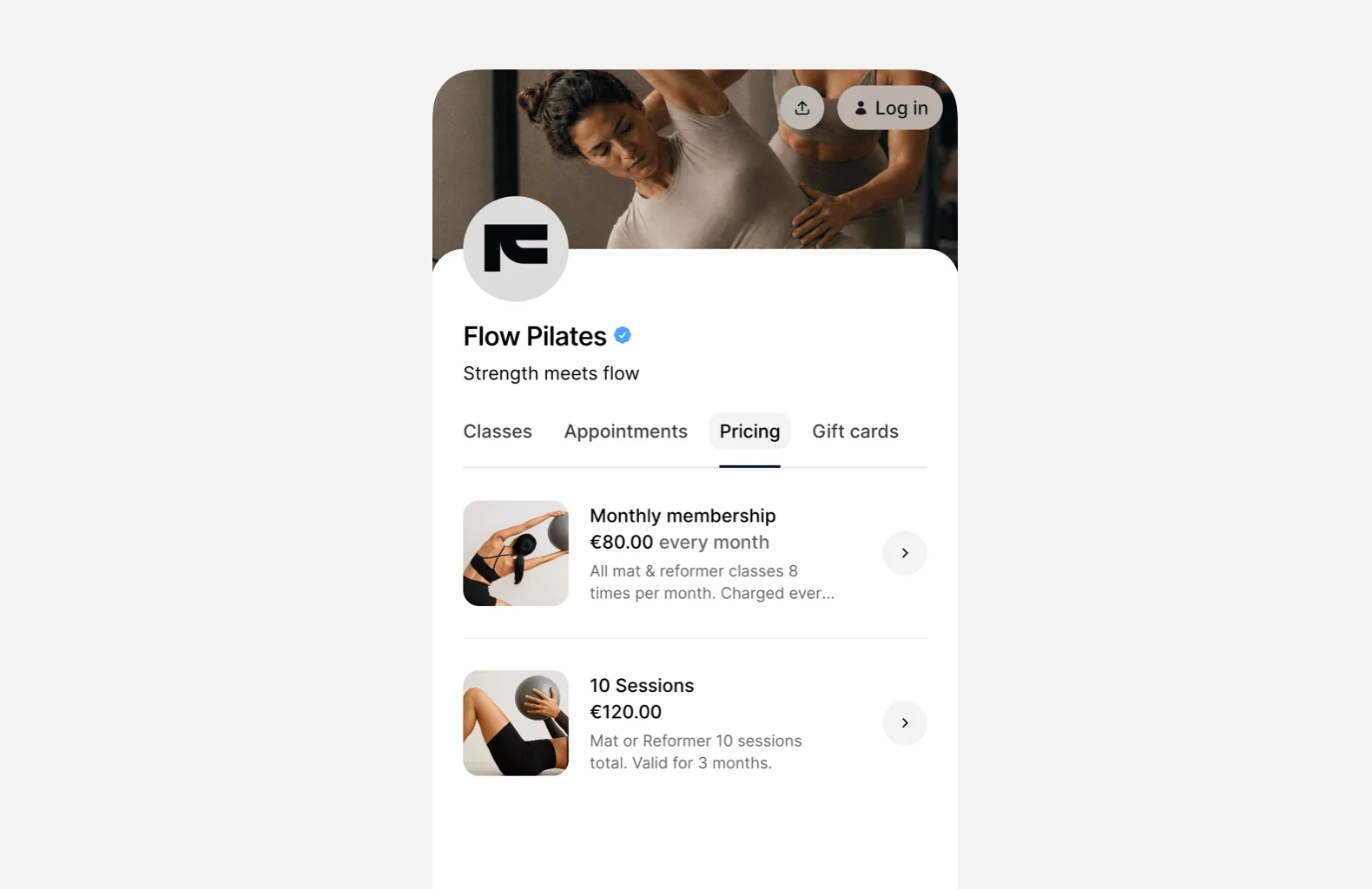
You could offer:
- A reduced monthly price
- A locked-in rate for a defined period
- No joining fee
- Priority booking
- A free private introduction
- A complimentary pair of grip socks
- Early access to the schedule
- Invitations to member-only events
Founding offers work best when the limit is genuine. Instead of saying the offer is available “for a limited time,” specify that it is available to the first 30, 50, or 100 members.
Several Pilates launch guides and active studio offers use limited founding memberships to generate early revenue and establish an initial client base before the official opening.
Avoid discounting your memberships so heavily that the price becomes difficult to sustain. Your founding rate should still contribute toward instructor pay, rent, software, equipment, and other operating expenses.
2. Create a Pre-Opening Waiting List
Start collecting potential client details before your full schedule is ready.
Your pre-opening landing page can include:
- Studio name and location
- Expected opening date
- Types of Pilates classes
- A few studio images or design previews
- Instructor introductions
- Founding membership information
- An email signup form
- A link to your Instagram account
Give people a reason to join the list. For example:
Join the early-access list to receive our opening schedule and founding membership offer before the public launch.
Your waiting list becomes the first audience you contact when classes become bookable.
3. Share the Studio Build-Out
Do not wait until the studio looks perfect before talking about it.
Share the process through:
- Renovation updates
- Paint and material choices
- Sign installation
- Equipment deliveries
- Reformer assembly
- Mirror installation
- Instructor training
- Small behind-the-scenes problems
- Opening-date countdowns
These updates make local followers feel involved in the studio’s progress. They also give you a natural reason to post regularly without repeating the same sales message.
Include a direct action in each update:
We are opening soon. Join our early-access list to be the first to book.
4. Run a Founding Member Referral Offer
Encourage early members to invite someone they know.
A simple founding referral offer could be:
Join with a friend before opening day and you both receive a free class credit.
Other rewards could include:
- A private introduction
- Branded grip socks
- A class-pack upgrade
- A guest pass
- Priority booking
- A membership discount for one month
Keep the reward connected to the studio. A free class or guest pass encourages another visit, while an unrelated prize may attract people who are less interested in becoming regular clients.
5. Organize a Soft Opening
A soft opening takes place before your public launch and gives you a chance to test the studio with a smaller group.
Invite:
- Friends and family
- Existing private clients
- Founding members
- Local business owners
- Other instructors
- A few local content creators
- People from your waiting list
Ask guests to complete the full client journey:
- Create an account
- Purchase or claim a class
- Book online
- Receive a confirmation
- Check in
- Attend the class
- Receive a follow-up
A soft opening can reveal problems with class timing, equipment spacing, reception, music, lighting, temperature, cleaning, payments, and booking instructions before the public event. Testing the entire client journey before launch is also recommended in current Pilates startup guidance.
6. Offer Short Reformer Demonstrations
A full reformer class may be too long for a busy open day. Instead, run 15- or 20-minute demonstrations throughout the event.
A mini session can introduce:
- Footwork
- Basic spring changes
- The carriage
- Straps and loops
- Beginner positions
- Studio safety
- The general class flow
Keep each session beginner-friendly. The objective is not to deliver an intense workout. It is to help visitors feel less intimidated by the equipment.
Display the next available session times clearly and let visitors reserve places in advance.
7. Host a Pilates for Beginners Workshop
Many potential clients are interested in Pilates but worry that they are not flexible, strong, coordinated, or experienced enough to join.
A beginner workshop can explain:
- What Pilates is
- What reformer Pilates feels like
- What to wear
- Whether grip socks are required
- How class levels work
- How to adjust the reformer
- What to tell the instructor about injuries
- Which first class to book
End the workshop with a simple next step, such as purchasing a three-class introductory pack.
For additional offer structures, see our guide to Pilates intro offer ideas.
8. Run Free Studio Tours
Not everyone attending your opening will be ready to exercise.
Offer short guided tours where visitors can:
- See the reformers
- Explore changing areas
- Meet instructors
- Ask about memberships
- View the class schedule
- Learn how online booking works
- Discuss beginner options
A tour can be particularly useful for older clients, people returning after an injury, and complete beginners who want more information before committing.
9. Offer Free Posture or Movement Consultations
Provide short consultations during the opening event.
An instructor could ask about the visitor’s:
- Current activity level
- Previous Pilates experience
- Goals
- Preferred class times
- Injuries or limitations
- Interest in group or private sessions
The instructor can then recommend an appropriate starting point.
Do not turn this into medical diagnosis or treatment advice unless the person providing the consultation is appropriately qualified. Keep the focus on helping the client select a suitable studio service.
10. Create an Opening-Only Intro Pack
Give visitors a clear offer they can purchase during the launch period.
Examples include:
- Three reformer classes for a fixed price
- Five beginner classes valid for 30 days
- A private introduction plus two group classes
- Seven days of unlimited mat Pilates
- Four classes plus a free guest pass
- A beginner workshop plus a three-class pack
The offer should give clients enough opportunities to experience the studio more than once. A single discounted class may attract interest, but a multi-visit offer creates more opportunities to build a routine.
Make the terms simple:
Three reformer classes for €49. Available to new clients during opening week. Valid for 30 days from the first booking.
11. Invite Nearby Businesses
Build relationships with businesses serving a similar local audience.
Potential partners include:
- Cafés
- Physiotherapists
- Massage therapists
- Hair and beauty salons
- Wellness clinics
- Activewear stores
- Nutrition professionals
- Running clubs
- Yoga studios
- Coworking spaces
- Apartment buildings
- Local employers
Partners could contribute products, samples, discounts, demonstrations, or prizes.
In return, feature them in your event promotion and provide space for them to introduce their business. Boutique fitness opening guides frequently recommend involving local partners because they can extend the event’s reach into established local communities.
12. Create a Local Wellness Passport
Partner with several nearby businesses to create a simple opening-week passport.
For example, visitors receive a stamp when they:
- Attend a Pilates demonstration
- Visit a participating café
- Book a massage consultation
- Follow the participating businesses
- Bring a friend to the open day
Completed passports can enter a prize draw.
This encourages people to explore the neighbourhood and gives every participating business a reason to promote the event.
13. Host a Pilates and Coffee Morning
A relaxed morning event can feel more approachable than a formal launch party.
The schedule could include:
- Beginner reformer demonstrations
- Coffee or tea from a local café
- Studio tours
- Instructor introductions
- Membership consultations
- A founding offer
This format works particularly well for studios targeting parents, remote workers, retirees, and clients who prefer morning classes.
14. Organize an Evening Launch Event
An evening event may work better for studios targeting office workers and professionals.
Include:
- Drinks and light refreshments
- Short reformer demonstrations
- Instructor introductions
- Music
- Studio tours
- Membership information
- A giveaway
- Time to speak with the team
Avoid making the event feel like a party unrelated to Pilates. Visitors should still leave understanding what you offer, which class suits them, and how to book.
15. Introduce Every Instructor
Your instructors are one of the strongest reasons for clients to return.
Give each instructor time to explain:
- Their background
- Their teaching style
- Which classes they lead
- Who their classes are best for
- What clients can expect
- Their favourite part of Pilates
You can also publish instructor introductions before the event through Instagram posts, videos, emails, and your booking page.
Clients may choose a class because its time is convenient, but the connection with an instructor is often what makes them return.
16. Run a Giveaway With a Relevant Prize
Use a giveaway to increase event registrations or email signups.
Suitable prizes include:
- A one-month membership
- A reformer starter pack
- Private Pilates sessions
- Branded grip socks
- A studio gift card
- A wellness package from local partners
- A membership upgrade
Require an action that supports your launch goal, such as registering for the event or joining the email list.
Avoid complicated social media rules requiring visitors to tag large numbers of friends. A simple and transparent giveaway creates a better first impression.
17. Create a Branded Photo Area
Set up a well-lit area where visitors can take photographs.
It could include:
- Your studio logo
- A simple branded wall
- A mirror message
- A flower or balloon installation
- A reformer positioned safely
- A small opening-day sign
- A short Pilates slogan
Make sure people can take photos without disrupting demonstrations or creating unsafe behaviour around equipment.
Ask permission before reposting identifiable images, especially when filming active classes.
18. Capture Professional Opening Content
Opening day gives you access to a full studio, real visitors, instructors, and genuine activity.
Capture:
- Exterior footage
- Studio tours
- Reformer details
- Instructors teaching
- Visitors arriving
- Beginner demonstrations
- Team photos
- Client reactions
- Membership conversations
- Branded details
You can reuse this material for:
- Instagram posts
- Reels
- Paid advertisements
- Your website
- Google Business Profile
- Email campaigns
- Instructor profiles
- Future event promotion
Pilates grand-opening guidance commonly recommends capturing photographs and video during the event so the material can support future marketing.
Get appropriate consent before using identifiable client images in public marketing.
19. Invite Local Content Creators
A smaller local creator with an engaged audience may be more useful than a larger creator whose followers live elsewhere.
Look for creators focused on:
- Local lifestyle
- Fitness
- Wellness
- Motherhood
- Healthy living
- Running
- Fashion and activewear
- Things to do in your city
Offer a genuine studio experience rather than requiring a positive review.
Be clear about what is included, whether they may bring a guest, and whether you are requesting any specific content. Sponsored or gifted collaborations should be disclosed according to applicable advertising rules.
20. Contact Local Media and Community Pages
Send a concise opening announcement to:
- Local newspapers
- City magazines
- Community newsletters
- Neighbourhood websites
- Local radio
- Business associations
- “What’s on” pages
- Local Facebook groups
Your announcement should answer:
- What is opening?
- Where is it?
- When is the event?
- What makes the studio different?
- Who is behind it?
- What can visitors do?
- How do they register?
A specific local story is more useful than a generic statement that your studio is “excited to announce” its opening.
21. Run a Charity Pilates Class
Use one opening class to support a local charity or community organisation.
You could:
- Donate all class proceeds
- Ask for optional contributions
- Match donations up to a set amount
- Collect useful items
- Support a local health initiative
Choose a cause that genuinely connects with your values and local community. Be transparent about what is being donated and how the contribution will be handled.
22. Offer Bring-a-Friend Sessions
Allow founding members or opening-week clients to bring someone new.
The reward could be:
- A complimentary guest place
- A reduced-price class
- A shared beginner session
- A credit after the friend purchases a plan
Pilates can feel easier to try with someone familiar. A guest session also introduces two potential clients without doubling your marketing cost.
Make sure both people complete the appropriate registration and waiver process.
23. Set Up a Booking and Membership Desk
Do not assume every visitor will purchase from their phone while standing in the studio.
Create a clearly marked area where someone can:
- View the schedule
- Compare memberships
- Purchase an intro pack
- Join a founding plan
- Create an account
- Book a first class
- Ask about cancellation rules
- Discuss private sessions
Keep the process simple and avoid pressuring visitors into an unsuitable plan.
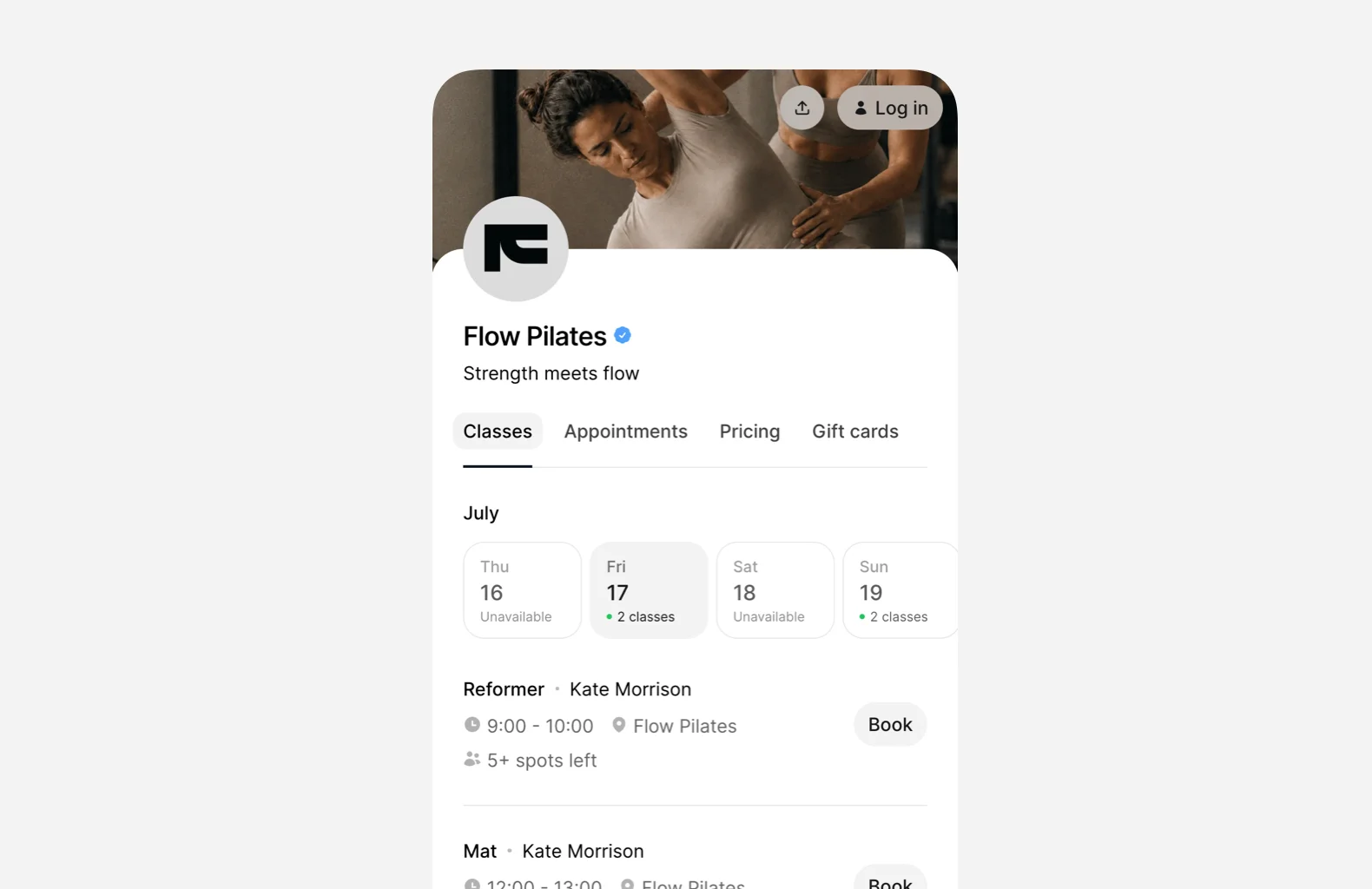
With Time2book Pilates studio software, clients can purchase a plan, book a class, and receive confirmation online while your team manages everything from one dashboard.
24. Ask Visitors to Choose Future Class Times
Use the opening event to learn when local clients actually want to attend.
Ask visitors to vote for:
- Early morning classes
- Mid-morning classes
- Lunchtime sessions
- After-work classes
- Evening classes
- Weekend classes
- Beginner-only sessions
- Prenatal or postnatal classes
- Private sessions
Do not promise every requested time. Use the responses as evidence when adjusting your first schedule.
You can combine this feedback with booking data once classes begin. Our beginner’s guide to setting up a Pilates studio schedule can help with the initial timetable.
25. Follow Up Within 24 Hours
The event is not finished when the final guest leaves.
Send attendees a follow-up containing:
- A thank-you message
- Opening photos
- The regular class schedule
- A link to book
- The intro or founding offer
- The offer deadline
- Instructor contact information
- Answers to common questions
Divide your follow-up by visitor type where possible.
For example:
- People who purchased should receive onboarding information.
- People who booked should receive preparation instructions.
- People who attended but did not purchase should receive the opening offer.
- People who registered but did not attend should receive another opportunity to visit.
A strong follow-up turns temporary opening-day excitement into actual bookings.
Pilates Studio Opening Ideas by Goal
| Opening goal | Best ideas to prioritize |
|---|---|
| Sell memberships | Founding memberships, opening-only intro packs, membership desk |
| Build local awareness | Local media outreach, content creators, business partnerships, branded photo area |
| Fill the first class schedule | Pre-opening waiting list, mini classes, bring-a-friend sessions |
| Attract beginners | Beginner workshop, studio tours, short movement consultations |
| Test studio operations | Soft opening, booking journey test, schedule feedback |
| Create marketing content | Build-out updates, professional photography, instructor introductions |
| Build a local community | Charity class, Pilates and coffee morning, wellness passport |
Choose three to five ideas that support the same objective rather than trying to fit every possible activity into one event.
Example Pilates Studio Grand Opening Schedule
Here is a simple opening-day schedule for a small reformer Pilates studio.
9:00 – Doors open
- Guest check-in
- Coffee and refreshments
- Studio tours
- Membership consultations
9:30 – Beginner reformer demonstration
- 20-minute introduction
- Basic equipment explanation
- Questions with an instructor
10:15 – Meet the instructors
- Instructor introductions
- Class-style overview
- Schedule recommendations
10:45 – Beginner reformer demonstration
- Second session for pre-registered visitors
11:30 – Pilates workshop
- What to expect from your first class
- Clothing, grip socks, safety, and class levels
12:00 – Partner introductions
- Local café, massage therapist, activewear store, or wellness partner
12:30 – Final demonstration
- Last mini class
- Membership reminder
- Giveaway entry deadline
13:00 – Giveaway and closing
- Announce the winner
- Thank guests
- Remind visitors how to book
Keep enough time between demonstrations to clean equipment, answer questions, and prepare the next group.
A 30-Day Pilates Studio Opening Plan
Four weeks before opening
- Confirm the date and event format
- Publish your landing page
- Open the waiting list
- Announce the studio
- Introduce the founding offer
- Contact local partners
- Create the event registration page
Three weeks before opening
- Introduce instructors
- Share renovation updates
- Contact local media
- Invite local creators
- Publish your first paid or organic local promotion
- Begin the countdown
Two weeks before opening
- Release the class schedule
- Allow early booking
- Promote beginner demonstrations
- Share membership explanations
- Confirm partners and refreshments
- Test payments and confirmation emails
One week before opening
- Send reminders
- Confirm attendance
- Prepare signs and printed information
- Test music, lighting, temperature, and equipment
- Brief instructors
- Run a soft-opening class
- Prepare follow-up emails
Opening day
- Capture guest information
- Keep demonstrations on schedule
- Make the booking process visible
- Record questions people ask
- Capture photos and videos
- Help visitors choose the right first service
The day after opening
- Send follow-up emails
- Share event photos
- Contact interested leads
- Confirm upcoming bookings
- Review memberships sold
- Ask the team what should improve
- Continue promoting the opening offer until its real deadline
Pilates Studio Opening Mistakes to Avoid
Making the event too complicated
A small studio does not need entertainment, catering, multiple partners, full classes, competitions, speeches, and workshops happening simultaneously.
Choose a clear format that your team can manage confidently.
Offering discounts without a conversion plan
Free classes can generate attendance without generating members.
Every free or discounted experience should lead to an obvious next step, such as an intro pack, consultation, or founding membership.
Opening bookings too late
People should be able to book a regular class while their interest is highest. Do not host a successful launch and then tell visitors that the schedule will be available several weeks later.
Focusing only on social media followers
A large number of likes does not pay studio expenses. Track email signups, intro-pack purchases, memberships, first bookings, and return visits.
Failing to test the client journey
Test booking, payment, reminders, waivers, cancellation rules, check-in, and membership credits before opening the studio publicly.
Trying to appeal to everyone
A beginner-friendly community studio should have a different opening from an athletic reformer concept or premium private studio.
The launch should reflect the actual client experience people will receive later.
Frequently Asked Questions About Pilates Studio Opening Ideas
The best Pilates studio opening ideas combine a practical Pilates experience with a clear opportunity to book. Short reformer demonstrations, beginner workshops, studio tours, founding memberships, local partnerships, and opening-only intro packs are all strong options.
Choose ideas that support one main goal, such as selling memberships, filling the first schedule, or building local awareness.
Start promoting the studio several weeks before opening. Share build-out updates, introduce instructors, create an early-access list, contact local businesses, publish the opening event, and invite local community pages.
Send potential clients directly to a page where they can register, join the waiting list, purchase an opening offer, or book a class. For more promotional ideas, read our guide to Pilates advertising ideas.
Free mini classes can help visitors experience the studio without committing to a full session. Keep them short, beginner-friendly, and limited in capacity.
Provide a clear paid next step after the class. This could be a new-client pack, founding membership, or private introduction.
A founding membership could include a reduced monthly rate, early booking access, no joining fee, a free private introduction, grip socks, or guest passes.
Keep the offer limited and make the terms clear. Avoid promising a lifetime discount unless you are confident the price will remain sustainable.
A small Pilates studio opening can usually be structured within three or four hours. This provides enough time for multiple demonstrations, tours, instructor introductions, and membership conversations.
A full opening weekend may work better for studios with greater capacity or several instructors.
Begin building awareness as soon as the concept, location, and likely opening period are confirmed. More focused event promotion can begin around four weeks before the opening date.
Do not wait until the studio is finished. Renovation, equipment delivery, instructor preparation, and behind-the-scenes content can all build anticipation.
Create an early-access list, sell a limited founding membership, offer beginner previews, build local partnerships, and let clients reserve future classes online.
For a complete acquisition plan, read how to get your first 50 Pilates clients.
A new Pilates studio needs a system for class scheduling, online booking, payments, memberships, class packs, client records, cancellation rules, reminders, and waitlists.
Setting up these systems before the opening helps clients book immediately and reduces the amount of manual administration required during the launch.
Final Thoughts
The best Pilates studio opening ideas do more than create a busy event. They introduce potential clients to your teaching style, remove uncertainty, and give people a simple reason to book their first class.
Start with a clear opening goal, then select a small number of activities that support it. A soft opening can help test operations, mini demonstrations can reassure beginners, founding memberships can generate early revenue, and local partnerships can introduce your studio to an established audience.
Most importantly, make the next step easy. Visitors should be able to purchase an intro offer, join a membership, and book a class while their interest is still high.
Try Time2book free today and simplify your Pilates studio launch with online bookings, payments, memberships, class packs, waitlists, and client management in one modern platform.