Opening a Pilates studio is exciting, but it can also feel overwhelming. You are not just planning classes. You are building a full business with a location, equipment, instructors, pricing, memberships, bookings, payments, policies, marketing, and client experience.
That is why having a clear Pilates studio startup checklist matters.
Whether you are opening a small mat Pilates space, a boutique reformer studio, or a premium wellness concept, the early decisions you make will shape how smoothly your studio runs once clients start booking. A beautiful studio is important, but your systems matter just as much. You need a simple way to take bookings, sell memberships, manage class capacity, reduce no-shows, and keep your clients organized from day one.
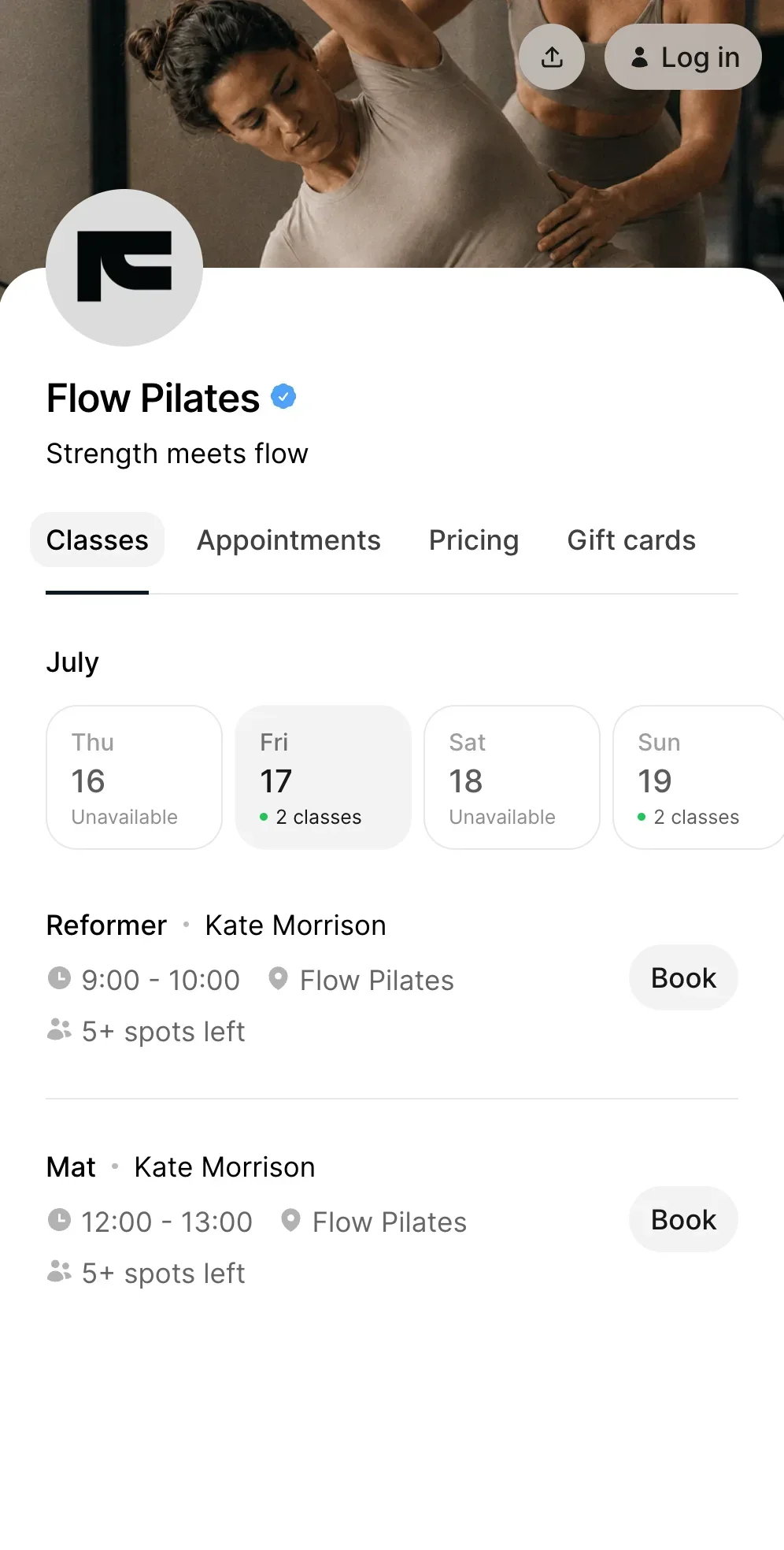
Modern studio software like Time2book can help you set up online bookings, payments, class packs, memberships, and client management before your first official class. That means fewer spreadsheets, fewer manual messages, and a smoother launch for both you and your clients.
In this guide, we’ll break down the best Pilates studio startup checklist for 2026 and what to prepare before opening.
Pilates Studio Startup Checklist: Quick Overview
Before we go step by step, here is a simple overview of what you need to prepare before opening a Pilates studio.
| Area | What to prepare |
|---|---|
| Business concept | Studio type, audience, positioning, class style |
| Location | Rent, lease terms, layout, accessibility, parking |
| Equipment | Reformers, mats, props, storage, cleaning supplies |
| Pricing | Drop-ins, class packs, memberships, intro offers |
| Software | Booking, payments, memberships, client management |
| Legal setup | Business registration, insurance, waivers, policies |
| Branding | Studio name, logo, colors, website, social profiles |
| Marketing | Pre-sale, launch offer, Google Business Profile, local partnerships |
| Operations | Schedule, instructors, cancellation rules, client flow |
| Launch plan | Soft opening, founding members, first reviews, retention strategy |
The goal is not to make everything perfect before launch. The goal is to build a clear foundation so your studio feels organized from the first client booking.
1. Define Your Pilates Studio Concept
Before signing a lease or buying equipment, get clear on what kind of Pilates studio you are opening. This decision affects everything else: your space, your equipment, your pricing, your instructors, your software setup, and your marketing message.
Common Pilates studio types
You might open a:
- Reformer Pilates studio
- Mat Pilates studio
- Classical Pilates studio
- Contemporary Pilates studio
- Private and semi-private Pilates studio
- Boutique wellness studio with Pilates, mobility, barre, or yoga
- Women-focused Pilates studio
- Athletic performance Pilates studio
- Rehabilitation-inspired Pilates studio
- Luxury reformer studio
- Beginner-friendly neighborhood studio
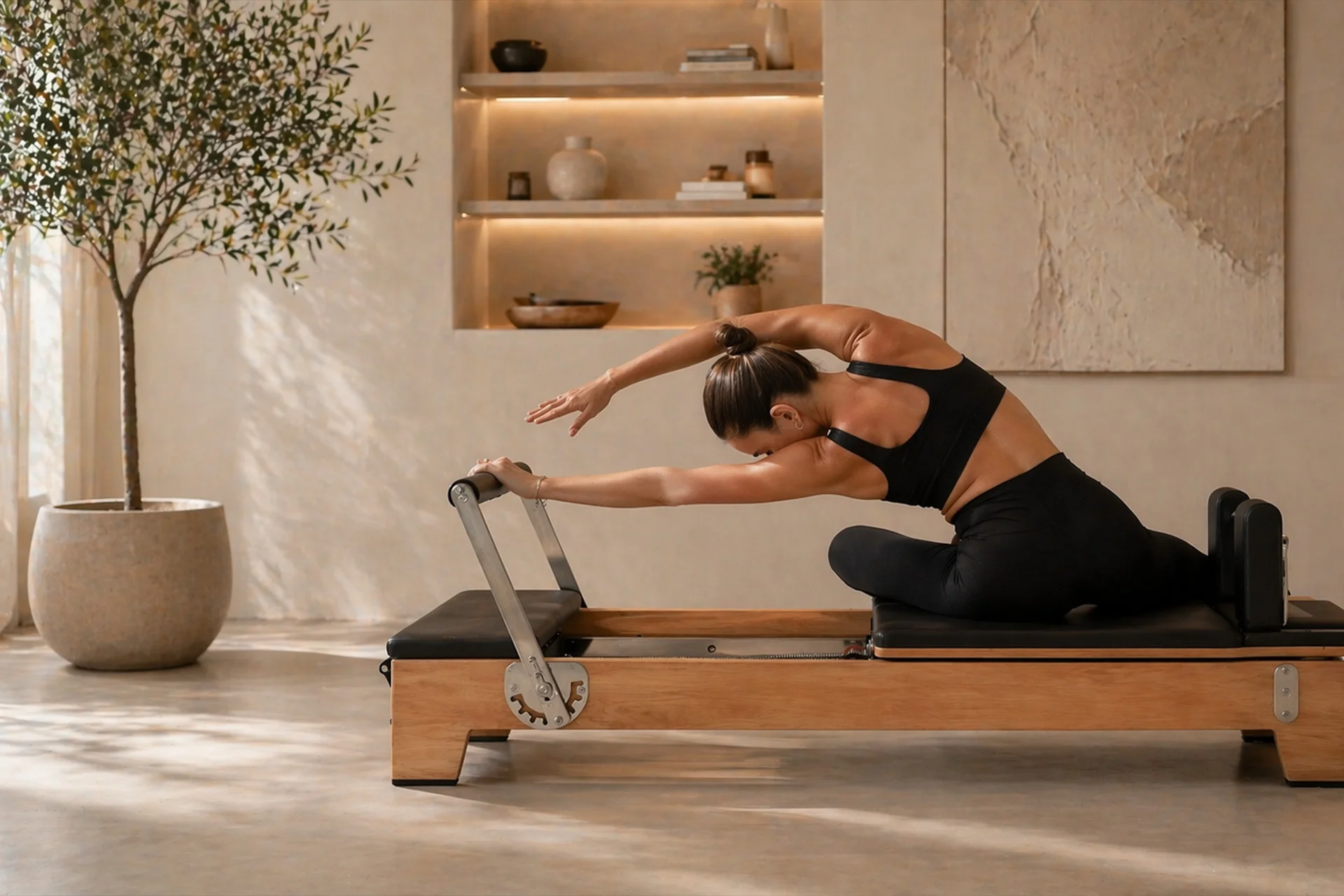
Each model has different startup needs. A mat Pilates studio may need less equipment and a smaller space. A reformer studio usually needs more upfront investment because every class spot requires a machine.
Questions to answer before opening
Ask yourself:
- Who is my ideal client?
- Will I offer group classes, private sessions, or both?
- Will I focus on beginners, advanced clients, athletes, rehab, pregnancy, or general fitness?
- Will I use reformers, mats, towers, chairs, or a mix?
- Will the studio feel premium, minimal, clinical, community-focused, or energetic?
- What makes my studio different from other Pilates studios nearby?
This clarity helps you avoid trying to serve everyone. A new Pilates studio should have a clear identity from the beginning.
For example, “a modern reformer Pilates studio for busy professionals who want small classes and easy online booking” is much stronger than “Pilates classes for everyone.”
2. Research Your Local Market
A Pilates studio can look great on Instagram, but it still needs enough local demand to survive. Before opening, research your city, neighborhood, and competitors. You do not need a complicated market report. You need practical answers.
Check nearby Pilates studios
Look at:
- How many Pilates studios are within 10–20 minutes?
- Are they reformer, mat, classical, contemporary, or mixed?
- What are their class prices?
- Do they offer memberships?
- Are their classes often full?
- What do reviews mention positively?
- What do reviews complain about?
- Do they make booking easy?
- Are they active on Instagram, Google, or TikTok?
Competitor research is not about copying. It helps you find gaps.
Maybe local studios are too expensive. Maybe they do not offer beginner classes. Maybe their booking experience is outdated. Maybe they focus only on advanced reformer clients. Maybe there is no studio serving early mornings, lunch breaks, or post-work hours.
These gaps can become your positioning.
Look at local client behavior
Pay attention to:
- Nearby offices
- Residential buildings
- Gyms and wellness centers
- Cafés and lifestyle businesses
- Parking options
- Public transport
- Foot traffic
- Local Facebook groups
- Local wellness influencers
- Search demand for “Pilates near me”
A Pilates studio does not need to be in the busiest street in town, but it does need to be convenient for the people you want to attract.
3. Choose the Right Location
Your location can make or break your studio. Pilates clients usually care about convenience. If your studio is hard to find, difficult to park near, or awkward to access, it can reduce repeat bookings.
What to look for in a Pilates studio space
Consider:
- Enough room for your class format
- Good natural light if possible
- Safe, clean entrance
- Easy access from street level or elevator
- Nearby parking or public transport
- Ventilation and temperature control
- Space for shoes, bags, coats, and check-in
- Storage for props and cleaning supplies
- Restroom access
- Sound control
- Good flooring
- Clear lease terms
For reformer Pilates, layout matters a lot. You need enough space between machines so instructors can move safely and clients do not feel cramped. For mat Pilates, you need enough floor space for movement, props, and comfortable transitions between exercises.
Do not overcommit too early
A common mistake is choosing a large, expensive space before demand is proven. If you are opening your first studio, it may be smarter to start with a smaller, focused setup and grow from there. A smaller studio with strong bookings, simple operations, and a loyal client base is better than a beautiful large studio with empty classes and high rent.
4. Plan Your Pilates Studio Startup Costs
Your Pilates studio startup costs depend on location, studio size, build-out, equipment, and whether you are opening a mat-based studio or a reformer studio. A simple mat Pilates studio can be much cheaper to start than a premium reformer studio. Reformer studios usually have higher startup costs because each client spot needs equipment.
Common startup costs
Your budget may include:
- Rent deposit
- Studio renovation or build-out
- Pilates reformers
- Mats and props
- Towers, chairs, barrels, or other apparatus
- Reception furniture
- Storage
- Mirrors
- Lighting
- Sound system
- Cleaning supplies
- Business registration
- Insurance
- Instructor training or hiring
- Website
- Branding
- Booking software
- Payment setup
- Launch marketing
- Photography
- Signage
Monthly operating costs
After opening, your monthly costs may include:
- Rent
- Utilities
- Instructor pay
- Software subscription
- Payment processing fees
- Marketing
- Cleaning
- Insurance
- Equipment maintenance
- Website/domain costs
- Accounting
- Supplies
The biggest mistake is only budgeting for the opening. You also need enough cash to operate while memberships grow. A strong launch plan should include at least a few months of operating runway, especially if you are hiring instructors or leasing a larger space.
5. Build Your Equipment List
Your equipment list depends on your studio model. A reformer studio needs a different setup from a mat Pilates studio. A private Pilates studio may need fewer machines but more specialized apparatus. A group class studio needs equipment that is durable, easy to clean, and consistent across all client spots.
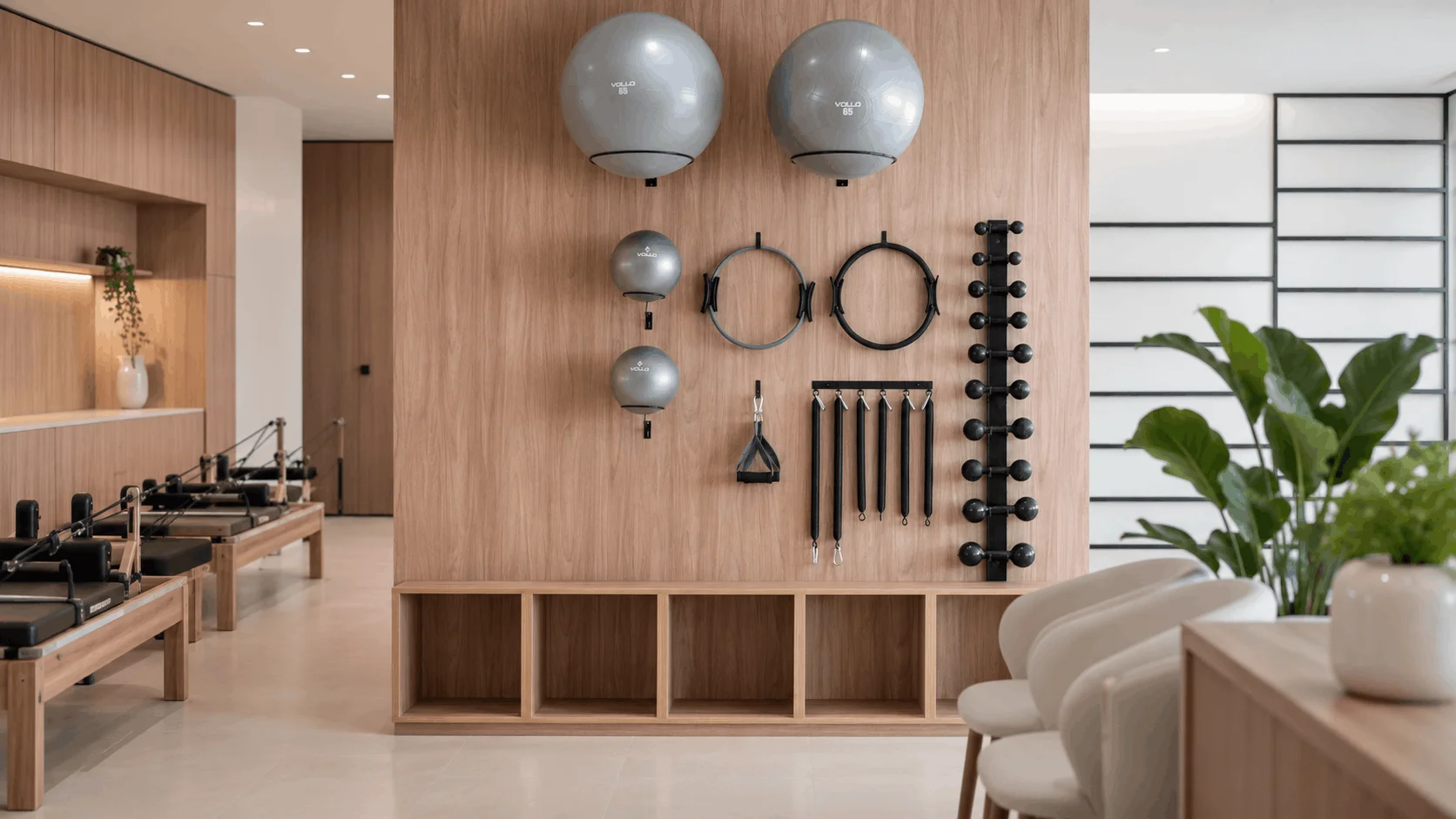
Basic mat Pilates equipment
For a mat-based studio, you may need:
- Pilates mats
- Small balls
- Resistance bands
- Magic circles
- Foam rollers
- Light weights
- Blocks
- Straps
- Cleaning sprays and towels
- Storage shelves or baskets
Reformer Pilates equipment
For a reformer studio, you may need:
- Reformers
- Jump boards
- Boxes
- Straps and loops
- Springs and replacement parts
- Cleaning supplies
- Machine spacing plan
- Maintenance schedule
Optional apparatus
Depending on your concept, you may also consider:
- Towers
- Cadillacs
- Wunda chairs
- Ladder barrels
- Spine correctors
- Stability chairs
Do not buy equipment just because it looks impressive. Buy based on your class format, instructor skill, client needs, and available space. If you are opening a beginner-friendly reformer studio, a consistent set of reformers may matter more than having every possible apparatus.
6. Create Your Class Types and Services
Before opening bookings, you need to define what clients can actually book. This is where many new studios get messy. They create too many class names, unclear levels, or confusing pricing. Keep it simple at the beginning.
Example Pilates class types
You could offer:
- Beginner Reformer
- Reformer Flow
- Reformer Strength
- Mat Pilates
- Private Pilates Session
- Duet Pilates Session
- Prenatal Pilates
- Stretch and Mobility
- Pilates Foundations
- Advanced Reformer
Keep your first schedule simple
For a new studio, it is usually better to start with a focused schedule instead of offering too many variations.
For example:
- Beginner Reformer
- Reformer Flow
- Reformer Strength
- Private Session
That is enough to serve different needs without confusing new clients. You can always add more class types later once you understand what people actually book.
Set clear class levels
Clients should know what they are booking.
Use simple labels like:
- Beginner
- All levels
- Intermediate
- Advanced
Avoid clever class names that sound nice but do not explain the experience. A new client should immediately understand whether the class is right for them.
7. Set Your Pricing, Memberships, and Class Packs
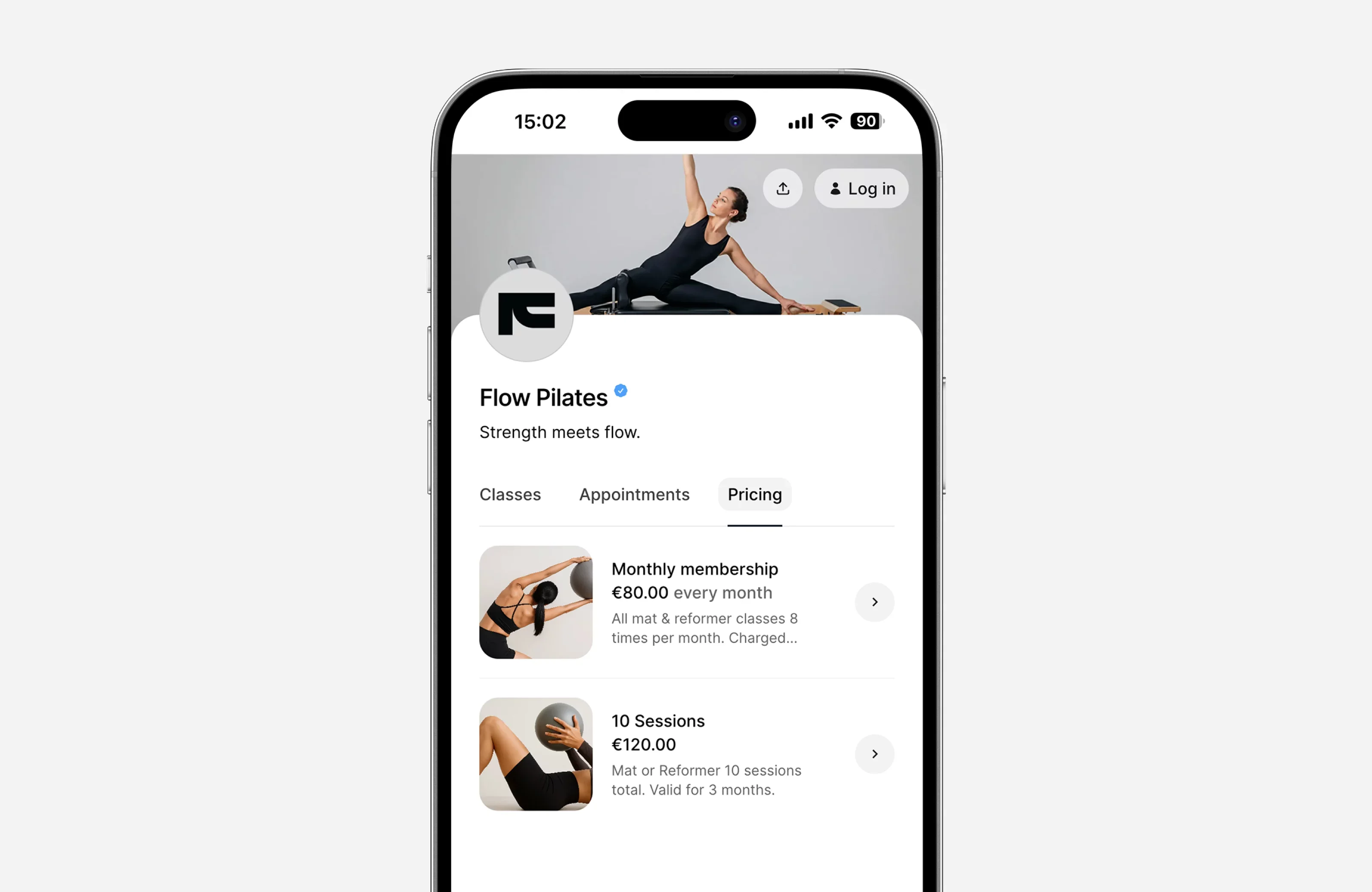
Pricing is one of the most important parts of your Pilates studio startup checklist. Your pricing should be simple enough for clients to understand and strong enough to support your business.
Common Pilates pricing options
Most studios use a mix of:
- Drop-in class
- 5-class pack
- 10-class pack
- Monthly membership
- Intro offer
- Private session
- Duet session
- Unlimited membership
- Founding member offer
Example pricing structure
| Offer | Best for |
|---|---|
| Drop-in class | New or occasional clients |
| 5-class pack | Beginners testing the studio |
| 10-class pack | Regular but flexible clients |
| 4 classes/month membership | Weekly clients |
| 8 classes/month membership | Twice-a-week clients |
| Unlimited membership | Highly committed clients |
| Private session | Clients needing individual attention |
| Intro pack | First-time clients |
| Founding member offer | Pre-opening sales |
Keep pricing easy to understand
Avoid too many options at launch. Too many plans can create decision fatigue.
A simple starting setup could be:
- Drop-in class
- 5-class pack
- 10-class pack
- 4x/month membership
- 8x/month membership
- Intro offer for new clients
With Time2book, you can create class packs and recurring memberships, connect them to specific services, and let clients buy online. This makes it easier to sell before opening and reduces manual admin once your studio is live.
8. Set Up Booking and Payment Software
Your booking system is not something to leave until the last week. Before launch, you need a simple way for clients to view your schedule, book classes, buy plans, pay online, and manage their bookings.
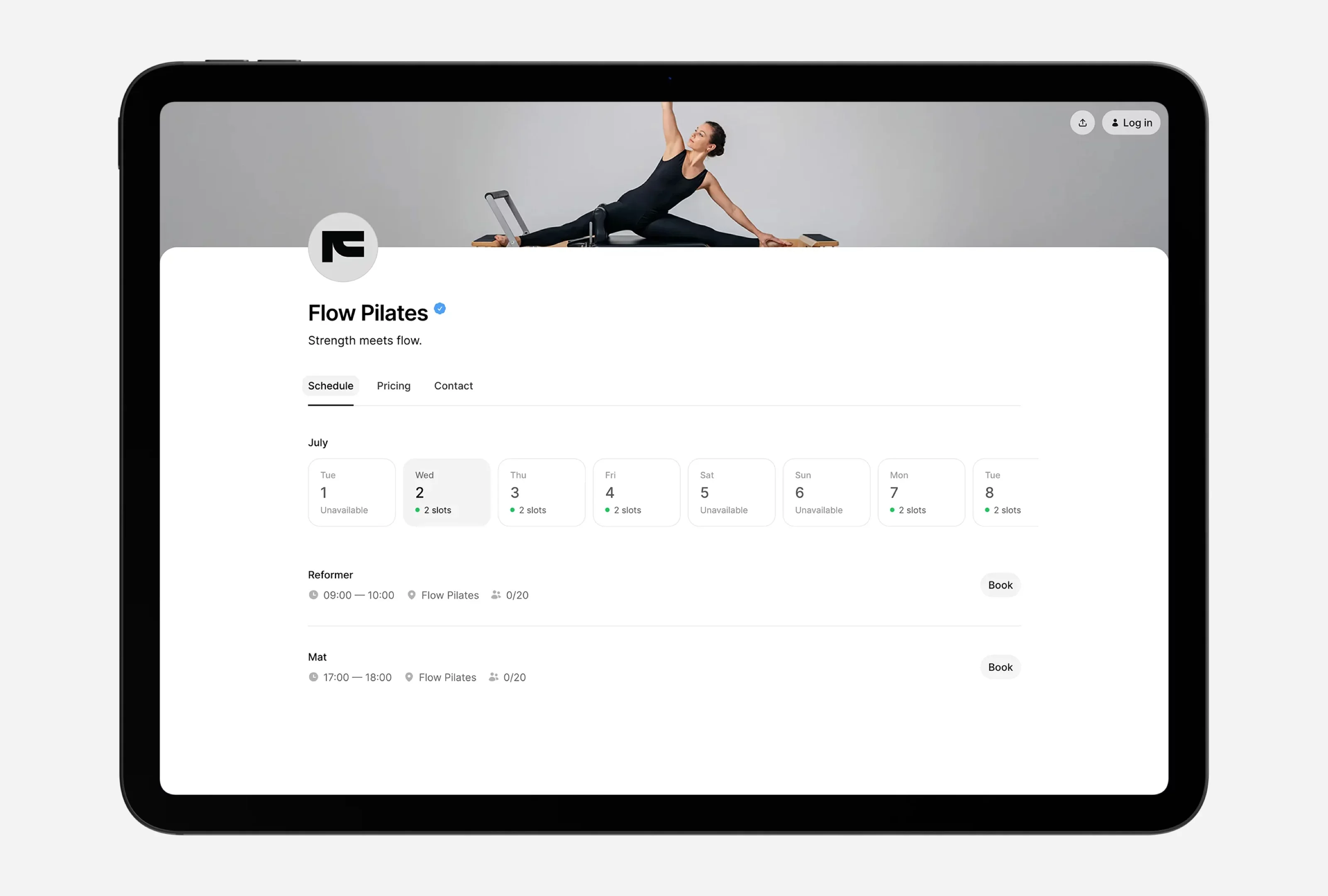
This is where Pilates studio software becomes part of your business foundation.
What your software should handle
Look for software that helps you manage:
- Online class booking
- Private session booking
- Class capacity
- Client profiles
- Class packs
- Monthly memberships
- Online payments
- Cancellations
- Booking rules
- Instructor schedules
- Client purchase history
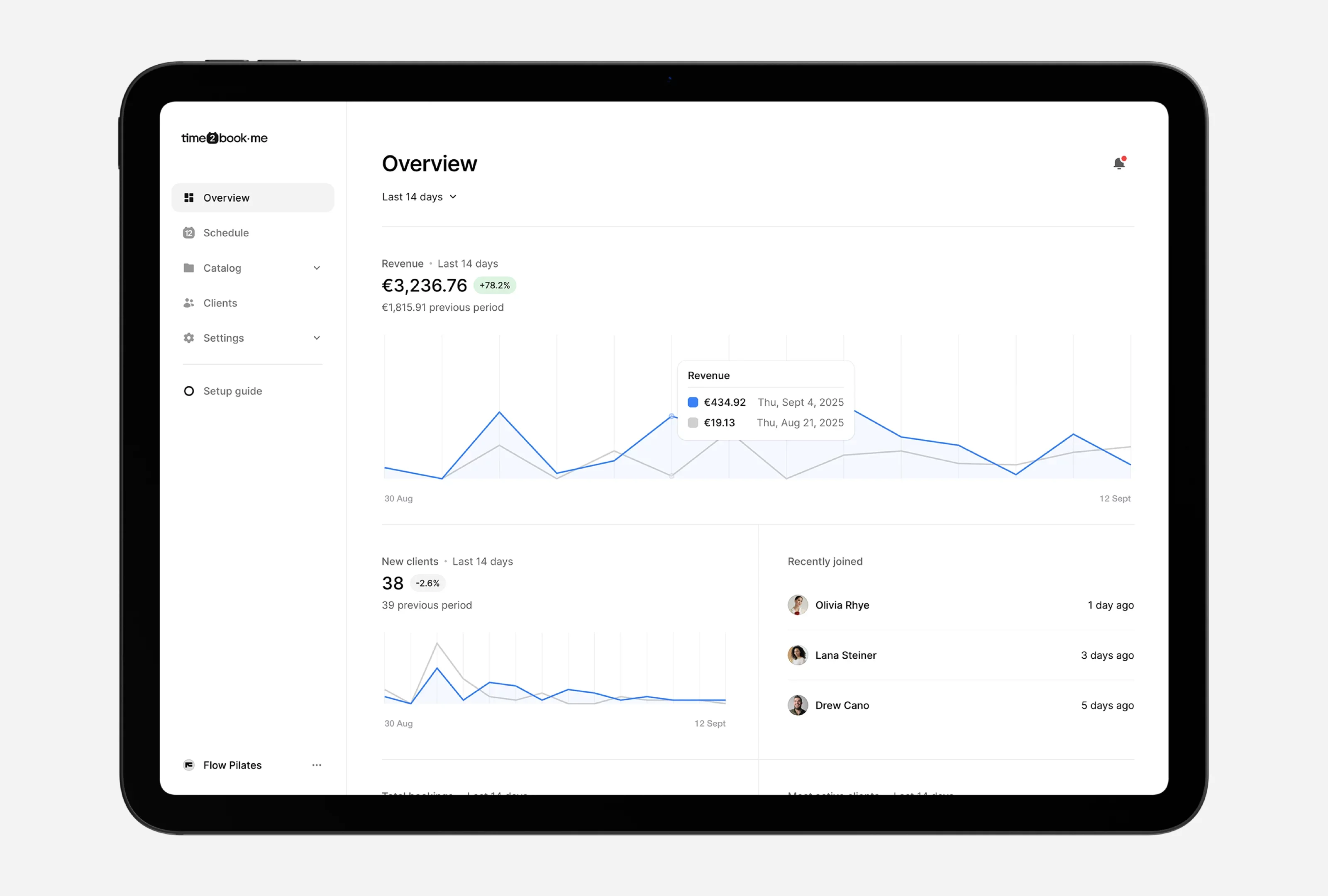
- Basic analytics
For new studios, simplicity matters. You do not need complicated enterprise software if you are just starting. You need something clean, modern, and easy for both staff and clients.
Why setup matters before opening
Setting up software early lets you:
- Sell founding memberships
- Start taking pre-opening bookings
- Collect payments online
- Test your schedule
- Share your booking link on Instagram
- Add booking links to your website
- Avoid manual DMs and spreadsheets
- Look professional from day one
Time2book is built for modern fitness studios that want bookings, payments, pricing plans, and client management in one simple place. For new Pilates studios, it can help you launch with a clean booking experience instead of piecing together forms, spreadsheets, bank transfers, and manual messages.
9. Create Your Studio Policies
Policies may not feel exciting, but they protect your studio and make expectations clear.
New studios often avoid policies because they want to be friendly. But clear policies actually create a better client experience. Clients know what to expect, and your team knows how to handle common situations.
Policies to prepare
You should define:
- Cancellation window
- No-show policy
- Late arrival policy
- Refund policy
- Class pack expiration
- Membership renewal rules
- Membership cancellation terms
- Waitlist rules
- Health and safety waiver
- Studio etiquette
- Payment terms
- Private session cancellation policy
Example cancellation policy
A simple Pilates class cancellation policy could say:
“Please cancel at least 12 hours before class to keep the session credit. Late cancellations and no-shows may result in the class being deducted from your plan.”
You can adjust the timing depending on your business model.
Why policies matter for revenue
If you do not have a cancellation policy, clients may cancel at the last minute and leave empty spots you cannot refill. For small reformer classes, every spot matters. If you have 8 reformers and 2 people cancel late, that can be a large part of your class revenue.
Your booking software should support your cancellation rules so you are not enforcing them manually.
10. Build Your Brand and Website
Your brand does not need to be complicated, but it should feel clear and consistent. For many new clients, your website, Instagram profile, or Google listing will be the first impression of your studio.
Brand basics to prepare
You need:
- Studio name
- Logo
- Colors
- Fonts
- Tone of voice
- Studio description
- Short tagline
- Class descriptions
- Photography style
- Social media handles
- Domain name
Website pages to include
A simple Pilates studio website can include:
- Home
- Classes
- Pricing
- Schedule
- About
- Contact
- FAQ
You do not need a huge website before launch. You need a website that explains what you offer and makes it easy to book.
What your homepage should answer
Your homepage should quickly explain:
- What type of Pilates studio you are
- Where you are located
- Who your classes are for
- What classes you offer
- How pricing works
- How to book
- What new clients should expect
Add your Time2book booking link to your website, Instagram bio, Google Business Profile, and launch emails so clients can book without messaging you manually.
11. Prepare Your Pre-Opening Marketing Plan
Do not wait until opening day to start marketing. Your marketing should begin weeks or months before your first class. The goal is to build awareness, collect interest, and start selling before your studio officially opens.
Pre-opening marketing ideas
You can:
- Create an Instagram page
- Share studio renovation updates
- Introduce instructors
- Explain your class types
- Create a founding member offer
- Build a waitlist
- Partner with local cafés, salons, and wellness businesses
- Offer a limited intro pack
- Run a soft opening week
- Collect emails from interested clients
- Add your studio to Google Business Profile
- Ask friends and early clients to share your launch
Founding member offer
A founding member offer works well because it gives early clients a reason to join before the studio is fully open.
Examples:
- First 50 members get special monthly pricing
- Buy 10 classes before opening and get 2 bonus classes
- Founding members get early booking access
- Limited pre-sale membership for opening month
With Time2book, you can create a launch pricing plan, share the purchase link, and start collecting payments before your schedule is full.
12. Plan Your First Class Schedule
Your first schedule should be based on realistic demand, not wishful thinking. It is better to start with fewer classes that fill up than to launch with too many empty classes.
Good starting class times
For many Pilates studios, popular times include:
- Early morning before work
- Lunch break
- After work
- Weekend mornings
Your exact schedule depends on your audience. A studio targeting office workers may do well with 7:00, 12:00, and 18:00 classes. A studio targeting parents may need mid-morning classes. A premium wellness studio may offer more flexible daytime options.
Example beginner launch schedule
| Day | Morning | Midday | Evening |
|---|---|---|---|
| Monday | Reformer Flow | Private sessions | Beginner Reformer |
| Tuesday | Reformer Strength | Mat Pilates | Reformer Flow |
| Wednesday | Beginner Reformer | Private sessions | Reformer Strength |
| Thursday | Reformer Flow | Mat Pilates | Beginner Reformer |
| Friday | Reformer Strength | Private sessions | Reformer Flow |
| Saturday | Beginner Reformer | Reformer Flow | — |
| Sunday | Mat Pilates | Stretch and Mobility | — |
You can expand once you see which times fill fastest.
Track what performs
After launch, review:
- Which classes fill up
- Which times are quiet
- Which memberships sell best
- Which clients attend most often
- Which intro offers convert
- Which instructors get repeat bookings
This helps you adjust your studio based on real behavior, not guesses.
13. Hire and Prepare Instructors
If you are not teaching every class yourself, instructors will shape your client experience. A beautiful studio with poor instruction will not retain clients. A simple studio with excellent instruction can grow quickly.
What to look for in Pilates instructors
Look for:
- Strong Pilates training
- Clear communication
- Safe teaching style
- Ability to support beginners
- Professional attitude
- Reliability
- Warm personality
- Alignment with your studio concept
- Ability to adapt exercises
- Good client care
Create instructor guidelines
Before opening, prepare:
- Class format expectations
- Music guidelines
- Arrival time
- Check-in process
- Cleaning responsibilities
- Client communication rules
- Safety standards
- Substitute policy
- Emergency process
Your instructors should know how the studio runs before clients arrive.
14. Design the Client Experience
Your client experience starts before someone enters the studio. It begins when they find your Instagram, visit your website, check your schedule, book a class, receive a confirmation, and arrive for the first time.
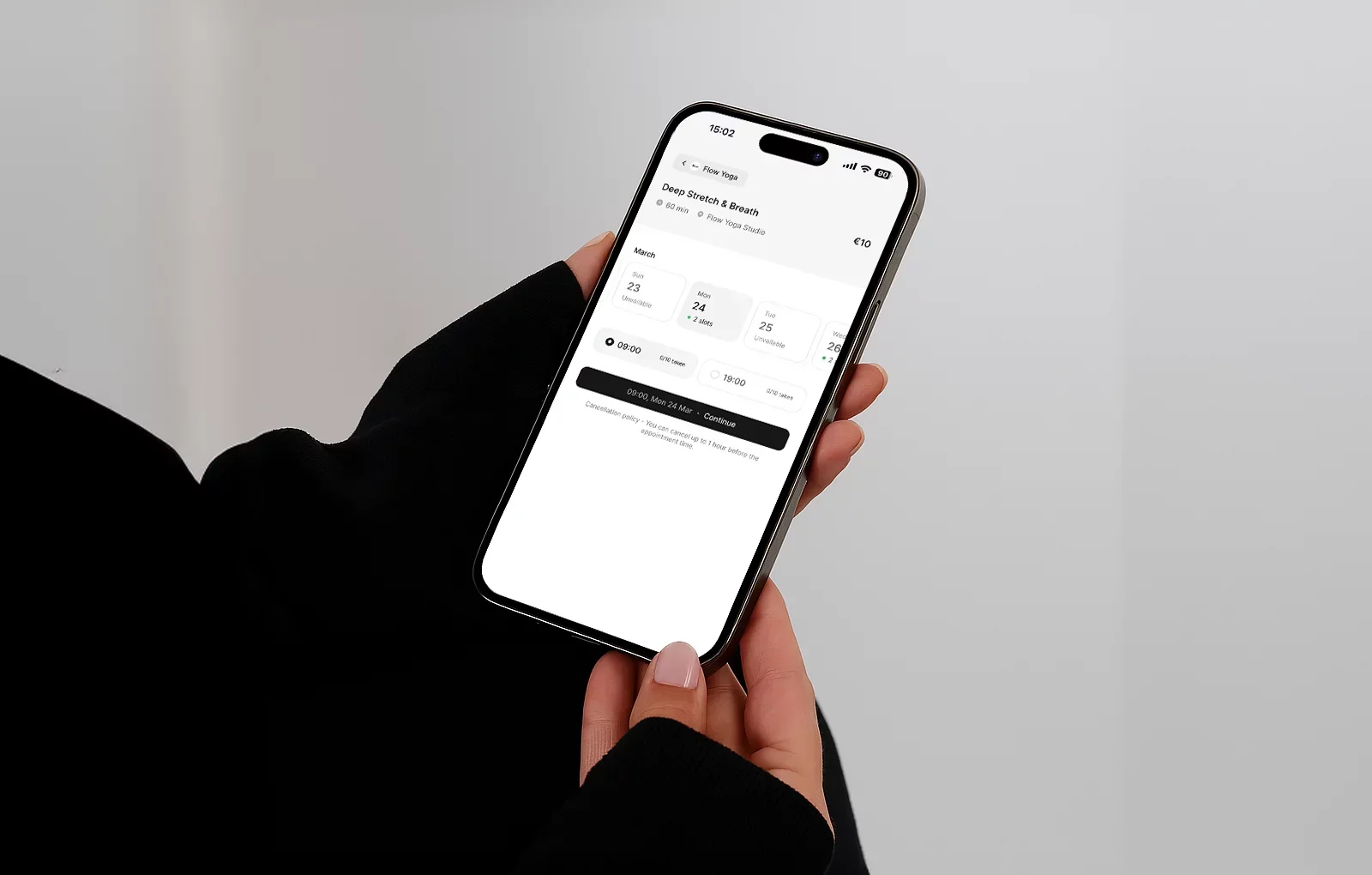
First-time client flow
Think through:
- Client finds your studio.
- Client views your class schedule.
- Client chooses a class or intro offer.
- Client creates a booking.
- Client pays online.
- Client receives confirmation.
- Client knows what to bring.
- Client arrives and checks in.
- Client takes the class.
- Client receives follow-up or books again.
Every step should feel simple.
Reduce friction
Avoid making clients:
- DM you to ask for availability
- Wait for manual payment instructions
- Send bank transfers
- Fill out unnecessary forms
- Guess what class is right for them
- Message you to cancel
- Ask where the studio is
- Search for pricing
The smoother the first booking experience, the more professional your studio feels.
15. Set Up Client Management
Client management becomes important very quickly. Even with a small studio, you need to know who your clients are, what they bought, how often they attend, and whether they are active.
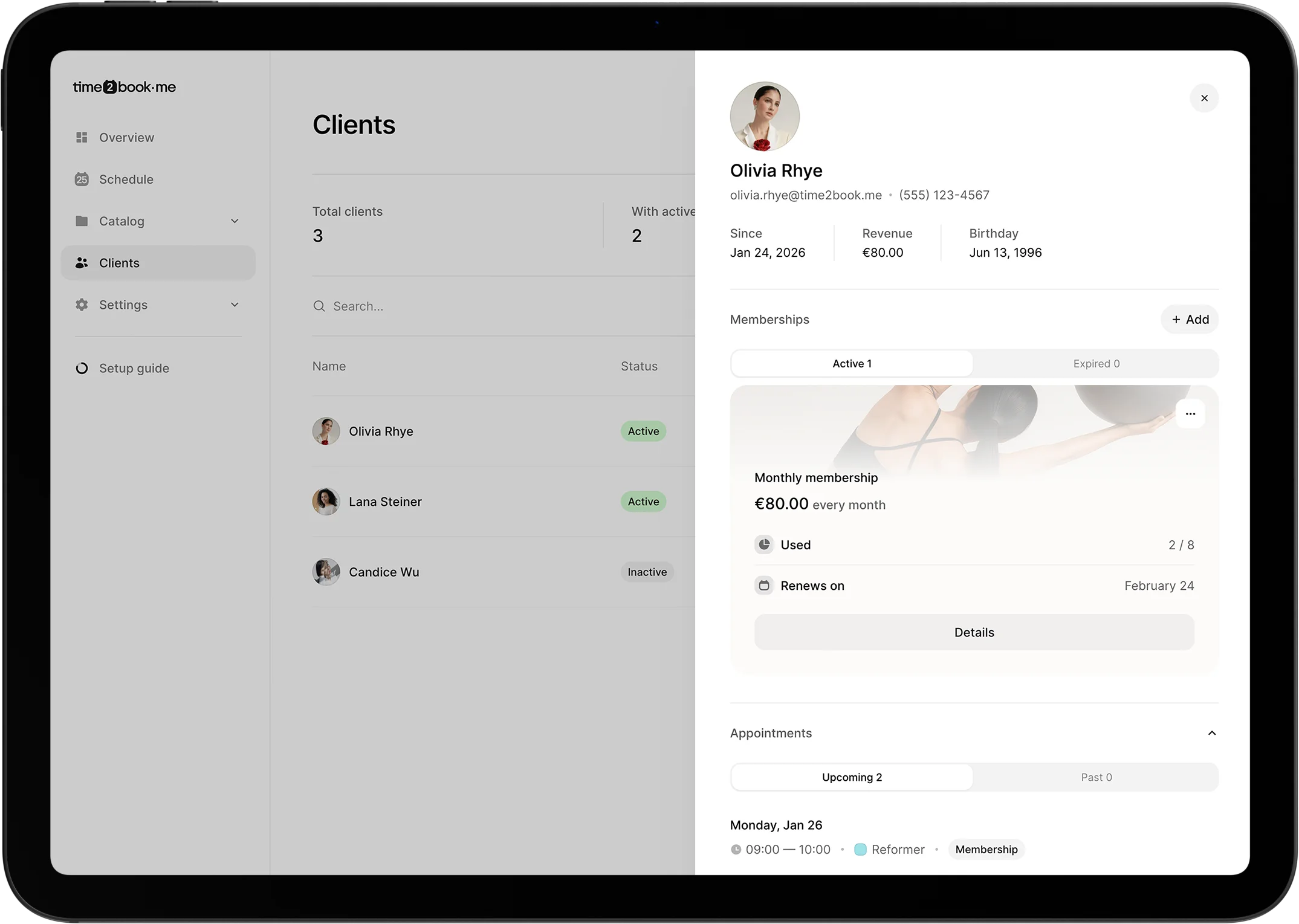
Client information to track
You may need:
- Name
- Phone number
- Purchased plans
- Remaining class credits
- Booking history
- Payment history
- Notes
- Waiver status
- Membership status
- Attendance patterns
This helps you understand your business and improve retention.
For example, if someone buys an intro pack but does not return, you can follow up. If someone attends every week, you can recommend a membership. If a class pack is almost used, you can remind them to buy again.
Time2book keeps bookings, payments, pricing plans, and client information connected, so you do not need to manually match payments, class credits, and attendance in separate tools.
16. Prepare for Opening Week
Opening week should feel exciting, but not chaotic.
Before opening, test everything.
Opening week checklist
Make sure:
- Your booking page works
- Payments work
- Your schedule is correct
- Class capacity is correct
- Pricing plans are live
- Confirmation emails are working
- Cancellation rules are set
- Your website links to booking
- Your Instagram bio links to booking
- Google Business Profile is live
- Instructors know the schedule
- Equipment is installed and tested
- Cleaning supplies are ready
- Waivers and policies are prepared
- Signage is clear
- Clients know where to go
- You have a plan for late arrivals
- You know how to handle no-shows
Run a soft opening
A soft opening helps you test the studio before a bigger launch.
Invite friends, early members, local partners, or waitlist clients to try classes. Use this time to check:
- Flow of arrival and check-in
- Machine spacing
- Sound levels
- Class timing
- Client questions
- Booking process
- Payment process
- Instructor transitions
A soft opening gives you a chance to fix small issues before more people arrive.
17. Measure What Matters After Launch
Once your studio opens, your job changes. You are no longer just preparing. You are improving. Track the numbers that show whether your studio is growing.
Important Pilates studio metrics
Watch:
- Total bookings
- New clients
- Active clients
- Class attendance
- No-show rate
- Revenue
- Membership sales
- Class pack sales
- Intro offer conversions
- Repeat booking rate
- Most popular class times
- Most popular pricing plans
You do not need to obsess over every number. But you should know what is working.
If morning classes are full and lunchtime classes are empty, adjust the schedule. If 10-class packs sell better than memberships, test a better membership offer. If intro clients are not returning, improve the follow-up experience.
A modern Pilates studio should not run on guessing.
Pilates Studio Startup Checklist: Final Version
Here is the full checklist in one place.
Business setup
- Choose your studio concept
- Define your ideal client
- Research competitors
- Choose your location
- Register your business
- Prepare insurance
- Create studio policies
- Plan startup costs
- Plan monthly expenses
Studio setup
- Sign lease
- Plan layout
- Buy equipment
- Prepare storage
- Install lighting
- Set up sound system
- Prepare cleaning supplies
- Test equipment
- Create client flow
Offer setup
- Define class types
- Set class levels
- Create private session options
- Set class capacity
- Create drop-in pricing
- Create class packs
- Create memberships
- Create intro offer
- Create founding member offer
Software setup
- Set up online booking
- Add classes and services
- Add pricing plans
- Connect online payments
- Set cancellation rules
- Add booking notice
- Add client terms
- Test booking flow
- Add booking link to website and Instagram
Marketing setup
- Choose studio name
- Create logo and brand style
- Build website
- Set up Instagram
- Set up Google Business Profile
- Create launch offer
- Build waitlist
- Contact local partners
- Share behind-the-scenes content
- Plan soft opening
Opening week
- Test booking and payments
- Confirm instructor schedule
- Prepare welcome message
- Check equipment
- Prepare studio signage
- Run soft opening
- Collect feedback
- Ask for reviews
- Track bookings
- Adjust schedule
Frequently Asked Questions
A Pilates studio startup checklist is a step-by-step list of everything you need to prepare before opening a Pilates studio. It usually includes business setup, location, equipment, pricing, booking software, payments, policies, marketing, and launch planning.
For new studio owners, a checklist helps turn a big project into smaller decisions. Instead of guessing what to do next, you can move through each area one by one and build a more organized launch plan.
To open a Pilates studio, you need a clear concept, suitable location, equipment, business registration, insurance, pricing, booking software, payment setup, policies, branding, and a launch marketing plan.
If you are opening a reformer Pilates studio, equipment and layout are especially important because each class spot usually requires a reformer. If you are opening a mat Pilates studio, your equipment costs may be lower, but you still need strong class programming, marketing, and client management.
The cost to open a Pilates studio depends on your country, city, rent, studio size, equipment, and build-out. A small mat Pilates studio may cost much less than a premium reformer studio with new machines, custom interiors, and a high-rent location.
Your budget should include both startup costs and operating costs. Many new owners plan for equipment and rent but forget about software, marketing, insurance, instructor pay, payment fees, cleaning, and several months of cash flow after opening.
A new Pilates studio needs software for online bookings, payments, class packs, memberships, client management, and scheduling. The software should make it easy for clients to book classes and buy plans without messaging you manually.
Time2book is a simple, modern option for new Pilates studios that want to manage bookings, payments, memberships, and clients in one place. It is especially useful if you want to launch with online payments, class packs, and recurring memberships from day one.
Yes, selling memberships before opening can be a smart way to build early cash flow and validate demand. Many new studios use founding member offers, intro packs, or limited pre-sale memberships before launch.
The key is to make the offer clear and limited. For example, you could offer special pricing for the first 50 founding members or sell a discounted 10-class pack before opening. Make sure your booking and payment system is ready before promoting the offer.
The number of reformers depends on your space, budget, and business model. Small boutique studios may start with 4–6 reformers, while larger group class studios may open with 8–12 or more.
More reformers can increase class revenue, but they also increase startup costs and space requirements. It is better to start with a layout you can fill consistently than to overinvest in machines before demand is proven.
To get clients before opening, start marketing early. Share your studio concept, behind-the-scenes progress, class types, instructor introductions, and launch offer. Build a waitlist and give people a simple way to book or buy before opening.
You can also partner with local cafés, salons, physiotherapists, wellness brands, and nearby businesses. Add your booking link to Instagram, your website, and Google Business Profile so interested clients can take action immediately.
A good Pilates studio launch offer should be simple, limited, and easy to buy. Examples include an intro pack, founding member membership, discounted first month, or bonus classes for early buyers.
Avoid making the offer too complicated. A clear offer like “Founding members get 8 classes per month at a special rate” is easier to understand than a long list of discounts and conditions.
Final Thoughts: Start Simple, But Start Organized
Opening a Pilates studio is a big step, but it becomes much easier when you break it into a clear checklist.
You need the right space, equipment, pricing, instructors, policies, marketing, and client experience. But you also need systems that make your studio easy to run once bookings start coming in.
That is where Time2book can help.
With Time2book, you can set up online bookings, sell class packs and memberships, collect payments, manage clients, and keep your schedule organized in one simple platform. For new Pilates studios, that means less admin and a smoother launch from day one.
Try Time2book free today and simplify your studio bookings, payments, and client management.