Good yoga class descriptions do more than explain what happens during a class. They help potential students understand the style, pace, difficulty level, and overall experience before they book.
That matters because someone looking at your yoga studio schedule may be choosing between Vinyasa, Yin, Hatha, Restorative, Power Yoga, Hot Yoga, and several other options. If the descriptions are vague, new students may not know which class is right for them.
A clear yoga class description can make that decision much easier. It can also reduce repetitive questions such as “Is this suitable for beginners?”, “Is the class heated?”, or “How difficult is it?”
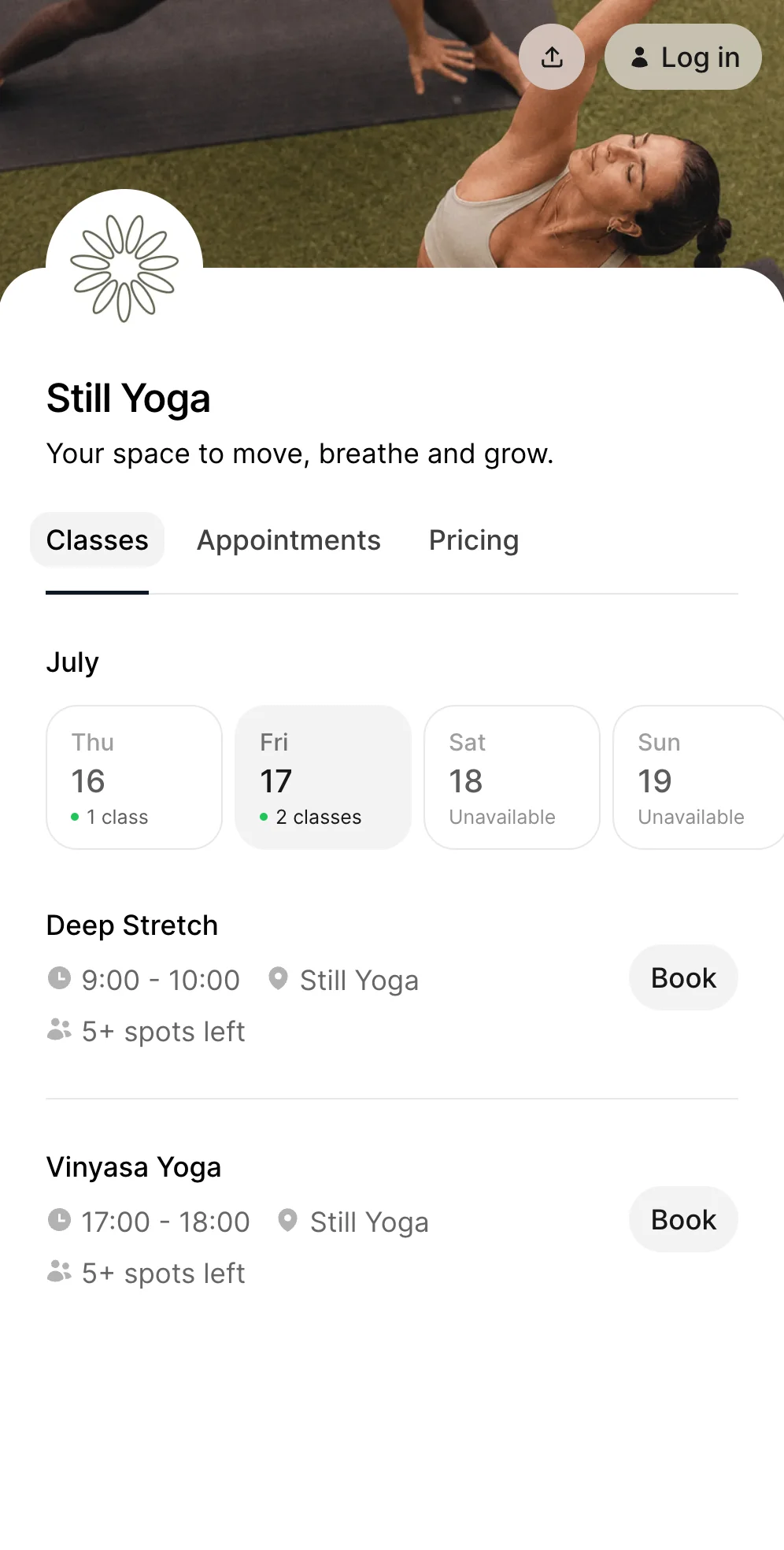
If you run a yoga studio, you can add these descriptions directly to your online schedule using yoga studio software, so students can understand the class and book their spot from the same page. Time2book supports online class bookings, payments, memberships, class passes, and student management from one place.
Try Time2book free and create a simple online schedule where students can discover, choose, and book your yoga classes.
In this guide, we’ll cover how to write better yoga class descriptions and share 50+ yoga class description examples you can adapt for your own studio.
What Should a Yoga Class Description Include?
A yoga class description does not need to be long. In most cases, two to four sentences are enough.
The most useful descriptions answer five simple questions:
- What type of yoga is it? Vinyasa, Hatha, Yin, Restorative, Hot Yoga, and so on.
- What will students do? Flow through poses, hold stretches, practise balance, work on strength, or focus on relaxation.
- How intense is the class? Gentle, moderate, dynamic, challenging, heated, or slow-paced.
- Who is it for? Beginners, experienced students, all levels, athletes, older adults, or another specific group.
- What should students expect? Props, heat, longer holds, breathwork, meditation, music, or a particular focus.
Students should be able to read your yoga class description and quickly decide whether the class matches what they are looking for.
Yoga Class Descriptions: Quick Examples
| Yoga class | Typical pace | Best for |
|---|---|---|
| Beginner Yoga | Slow | New students |
| Vinyasa Yoga | Moderate–fast | Students who enjoy flowing movement |
| Slow Flow Yoga | Slow–moderate | Mindful movement |
| Hatha Yoga | Slow–moderate | Technique and fundamentals |
| Power Yoga | Fast | Strength and challenging movement |
| Yin Yoga | Very slow | Longer stretches and stillness |
| Restorative Yoga | Very slow | Rest and relaxation |
| Gentle Yoga | Slow | Low-intensity practice |
| Hot Yoga | Moderate–fast | Students who enjoy heated classes |
| Ashtanga Yoga | Moderate–fast | Structured, athletic practice |
| Chair Yoga | Gentle | Accessible movement |
| Yoga Sculpt | Moderate–fast | Yoga with strength training |
| Prenatal Yoga | Gentle | Pregnancy-focused practice |
| Yoga Nidra | Still | Guided relaxation |
| Morning Flow | Moderate | Energising morning movement |
Different studios may teach these formats differently, so make sure your description accurately reflects the class your instructors actually deliver.
50+ Yoga Class Description Examples
Below are copy-ready yoga class descriptions you can edit to match your teachers, studio style, class duration, and experience level.
1. Beginner Yoga Class Description
Beginner Yoga
New to yoga? This welcoming class introduces foundational yoga poses, simple breathing techniques, and basic transitions at a comfortable pace. Your instructor will guide you through each movement and offer options throughout the practice.
Perfect for first-time students or anyone looking to revisit the fundamentals.
2. Yoga Fundamentals
Yoga Fundamentals
Build a strong foundation for your yoga practice. This class focuses on essential postures, alignment, breathing, and simple movement sequences while giving you time to understand each pose.
Ideal for beginners and students who want to strengthen their understanding of yoga basics.
3. All Levels Yoga
All Levels Yoga
A balanced yoga class designed to welcome different experience levels. Expect a combination of movement, strength, mobility, balance, and relaxation, with variations offered throughout the class.
Come as you are and practise at the level that works for your body today.
4. Vinyasa Yoga Class Description
Vinyasa Yoga
Move continuously through a creative sequence of yoga poses connected by the breath. Vinyasa combines strength, flexibility, balance, and flowing movement for a dynamic full-body practice.
Some previous yoga experience can be helpful, but options are offered throughout the class.
5. Vinyasa Flow
Vinyasa Flow
Flow from one posture to the next while connecting movement with your breath. Each class features a creative sequence designed to build warmth, mobility, strength, and body awareness.
Expect an energising practice with opportunities to modify or challenge yourself.
6. Slow Flow Yoga
Slow Flow Yoga
Enjoy the flowing movement of Vinyasa at a slower, more deliberate pace. You'll have extra time to explore each posture, focus on alignment, and move mindfully between poses.
A great option for students who enjoy movement without feeling rushed.
7. Gentle Flow Yoga
Gentle Flow
A soft and approachable yoga flow combining gentle movement, stretching, breathing, and relaxation. Transitions are slower and the overall intensity remains low.
Suitable for beginners and anyone wanting a calmer yoga practice.
8. Power Yoga Class Description
Power Yoga
A strong, energetic yoga class designed to challenge your entire body. Expect flowing sequences, strength-focused poses, balance work, and opportunities to explore more demanding variations.
Recommended for students comfortable with basic yoga postures and a faster-paced practice.
9. Dynamic Yoga
Dynamic Yoga
Move, breathe, and build strength through an energetic sequence of yoga postures. Classes combine fluid transitions with balance, mobility, and strength work for a challenging full-body session.
Perfect when you want your yoga practice to feel active and energising.
10. Hatha Yoga Class Description
Hatha Yoga
Slow things down and explore yoga postures with greater attention to alignment, breathing, and control. Poses are generally held longer than in a flowing Vinyasa class, giving you time to settle into each movement.
Suitable for beginners as well as experienced students wanting a more deliberate practice.
11. Traditional Hatha Yoga
Traditional Hatha Yoga
Explore a balanced practice combining physical postures, breathing exercises, mindful movement, and relaxation. The slower pace creates space to focus on technique and develop greater awareness throughout the body.
Open to a range of experience levels.
12. Yin Yoga Class Description
Yin Yoga
Slow down with a quiet practice built around longer-held floor-based poses. Yin Yoga gives you time to settle into each position, reduce unnecessary effort, and focus on stillness and awareness.
Perfect for students who enjoy deep stretching and a slower pace.
13. Yin & Stretch
Yin & Stretch
A slow, floor-based class combining longer yoga poses with gentle stretching. You'll spend several minutes in many positions, giving yourself plenty of time to relax into the practice.
Ideal after a busy day or alongside more active training.
14. Restorative Yoga Class Description
Restorative Yoga
Give yourself permission to slow down. This deeply restful class uses comfortable, supported yoga postures held for longer periods with minimal physical effort.
Props may be used to help you settle into each position while the class focuses on stillness, breathing, and relaxation.
15. Gentle Yoga Class Description
Gentle Yoga
Move slowly through comfortable yoga poses designed to encourage mobility, balance, and body awareness. This class avoids fast transitions and highly demanding sequences.
A welcoming option for beginners or anyone looking for a lower-intensity yoga practice.
16. Hot Yoga Class Description
Hot Yoga
Practise yoga in a heated studio while moving through a full-body sequence of postures. Expect to build warmth, move through standing and floor-based poses, and finish with a period of relaxation.
Bring water and a towel and arrive hydrated.
17. Heated Vinyasa
Heated Vinyasa
A flowing Vinyasa practice in a heated room. Connect breath with movement while working through dynamic sequences designed to challenge strength, balance, mobility, and endurance.
Recommended for students comfortable exercising in warmer conditions.
18. Hot Power Yoga
Hot Power Yoga
Turn up the intensity with a strong Power Yoga sequence performed in a heated studio. Expect energetic flows, strength work, balance challenges, and plenty of movement.
Best suited to students looking for a more physically demanding yoga class.
19. Ashtanga Yoga Class Description
Ashtanga Yoga
Explore a structured and dynamic style of yoga built around a consistent sequence of postures. The practice combines breath, movement, strength, flexibility, and concentration.
Ideal for students who enjoy repetition, progression, and a more disciplined yoga practice.
20. Ashtanga Fundamentals
Ashtanga Fundamentals
An introduction to the foundations of Ashtanga Yoga. Learn key postures, transitions, breathing techniques, and elements of the traditional sequence at a manageable pace.
Perfect for students wanting to prepare for a regular Ashtanga practice.
21. Iyengar Yoga
Iyengar Yoga
A precise yoga practice with particular attention to alignment and technique. Classes may use blocks, straps, bolsters, and other props to help students explore postures with greater control.
Suitable for students who enjoy detailed instruction and a methodical approach to yoga.
22. Kundalini Yoga
Kundalini Yoga
A distinctive practice combining movement, breathing techniques, meditation, and other traditional yoga practices. Classes may include repeated movements, periods of stillness, and guided breathwork.
Expect an experience that feels different from a traditional flowing yoga class.
23. Chair Yoga Class Description
Chair Yoga
An accessible yoga class using a chair for additional support. Practise gentle movements, stretches, balance exercises, and breathing techniques without needing to spend the entire session on the floor.
Suitable for beginners and students looking for a more accessible way to practise yoga.
24. Senior Yoga
Yoga for Seniors
A gentle yoga class focused on comfortable movement, balance, mobility, and breathing. Your instructor provides accessible options and plenty of time to move between positions.
No previous yoga experience is required.
25. Prenatal Yoga Class Description
Prenatal Yoga
A supportive yoga class created specifically for pregnancy. Sessions combine gentle movement, breathing, mobility, relaxation, and pregnancy-appropriate yoga poses.
Please tell your instructor how far along you are and discuss any individual considerations before class.
26. Postnatal Yoga
Postnatal Yoga
Reconnect with movement through a gentle yoga practice designed for the postnatal period. Classes focus on breathing, controlled movement, mobility, and gradually rebuilding confidence in your practice.
Students should follow guidance from their healthcare professional regarding their individual return to exercise.
27. Parent & Baby Yoga
Parent & Baby Yoga
A relaxed yoga class where parents can move, stretch, breathe, and practise alongside their babies. Expect a flexible environment where feeding, changing, cuddles, and breaks are completely welcome.
No previous yoga experience is needed.
28. Kids Yoga
Kids Yoga
A playful introduction to yoga using movement, simple poses, balance, breathing, and imagination. Classes encourage children to explore movement in a fun and supportive environment.
Activities are adapted to the age group attending.
29. Teen Yoga
Teen Yoga
A welcoming yoga class created specifically for teenagers. Sessions combine movement, strength, flexibility, breathing, and relaxation without the pressure of a competitive environment.
Suitable for beginners and students with previous yoga experience.
30. Morning Yoga
Morning Yoga
Start your day with movement. This balanced morning practice combines flowing yoga sequences, mobility, breathing, and gentle strength work to help wake up the body.
Leave class feeling ready for the day ahead.
31. Sunrise Flow
Sunrise Flow
Begin your morning with an energising Vinyasa-inspired flow. Move gradually from gentle mobility into stronger standing sequences before finishing with stretching and a short relaxation.
A refreshing way to start the day.
32. Lunchtime Yoga
Lunchtime Yoga
Step away from your desk and move through a balanced yoga practice designed to fit into your lunch break. Expect mobility, flowing movement, stretching, and a short relaxation.
Suitable for all levels.
33. Express Yoga
30-Minute Express Yoga
Short on time? This focused 30-minute yoga class gets straight into movement with a compact sequence combining mobility, strength, balance, and stretching.
Perfect for busy mornings, lunch breaks, or days when an hour-long class isn't possible.
34. Evening Yoga
Evening Yoga
Transition out of your day with a slower yoga practice combining mindful movement, stretching, breathing, and relaxation.
Expect a calmer pace than a typical daytime flow class.
35. Candlelight Yoga
Candlelight Yoga
Slow down in a calm studio environment with gentle yoga, longer stretches, breathing, and relaxation. Soft lighting helps create a quieter atmosphere for an evening practice.
Suitable for all experience levels.
36. Deep Stretch Yoga
Deep Stretch
A slower yoga class dedicated to mobility and longer-held stretches. Expect mostly floor-based positions targeting areas such as the hips, legs, shoulders, and back.
A great complement to running, strength training, cycling, or more dynamic yoga classes.
37. Yoga for Runners
Yoga for Runners
A yoga class designed with runners in mind. Sessions focus on mobility, balance, controlled strength, and stretching areas commonly used during running, including the hips and legs.
You don't need previous yoga experience to join.
38. Yoga for Athletes
Yoga for Athletes
Complement your regular training with yoga focused on mobility, balance, body control, and flexibility. Classes combine active movement with longer stretches to create a well-rounded practice.
Suitable for athletes from a range of sports.
39. Core Yoga
Core Yoga
A yoga flow with additional focus on the core. Expect traditional yoga postures alongside controlled strength work designed to challenge stability and body awareness.
Suitable for students who enjoy a stronger, more active class.
40. Strength & Flow Yoga
Strength & Flow
Combine flowing yoga sequences with strength-focused movements for a challenging full-body practice. Expect standing poses, controlled transitions, balance work, and longer holds.
Perfect for students who want their yoga practice to feel strong and athletic.
41. Yoga Sculpt
Yoga Sculpt
Yoga meets strength training in this energetic class. Flow through yoga-inspired sequences while adding controlled strength exercises for a full-body workout.
Some classes may use light weights or other equipment, so check your studio's class details before attending.
42. Mobility Flow
Mobility Flow
Explore controlled movement through a yoga-inspired class focused on improving how comfortably your body moves. Expect hip, shoulder, spine, and full-body mobility combined with breathing and gentle strength.
Suitable for a wide range of experience levels.
43. Hip Opening Yoga
Hip Opening Flow
A focused yoga class exploring movement and stretches around the hips and lower body. Expect a combination of flowing sequences, longer-held poses, and floor-based mobility.
Perfect for students wanting to dedicate extra time to lower-body movement.
44. Shoulders & Upper Body Yoga
Shoulders & Upper Body Flow
Give your upper body some attention with a yoga practice focused on the shoulders, chest, upper back, and spine. The class combines mobility, gentle strength, and longer stretches.
A useful option after long hours spent sitting or working at a desk.
45. Full Body Flow
Full Body Flow
A balanced Vinyasa-style class designed to move the entire body. Expect standing sequences, twists, balances, strength work, mobility, and stretches before finishing with relaxation.
Suitable for students with some familiarity with basic yoga poses.
46. Balance & Stability Yoga
Balance & Stability
Challenge your balance through standing poses, controlled transitions, core work, and mindful movement. Your instructor will offer variations so you can explore each pose at your own level.
Expect a focused class with a playful element.
47. Breathwork & Yoga
Breath & Flow
Combine mindful yoga movement with guided breathing exercises. The session begins with breath awareness before progressing into a balanced sequence of poses and finishing with a quiet relaxation.
Suitable for all levels.
48. Meditation & Movement
Meditation & Movement
A slower practice combining gentle yoga with guided meditation and intentional breathing. Move through simple postures before settling into a longer period of stillness.
No meditation or yoga experience is required.
49. Yoga Nidra Class Description
Yoga Nidra
A guided relaxation practice performed primarily while resting comfortably on your mat. Your instructor will lead you through awareness and relaxation techniques while you remain physically still.
Wear comfortable clothing and prepare for a very different experience from an active yoga class.
50. Yin & Sound
Yin Yoga & Sound
Combine slow Yin Yoga postures with an immersive sound experience. Longer-held poses create plenty of time for stillness before the session transitions into an extended relaxation accompanied by sound.
No previous yoga experience is required.
51. Advanced Vinyasa
Advanced Vinyasa
A challenging yoga flow for experienced practitioners who are confident with common Vinyasa postures and transitions. Classes may include arm balances, inversions, deeper variations, and more complex sequencing.
Previous Vinyasa experience is strongly recommended.
52. Inversions & Arm Balances
Inversions & Arm Balances
Develop the foundations needed for inversions and arm balances through technique drills, strength work, mobility, and guided practice.
This workshop-style class is best suited to students with an established yoga practice.
53. Private Yoga Class
Private Yoga
Enjoy one-to-one yoga instruction tailored to your goals, experience, and preferred style of practice. Your teacher can adapt the pace, sequence, and areas of focus specifically for you.
Suitable for complete beginners as well as experienced practitioners looking for more individual guidance.
54. Small Group Yoga
Small Group Yoga
Experience personalised instruction while practising alongside a small group. Limited class sizes allow your teacher to provide more individual guidance while maintaining the energy of a group yoga session.
Suitable for different experience levels unless otherwise specified.
55. Community Yoga
Community Yoga
A welcoming yoga class designed to bring people together through movement and practice. Expect an accessible all-level sequence with options available throughout the session.
Everyone is welcome.
How to Write Better Yoga Class Descriptions
The best yoga class descriptions are specific enough to help students choose without becoming unnecessarily complicated.
Start With the Experience
Instead of beginning with a technical definition of the yoga style, tell students what the class will feel like.
For example:
Less useful:
“Vinyasa is a style of yoga where asanas are connected through transitional movements.”
Better:
“Move continuously through a creative sequence of yoga poses while connecting each movement with your breath.”
The second description helps someone imagine actually attending the class.
Clearly State the Difficulty Level
Words such as “all levels” can be useful, but only when they are accurate.
If students need to know basic poses before attending, say so. If complete beginners are welcome, make that obvious too.
Useful phrases include:
- Beginners welcome
- No previous yoga experience required
- Suitable for all levels
- Some yoga experience recommended
- Recommended for experienced practitioners
- Modifications are offered throughout the class
Clear expectations create a better experience for both students and instructors.
Explain the Pace
Two classes can both be called “Yoga Flow” while offering completely different experiences.
Use descriptive language such as slow, gentle, steady, dynamic, energetic, or challenging so students understand what they are booking.
Mention Important Practical Details
If something could materially affect a student's decision to attend, put it in the description.
For example, mention when:
- The studio is heated.
- Weights are used.
- Most of the class is floor-based.
- Students need previous experience.
- Props are required or provided.
- The class is designed for pregnancy.
- The session includes meditation or sound.
- The class has a specific age requirement.
Don't make students search through several pages to find important information.
Short Yoga Class Descriptions vs Long Descriptions
Your main schedule usually needs a short yoga class description rather than a full explanation of the yoga style.
Students often browse several classes before choosing one, so making descriptions easy to scan is more useful than filling your booking page with long paragraphs.
For example:
Short Vinyasa Yoga Description
A dynamic yoga flow connecting movement with breath. Expect creative sequences, strength, balance, mobility, and stretching. Some yoga experience is recommended.
Short Yin Yoga Description
Slow down with longer-held, floor-based yoga poses focused on stillness and stretching. Suitable for beginners and experienced students.
Short Beginner Yoga Description
Learn foundational yoga poses, breathing, and simple transitions at a comfortable pace. No previous yoga experience is required.
You can always create a separate page explaining each yoga style in greater detail if your students want to learn more.
Give Every Yoga Class a Clear Name
Your class name and description should work together.
A creative name such as Reset, Awaken, or Sunday Ritual might fit your studio branding, but a new student may have no idea what they are booking.
One solution is combining the creative name with a descriptive yoga term:
Reset — Gentle Evening Yoga
Awaken — Morning Vinyasa Flow
Sunday Ritual — Yin & Restorative Yoga
Ignite — Heated Power Yoga
Foundations — Beginner Yoga
This keeps your schedule distinctive while still helping students understand each class.
Make Your Yoga Class Descriptions Easy to Book
Great descriptions work best when students can immediately act on them.
Your online schedule should make it easy to see the class name, description, instructor, date, time, availability, price, and applicable membership or class pack without needing to message the studio.
With Time2book, yoga studios can manage their schedule, bookings, payments, memberships, class passes, and student information from one place. Students can view upcoming classes and reserve their spot online.
You can also compare the best yoga studio booking software if you're reviewing how your studio currently handles classes and memberships.
Frequently Asked Questions About Yoga Class Descriptions
A good yoga class description quickly explains the style, pace, difficulty, and experience students should expect. It should also clearly state whether beginners are welcome and mention important details such as heat, props, equipment, or previous experience requirements.
For most online schedules, two to four sentences are enough.
A beginner yoga class description should emphasise that no previous experience is required and explain that foundational poses, breathing, and basic transitions will be introduced gradually.
Avoid language that could make first-time students feel they are expected to already understand yoga terminology.
A Vinyasa yoga class description should explain that students move through sequences of yoga poses connected by breath. You can also mention whether your particular class is slow, moderate, dynamic, heated, beginner-friendly, or designed for more experienced students.
A Yin yoga class description should explain that the practice is slower and generally involves holding mostly floor-based poses for longer periods. Mentioning stillness, stretching, and the slower pace helps students distinguish Yin from more dynamic classes such as Vinyasa or Power Yoga.
Tell students that the room is heated, describe the general intensity and style of the class, and mention practical requirements such as bringing water and a towel if appropriate for your studio. If your studio maintains a specific temperature range, you can also include it directly in the description.
For an online yoga schedule, around 40–80 words is usually enough. The goal is to give students the information they need to choose a class without forcing them to read a long explanation.
More detailed information about individual yoga styles can live on separate pages of your studio website.
Yes. Even familiar names such as Vinyasa, Hatha, or Power Yoga can mean slightly different things depending on the studio and teacher.
Adding a short description helps students understand your studio's version of the class and makes your schedule easier for new clients to navigate.
Display the description directly alongside your class schedule or booking flow so students can understand the class before reserving a place.
A yoga studio booking system such as Time2book can keep your class schedule, bookings, payments, memberships, and student management connected instead of relying on separate tools.
Final Thoughts on Yoga Class Descriptions
Your yoga class descriptions are a small part of your website, but they can have a big impact on how easy your studio is to understand.
Someone visiting for the first time should not need to know the difference between Vinyasa, Hatha, Yin, Restorative, or Power Yoga before opening your schedule. Your descriptions should make those differences clear.
Keep each description concise, explain the pace and experience, state who the class is suitable for, and mention anything students should know before attending.
You don't need to use the examples above word for word. Adjust them to reflect your instructors, teaching style, studio personality, class length, and the experience you want students to have.
And once your descriptions are ready, make the next step just as easy.
Try Time2book free today and simplify your yoga studio bookings, payments, memberships, and client management.