Yoga Studio Profit Margin: How Profitable Are Yoga Studios in 2026?

Ignas Lunenas
Sep 12, 2026
14 min read

Opening a yoga studio can create a rewarding business around something you care about, but a full class schedule does not automatically mean a profitable studio. Rent, instructor payroll, front-desk staff, marketing, payment processing, insurance, software, cleaning, and dozens of smaller expenses all have to be paid before the owner sees any real profit.
So, what is a good yoga studio profit margin?
The answer varies considerably. Industry data shows that many profitable yoga studios operate on relatively thin margins. Boutique Fitness Solutions found that 41% of profitable yoga studios reported profit margins between just 1% and 9%, while yoga studios also tended to have larger facilities and lower pricing than Pilates studios.
That does not mean yoga studios cannot become highly profitable. A well-run studio with strong memberships, good retention, healthy class occupancy, appropriate pricing, and controlled expenses can potentially reach 10–20% net profit margins, with 20%+ representing a particularly strong business.
If you run a yoga studio, Time2book helps you manage classes, memberships, class packs, payments, clients, and revenue from one place, making it easier to understand what is actually driving your studio's performance.
Try Time2book free today and simplify your yoga studio bookings, payments, memberships, and client management.
In this guide, we'll break down realistic yoga studio profit margins in 2026, how much profit a yoga studio can make, the biggest expenses affecting profitability, and what studio owners can do to improve their margins.
What Is the Average Yoga Studio Profit Margin?
There is no single profit margin that applies to every yoga studio.
Location, pricing, studio size, instructor costs, memberships, class capacity, and owner involvement can completely change the economics of the business.
One recent boutique fitness industry study provides an important reality check. Among profitable yoga studios surveyed, 41% reported margins of only 1–9%, while 61% generated less than $500,000 in annual revenue.
Other industry estimates put established yoga studio margins higher. Mindbody suggests yoga studio profit margins can fall around 15–30%, although actual results depend heavily on how efficiently the business operates.
For planning purposes, a useful way to think about yoga studio net profit margins is:
Net profit margin | What it means |
|---|---|
Below 0% | Studio is losing money |
0–5% | Profitable, but financially vulnerable |
5–10% | Common for smaller or lower-margin yoga studios |
10–15% | Healthy |
15–20% | Strong |
20%+ | Excellent |
25%+ | Highly profitable and usually very efficiently operated |
A studio earning a 5% margin is technically profitable, but there is very little room for unexpected expenses, seasonal downturns, instructor changes, rent increases, or declining membership.
A consistent 10–20% net margin is therefore a sensible target for an established yoga studio.
How Do You Calculate Yoga Studio Profit Margin?
Your yoga studio profit margin shows how much of your revenue remains after expenses.
The basic formula is:
Net profit margin = Net profit ÷ Total revenue × 100
For example, imagine your yoga studio generates:
- $30,000 monthly revenue
- $27,000 monthly expenses
- $3,000 monthly profit
Your profit margin would be:
$3,000 ÷ $30,000 × 100 = 10%
If the same studio reduced expenses or increased revenue and produced $6,000 in monthly profit:
$6,000 ÷ $30,000 × 100 = 20%
That difference is significant.
At $30,000 in monthly revenue, improving your profit margin from 10% to 20% would increase annual profit from $36,000 to $72,000 without requiring the studio to double its revenue.
Gross Profit vs Net Profit
It is also important to distinguish between gross profit and net profit.
Gross profit typically considers the direct costs of delivering a service. For example, if a class generates $300 in revenue and the instructor costs $60, the class may appear to generate $240 in gross profit.
But the studio still needs to pay for:
- Rent
- Utilities
- Management
- Reception
- Insurance
- Booking software
- Payment processing
- Cleaning
- Marketing
- Accounting
- Repairs
- Other overhead
Net profit is what remains after all of those operating costs.
For evaluating whether your yoga studio is actually profitable, net profit margin is usually the more useful number.
How Much Profit Can a Yoga Studio Make?
Revenue alone does not tell you how successful a yoga studio is.
Consider several studios with different revenue levels and profit margins:
Monthly revenue | 5% margin | 10% margin | 15% margin | 20% margin |
|---|---|---|---|---|
$15,000 | $750 | $1,500 | $2,250 | $3,000 |
$20,000 | $1,000 | $2,000 | $3,000 | $4,000 |
$30,000 | $1,500 | $3,000 | $4,500 | $6,000 |
$40,000 | $2,000 | $4,000 | $6,000 | $8,000 |
$50,000 | $2,500 | $5,000 | $7,500 | $10,000 |
$75,000 | $3,750 | $7,500 | $11,250 | $15,000 |
A studio generating $50,000 per month at a 5% margin produces only $2,500 in monthly profit.
Meanwhile, a smaller studio generating $30,000 per month at a 20% margin produces $6,000.
That is why increasing revenue should not be the only goal. How much money remains after generating that revenue matters just as much.
If you are also trying to understand how that profit translates into personal income, see our guide to Yoga Studio Owner Salary: How Much Do Yoga Studio Owners Make in 2026?
Why Yoga Studio Profit Margins Can Be Tight
Yoga studios have several structural challenges that can make profitability harder than it initially appears.
Boutique Fitness Solutions found that yoga studios commonly operate in larger spaces while generally charging less than Pilates studios. Among surveyed studios, 54% of city yoga studios and 48% of suburban yoga studios occupied spaces larger than 2,500 square feet.
That creates a difficult combination:
Lower pricing + larger studio + instructor payroll = pressure on profit margins.
Yoga Classes Often Have Lower Pricing
Yoga studios frequently compete with gyms, community centers, online yoga platforms, independent instructors, free YouTube content, and other local studios.
This can make owners reluctant to raise prices.
But underpricing has a compounding effect.
Imagine you have 200 recurring members.
At $90 per month:
200 × $90 = $18,000/month
At $110 per month:
200 × $110 = $22,000/month
That $20 difference creates another $4,000 per month or $48,000 per year in revenue without adding a single member.
Pricing needs to fit your local market, but a studio that remains permanently underpriced will find it difficult to create healthy margins.
Yoga Studios Need Physical Space
Unlike appointment businesses that can operate from relatively small rooms, a group yoga class needs enough floor space for multiple students.
Larger spaces usually mean higher:
- Rent
- Utility costs
- Cleaning costs
- Deposits
- Renovation expenses
- Heating and cooling costs
Your studio needs enough members and sufficiently full classes to make that space financially productive.
Instructor Payroll Adds Up Quickly
Most studios need multiple instructors to offer a varied schedule.
One additional class may not seem expensive, but consider a studio running 45 classes per week.
At an average instructor cost of $50:
45 × $50 = $2,250 per week
That is approximately $9,750 per month before payroll taxes, employee benefits, management costs, or other staffing expenses.
The important question is therefore not simply how much an instructor costs.
It is:
How much revenue does each class generate relative to the cost of running it?
What Are the Biggest Yoga Studio Expenses?
Most yoga studios have a combination of fixed and variable costs.
Instructor Payroll
Instructor payroll is usually one of the biggest expenses.
Depending on your business model, teachers may receive:
- A flat rate per class
- Pay based on attendance
- Base pay plus attendance bonuses
- Hourly wages
- Employee salaries
- Revenue percentages
The exact structure matters less than understanding how instructor costs relate to class revenue.
Paying an instructor $60 for a class producing $400 is very different from paying $60 for a class producing $90.
Rent
Rent can quickly become one of the biggest constraints on yoga studio profitability.
A beautiful studio may help attract members, but more space is not always better.
Every additional square foot needs to generate enough value to justify its cost.
Before expanding, studio owners should ask whether the current space is genuinely limiting growth or whether existing classes simply need higher occupancy.
Management and Front Desk Staff
As a studio grows, administration can become another major expense.
You may need staff to manage:
- Bookings
- Membership questions
- Instructor schedules
- Sales
- Phone calls
- Cleaning
- Cancellations
- Payments
- Client accounts
Software and automation can reduce some of this administrative work.
For example, dedicated yoga studio software can allow clients to book classes, purchase memberships and class packs, pay online, cancel within your policies, and manage their bookings without requiring staff to process everything manually.
Marketing
Even studios with good retention need a steady stream of new students.
Marketing costs may include:
- Google Ads
- Meta or Instagram advertising
- Local partnerships
- Introductory offers
- Influencer collaborations
- Events
- Photography
- Website costs
- SEO
- Referral rewards
Marketing should therefore be evaluated based on how many paying members it creates rather than simply how many leads or Instagram followers it generates.
Software and Payment Processing
Booking software, payment processing, accounting tools, email software, websites, and other subscriptions may individually appear inexpensive, but multiple disconnected systems can add up.
A simpler technology stack also reduces administrative work.
Utilities, Insurance and Other Expenses
Smaller expenses include:
- Electricity
- Heating
- Water
- Internet
- Insurance
- Cleaning
- Yoga props
- Towels
- Repairs
- Accounting
- Legal costs
- Music licensing
- Merchant fees
- Office supplies
None of these may destroy your margin individually, but together they can become significant.
A Realistic Yoga Studio Profit Example
Imagine an established yoga studio generates $35,000 per month.
Its monthly expenses might look something like this:
Expense | Monthly cost |
|---|---|
Instructor payroll | $10,000 |
Rent | $6,000 |
Manager/front desk | $4,000 |
Marketing | $1,500 |
Payment processing & software | $1,300 |
Utilities | $800 |
Cleaning & supplies | $700 |
Insurance | $300 |
Accounting & admin | $400 |
Repairs & miscellaneous | $1,000 |
Total expenses | $26,000 |
Operating profit | $9,000 |
The studio generates:
$9,000 ÷ $35,000 × 100 = 25.7% profit margin
That would be a highly profitable yoga studio.
Now imagine revenue falls to $30,000 while expenses remain almost identical.
Profit becomes:
$30,000 − $26,000 = $4,000
The margin falls to:
13.3%
A relatively small reduction in revenue has nearly halved the studio's profit.
This illustrates why recurring membership revenue, retention, and class occupancy matter so much.
Where Does Yoga Studio Revenue Come From?
Most successful yoga studios do not rely entirely on drop-in classes.
Common yoga studio revenue streams include:
Memberships
Recurring memberships are usually the most valuable revenue source because they make revenue predictable.
For example:
200 members × $110/month = $22,000 monthly recurring revenue
That allows the studio to plan payroll, rent, marketing, and future investment with much greater confidence.
Class Packs
Five-class, 10-class, or 20-class packs work well for students who want flexibility without committing to a recurring membership.
They can also help studios collect payment upfront.
Drop-In Classes
Drop-ins provide flexibility for occasional visitors and new students, but relying too heavily on them makes revenue less predictable.
A strong pricing structure usually makes membership increasingly attractive for students attending regularly.
Private Yoga Sessions
Private and semi-private sessions can produce significantly more revenue per teaching hour than standard group classes.
They are particularly useful for:
- Beginners
- Rehabilitation
- Older students
- Athletes
- Pregnancy
- Mobility work
- Students wanting individual attention
Workshops
Weekend workshops can make use of your space outside the normal class schedule while creating additional revenue from existing members.
Examples include:
- Handstand workshops
- Breathwork
- Meditation
- Mobility
- Yoga for runners
- Inversions
- Sound baths
- Partner yoga
Teacher Training
Teacher-training programs can become a substantial revenue stream for established studios with a strong brand and experienced instructors.
Retreats and Events
Retreats can increase revenue while also strengthening your studio community.
Retail
Mats, blocks, clothing, water bottles, towels, and other merchandise can provide additional revenue, although margins and inventory need to be monitored carefully.
Yoga Alliance has previously found that more than half of yoga studios generate revenue from additional fitness classes, wellness services, or accessories rather than relying solely on yoga classes.
Class Occupancy Is One of the Biggest Profitability Levers
A class costs almost the same to run whether four people attend or 18.
That makes occupancy particularly important.
Imagine a class accommodates 20 students and the average realized revenue per visit is $15.
5 Students
Revenue:
5 × $15 = $75
If the instructor costs $50, only $25 remains before accounting for rent, utilities, software, marketing, and everything else.
15 Students
Revenue:
15 × $15 = $225
The instructor may still cost $50.
Now $175 remains before overhead.
Same room.
Same instructor.
Same 60-minute class.
But the economics are completely different.
This is why adding more classes is not always the best way to grow a yoga studio.
Sometimes the better strategy is to fill the classes you already have.
The Danger of Running Too Many Yoga Classes
Studio owners naturally want to provide convenient schedules.
Morning yoga. Lunchtime yoga. After-work yoga. Evening Yin. Weekend Vinyasa.
Eventually, however, the schedule can become too fragmented.
Instead of filling four strong classes, you may end up running eight half-empty ones.
Consider two options.
Schedule A
4 classes × 15 students = 60 bookings
Schedule B
8 classes × 8 students = 64 bookings
Schedule B produces slightly more bookings, but requires twice as many instructor hours.
If instructors cost $50 per class:
- Schedule A instructor cost: $200
- Schedule B instructor cost: $400
Nearly identical attendance produces very different profitability.
Regularly review your timetable and identify:
- Consistently full classes
- Classes approaching capacity
- Underperforming classes
- Times with repeated waitlists
- Classes with declining attendance
- Instructors driving particularly strong retention
Your class schedule should respond to actual demand.
How to Improve Your Yoga Studio Profit Margin
Improving profitability does not necessarily require hundreds of new students.
Often, the biggest improvements come from making the existing business more efficient.
1. Increase Recurring Membership Revenue
Memberships make revenue predictable and increase client lifetime value.
Create a simple pricing structure where students clearly understand the benefit of becoming members.
For example:
- 4 classes per month
- 8 classes per month
- Unlimited membership
- Class packs for flexible students
- Drop-in price as the premium flexible option
Avoid creating so many packages that choosing becomes confusing.
2. Improve Member Retention
Acquiring a new client only to lose them after two months creates constant pressure on marketing.
Retention improves profitability because you continue earning revenue without repeatedly paying to replace the same customers.
Track:
- Membership cancellations
- Attendance frequency
- Failed payments
- Members who stop attending
- Membership renewals
- New-client conversion
Students who suddenly stop attending are particularly important. Reaching out early may prevent a cancellation later.
3. Increase Class Occupancy
Before adding another class, look at whether your existing timetable is being used effectively.
Move poorly attended sessions, test alternative times, combine similar classes, and expand high-demand sessions when needed.
Waitlists can also help recover spaces when cancellations occur.
4. Review Your Pricing
Many studio owners are uncomfortable raising prices.
But keeping prices unchanged for years while rent, instructor pay, insurance, utilities, and software costs increase gradually reduces your margin.
Even relatively small increases can materially change profitability.
With 200 members:
$5 increase = $1,000 more monthly revenue
That becomes:
$12,000 additional annual revenue
A $10 increase doubles that impact.
5. Increase Revenue Per Client
You do not always need more clients.
You can increase the value created by existing relationships through:
- Workshops
- Private sessions
- Teacher training
- Retreats
- Merchandise
- Online classes
- Specialty courses
- Corporate yoga
Choose services that fit your studio rather than adding revenue streams simply because other studios offer them.
6. Reduce Unnecessary Admin Work
Every booking that needs to be manually entered, payment that needs to be chased, and membership question that requires staff attention creates operational cost.
A good yoga booking system should let students:
- Book online
- Buy memberships
- Purchase class packs
- Pay online
- View their bookings
- Cancel within studio policies
- Join waitlists
- Receive automatic confirmations and reminders
Time2book brings these processes together while also giving studio owners visibility into bookings, revenue, clients, and pricing-plan performance.
7. Know Your Numbers
You should be able to answer questions such as:
- What is our monthly revenue?
- What is our net profit?
- What is our profit margin?
- How many active members do we have?
- What is our average revenue per member?
- Which classes are most profitable?
- Which classes are regularly under capacity?
- How many members cancel each month?
- Which memberships generate the most revenue?
- What percentage of revenue goes toward instructor payroll?
If you cannot answer these questions, improving profitability becomes guesswork.
What Is a Good Yoga Studio Profit Margin?
For most established yoga studios, a good target is approximately 10–20% net profit.
That means:
For every $100 of revenue, the business keeps approximately $10–$20 after operating expenses.
A margin below 10% does not necessarily mean your studio is failing. Industry research suggests many profitable yoga businesses operate within this range.
However, thinner margins create less room for error.
A studio consistently achieving 15–20% is in a much stronger position to:
- Build cash reserves
- Invest in marketing
- Increase staff pay
- Improve facilities
- Replace equipment
- Survive slower months
- Expand
- Pay the owner
- Handle unexpected costs
Reaching 20%+ should generally be considered excellent performance rather than the minimum requirement.
How Profitable Are Yoga Studios Compared With Pilates Studios?
Yoga studios can be profitable, but the business model is often structurally more challenging than Pilates.
Pilates studios—particularly reformer studios—can usually charge significantly more per session while operating with smaller class capacities.
Yoga studios often charge less while needing larger spaces.
Boutique Fitness Solutions found that Pilates studios were more likely to reach stronger profitability levels, while yoga studios experienced tighter margins because of their combination of lower pricing and larger spaces.
That does not make yoga a bad business.
It simply means yoga studios need to pay particularly close attention to:
- Membership pricing
- Instructor payroll
- Rent
- Schedule efficiency
- Class occupancy
- Retention
- Revenue per client
A strong community can become one of the biggest advantages of the yoga business model. Loyal students who attend several times per week, participate in workshops, refer friends, and remain members for years can create extremely valuable recurring revenue.
Frequently Asked Questions About Yoga Studio Profit Margin
What is the average yoga studio profit margin?
Yoga studio profit margins vary significantly. Industry research found that 41% of profitable yoga studios surveyed operated at a 1–9% profit margin, while other industry estimates place established studios closer to 15–30%.
For planning purposes, a consistent 10–20% net profit margin is a strong target for an established studio.
Are yoga studios profitable?
Yes, yoga studios can be profitable.
Profitability depends primarily on membership revenue, pricing, retention, class occupancy, rent, instructor payroll, and how efficiently the studio is managed.
A studio can have busy classes but still produce very little profit if prices are too low or operating expenses are too high.
What is a good profit margin for a yoga studio?
A net margin of around 10–20% can generally be considered healthy for a yoga studio.
Margins above 20% represent particularly strong performance, while studios below 10% should look carefully at pricing, occupancy, payroll, rent, and membership retention.
How much money can a yoga studio make?
A small yoga studio might generate $10,000–$25,000 per month, while established studios with large recurring memberships, workshops, teacher training, private sessions, or additional services can generate substantially more.
However, revenue is not the same as profit. A $40,000-per-month studio with a 10% net margin produces approximately $4,000 in monthly profit.
How much does a yoga studio owner make?
Owner income depends on revenue, expenses, profit margin, and whether the owner also teaches or manages the studio.
Some new owners may earn very little while building the business, while established profitable studios can support owner incomes of $60,000–$100,000 or more.
Read our full guide to Yoga Studio Owner Salary for a more detailed breakdown.
What makes a yoga studio profitable?
The most important factors include strong recurring memberships, good member retention, healthy class occupancy, appropriate pricing, controlled instructor payroll, manageable rent, and a schedule aligned with actual demand.
Additional revenue from private sessions, workshops, teacher training, retreats, and other services can further improve profitability.
How can I increase my yoga studio profit margin?
Start by measuring class occupancy, revenue per member, instructor costs, membership cancellations, and expenses.
Then focus on filling existing classes, improving membership retention, reviewing pricing, removing persistently unprofitable sessions, and increasing revenue from current clients before significantly increasing overhead.
Can a yoga studio reach a 20% profit margin?
Yes. A 20% net profit margin is achievable for a well-run yoga studio, although industry data suggests many yoga studios operate below that level. Reaching 20% usually requires strong recurring revenue, efficient scheduling, good retention, disciplined costs, and consistently healthy class occupancy.
Final Thoughts: How Profitable Are Yoga Studios?
Yoga studios can absolutely become profitable businesses, but profitability should not be measured by how many classes appear on the timetable or how busy the studio looks.
The number that ultimately matters is what remains after paying everyone and everything required to operate the business.
Industry research suggests that many profitable yoga studios still operate on margins below 10%, which highlights how important pricing, rent, instructor payroll, and class occupancy are. A healthier long-term goal is to work toward a 10–20% net profit margin, with 20%+ representing an especially strong studio.
Focus first on predictable recurring membership revenue. Build a schedule around actual demand instead of running unnecessary classes. Track retention and reach out when regular students disappear. Review your pricing as costs rise. Make better use of the clients and studio space you already have before taking on more overhead.
Most importantly, know your numbers.
A studio generating $500,000 in annual revenue with little profit is not necessarily healthier than one generating $300,000 with a strong margin, loyal membership base, and manageable expenses.
Profit gives you the ability to pay yourself properly, reward your instructors, invest in the studio, survive difficult periods, and keep building the community your clients value.
Time2book helps yoga studios manage class schedules, memberships, class packs, payments, clients, and studio performance from one simple platform.
Try Time2book free today and simplify your studio bookings, payments, and client management.
Yoga studio software
Learn more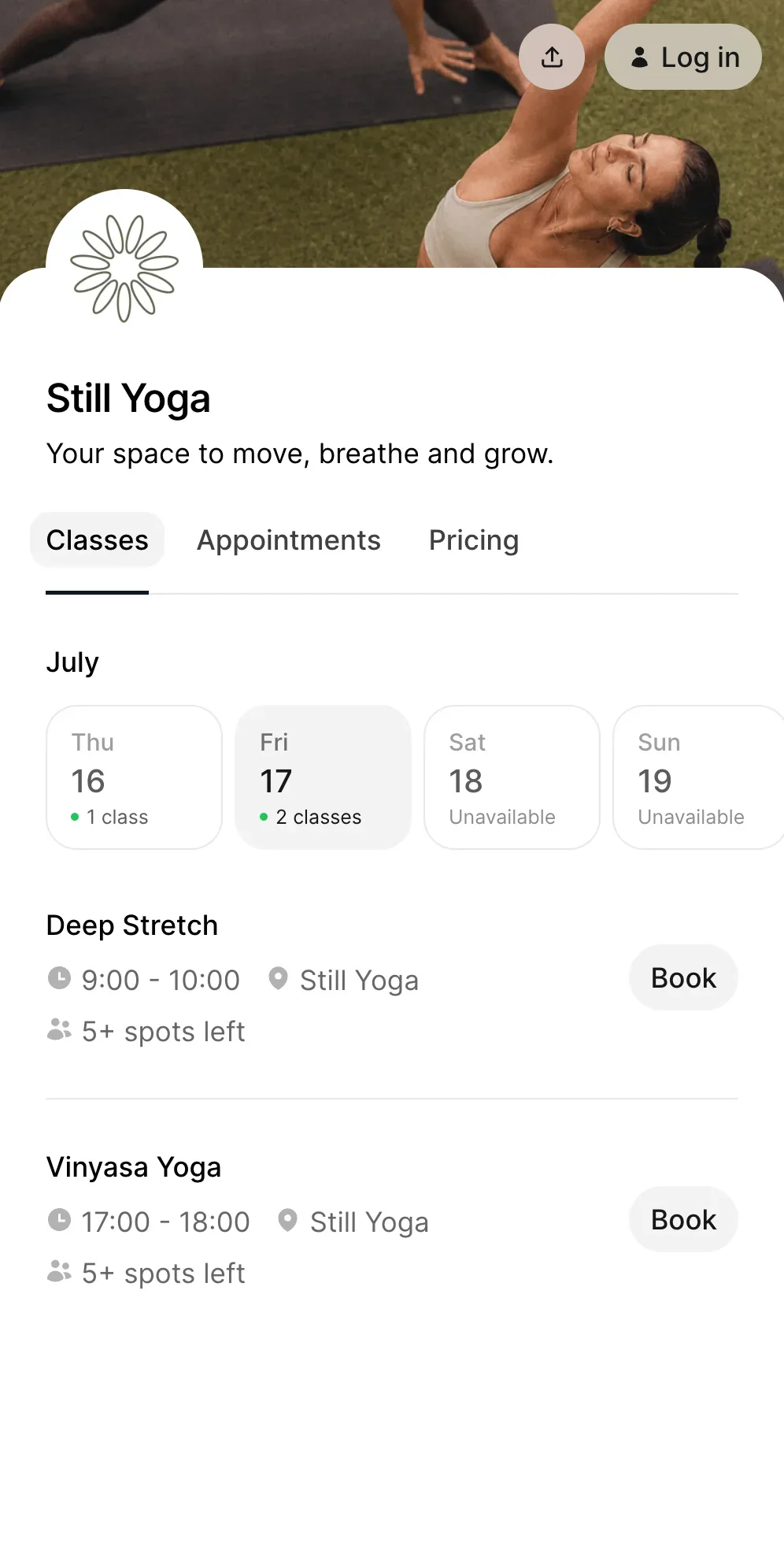
Manage bookings and payments easier
Get a free 7-day trial
No credit card required