Pilates Class Planning: How to Create a Pilates Class Plan for Group Classes
Jun 10, 2026
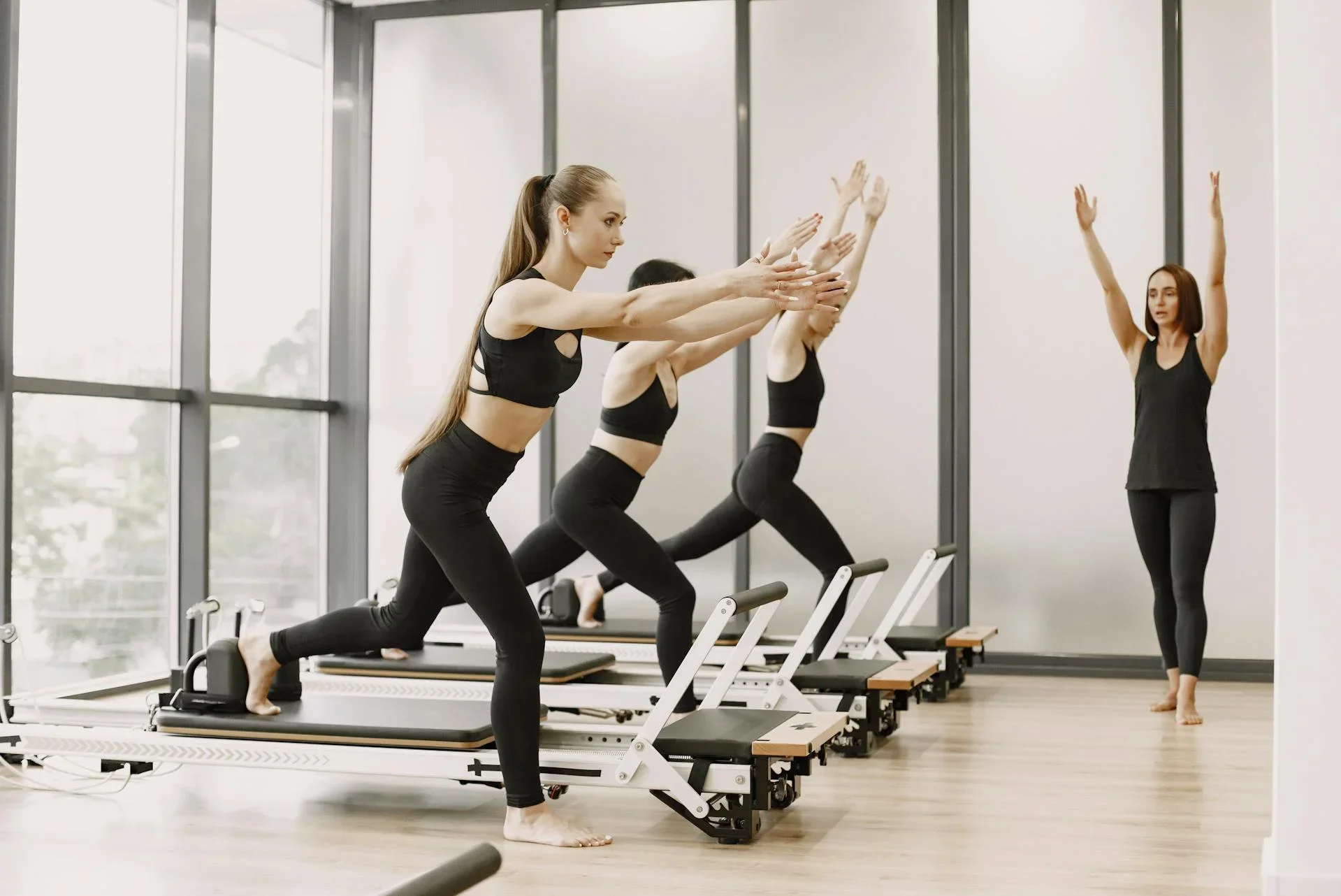
Planning a Pilates class sounds simple until you have to do it every week.
You want the class to feel smooth, balanced, safe, and interesting. You want clients to leave feeling stronger and more connected to their body. You also need to think about different levels, modifications, timing, props, equipment, and how the whole class flows from one exercise to the next.
That is where Pilates class planning becomes important.
A good Pilates class plan gives you structure without making the class feel stiff. It helps you teach with more confidence, create a better client experience, and keep your group classes consistent from week to week.
If you run a Pilates studio, class planning is only one part of the bigger picture. You also need to manage bookings, class capacity, memberships, class packs, payments, and client communication. Time2book helps Pilates studios keep the business side simple, so instructors can spend more time teaching and less time managing admin.
In this guide, we’ll break down how to create a Pilates class plan for group classes, including class structure, lesson plan examples, planning tips, common mistakes, and a simple Pilates class plan template you can reuse.
What Is Pilates Class Planning?
Pilates class planning is the process of designing a Pilates session before you teach it.
A Pilates class plan usually includes:
- The goal of the class
- The class level
- The class length
- The warm-up
- The main exercises
- The order of exercises
- Transitions between positions
- Modifications for different levels
- Props or equipment
- Cool-down and final reset
A good Pilates class plan gives the session a clear direction. Instead of choosing random exercises, you build the class around a purpose.
That purpose might be core stability, posture, glute strength, spinal mobility, breath, balance, flexibility, or full-body control.
For example, a Pilates lesson plan for beginners might focus on breathing, pelvic control, basic core activation, and simple movement patterns. A reformer Pilates class plan might focus more on resistance, spring changes, equipment setup, and controlled transitions.
The goal is not to make every class complicated. The goal is to make every class intentional.
Why a Pilates Class Plan Matters
A strong Pilates class plan helps both the instructor and the client.
For instructors, planning reduces stress. You do not have to walk into the room wondering what comes next. You already know the focus, the flow, the exercises, and the options.
For clients, planning creates a better experience. They can feel when a class has structure. The warm-up connects to the main work. The exercises make sense together. The transitions feel smooth. The class builds gradually instead of jumping randomly from one movement to another.
Pilates class planning is especially important for group classes because everyone in the room may have different levels, goals, and limitations.
In one Pilates group class, you might have:
- A complete beginner
- A regular client who wants more challenge
- Someone with tight hips
- Someone rebuilding strength after time away
- Someone who struggles with coordination
- Someone who wants a faster pace
You cannot personalize every moment like you would in a private session. But you can plan smart modifications, clear cues, and safe progressions.
That is what makes a good Pilates class plan so valuable.
The Basic Structure of a Pilates Class Plan
Most Pilates classes follow a simple structure. The details can change depending on whether you teach mat Pilates, reformer Pilates, beginner classes, or mixed-level group classes, but the overall flow is usually similar.
Class section | 45-minute class | 60-minute class | Purpose |
|---|---|---|---|
Arrival and breathing | 3–5 min | 5 min | Focus, breath, body awareness |
Warm-up | 5–8 min | 8–10 min | Mobility and gentle activation |
Core activation | 8–10 min | 10–12 min | Deep core, pelvic control, stability |
Main sequence | 18–22 min | 25–30 min | Strength, flow, balance, coordination |
Integration | 5–7 min | 8–10 min | Full-body movement and transitions |
Cool-down | 3–5 min | 5 min | Stretch, reset, finish calmly |
This structure helps the class feel complete.
You start by bringing clients into the room mentally and physically. Then you warm up the spine, hips, shoulders, and core. From there, you build into the main work. Finally, you slow the class down and help clients leave feeling balanced.
A Pilates class plan does not need to follow this structure perfectly every time. But having a clear framework makes planning easier, especially if you teach multiple group classes per week.
How to Create a Pilates Class Plan Step by Step
1. Choose the class goal
Every good Pilates class plan starts with a goal.
Ask yourself: what should clients feel, learn, or improve by the end of this class?
Your class goal could be:
- Core stability
- Hip mobility
- Glute strength
- Better posture
- Spinal mobility
- Balance and coordination
- Full-body flow
- Breath and control
- Shoulder stability
- Beginner fundamentals
- Reformer control
- Recovery and stretch
Choosing a goal makes the rest of the planning easier. It helps you decide which exercises to include, which cues to repeat, and which modifications to prepare.
For example, if the goal is spinal mobility, your class might include cat-cow, pelvic curls, spine stretch, mermaid, thoracic rotation, and gentle extension work.
If the goal is glute strength, your class might include bridges, side-lying leg work, clams, kneeling leg lifts, standing work, and controlled single-leg movements.
The clearer the goal, the stronger the class.
2. Know who the class is for
Before choosing exercises, think about who will be in the room.
A Pilates class plan for beginners should look different from a mixed-level group class. A class for older adults may need more time for setup, slower transitions, and more balance support. A class for athletic clients might include more endurance, strength, and coordination.
Think about:
- Experience level
- Age range
- Common limitations
- Class size
- Equipment available
- Studio space
- Pace of the class
- Whether clients know the basics already
For group classes, you usually need to plan for the middle of the group and then offer options.
That means the base version should be accessible for most people, with easier and harder options available.
3. Pick a movement theme
A movement theme gives your Pilates lesson plan more focus.
Examples of movement themes include:
- Flexion and extension
- Rotation
- Lateral flexion
- Hip stability
- Shoulder stability
- Breath and core connection
- Balance and coordination
- Posterior chain strength
- Full-body control
A theme helps the class feel connected.
For example, if your theme is rotation, you might begin with gentle thoracic rotation in the warm-up, add oblique work during the core section, include seated rotation or side-lying rotation in the main sequence, and finish with a rotational stretch.
Clients may not notice the full structure consciously, but they will feel that the class has a clear flow.
4. Build the class in blocks
One of the easiest ways to plan a Pilates class is to build it in blocks.
Instead of writing one long list of exercises, divide the class into sections:
- Arrival and breath
- Warm-up
- Core activation
- Lower body
- Upper body
- Balance or coordination
- Cool-down
This makes planning faster and easier to repeat.
You can also reuse the same class structure while changing one or two blocks each week. For example, you might keep the same warm-up and cool-down but change the main focus from hips to posture.
This helps keep Pilates group classes fresh without forcing you to reinvent the entire lesson plan every time.
5. Add progressions and regressions
A strong Pilates class plan includes options.
For each challenging exercise, think about:
- What is the easier version?
- What is the harder version?
- Can this be done without props?
- Can this be done with props?
- What should someone do if they feel discomfort?
- What option works for beginners?
- What option works for regular clients?
For example, if your class includes plank work, you might offer:
- Knees down
- Forearm plank
- High plank
- Shorter hold
- Longer hold
- Shoulder taps
- No plank option with bird dog instead
This keeps the class inclusive and safer for different levels.
6. Plan your transitions
Transitions are one of the most overlooked parts of Pilates class planning.
A class can have great exercises but still feel messy if clients constantly move from lying down to standing, then back to lying down, then side-lying, then standing again.
Try to group exercises by body position.
For mat Pilates, you might move through:
- Supine
- Side-lying
- Prone
- Quadruped
- Kneeling
- Standing
For reformer Pilates, you might move through:
- Footwork
- Supine straps
- Side-lying work
- Long box
- Kneeling work
- Standing or lunge work
Smooth transitions make the class feel more professional. They also save time, especially in group classes.
7. Leave space to adapt
A Pilates class plan should guide you, not trap you.
Sometimes the group needs more warm-up. Sometimes an exercise does not work well for the people in the room. Sometimes clients are tired, stressed, or less coordinated than expected.
Good instructors know how to adapt.
Build your plan with flexibility. Have a few backup exercises ready. Be willing to simplify. If clients need more time with one movement pattern, stay there.
A great Pilates lesson plan is structured, but not rigid.
Sample 45-Minute Pilates Class Plan
Here is a simple 45-minute Pilates class plan for a beginner-friendly full-body mat class.
Time | Section | Exercises |
|---|---|---|
0–5 min | Breath and setup | Lateral breathing, pelvic tilts, rib awareness |
5–10 min | Warm-up | Cat-cow, shoulder rolls, knee folds |
10–20 min | Core activation | Dead bug prep, toe taps, chest lift prep |
20–30 min | Lower body | Glute bridge, side-lying leg lifts, clam variations |
30–38 min | Full-body work | Swimming prep, plank prep, bird dog |
38–45 min | Cool-down | Spine stretch, mermaid stretch, breathing reset |
This Pilates class plan works well for beginners because it starts with breath and body awareness before moving into strength.
The class does not include too many exercises. Instead, it gives clients time to understand the movement, practice control, and build confidence.
For a more experienced group, you could make this class harder by adding:
- Longer holds
- More repetitions
- Resistance bands
- Small weights
- More challenging plank variations
- Faster transitions
- Single-leg bridge options
For a more gentle group, you could make it easier by reducing time in plank, using more supported positions, and keeping the pace slower.
Sample 60-Minute Pilates Group Class Plan
Here is a 60-minute Pilates group class plan for a mixed-level strength and control class.
Time | Section | Exercises |
|---|---|---|
0–5 min | Arrival and breath | Breathing, posture check, gentle mobility |
5–12 min | Warm-up | Pelvic curl, cat-cow, thoracic rotation |
12–25 min | Core series | Hundred prep, single-leg stretch, toe taps, oblique prep |
25–38 min | Lower body strength | Bridges, side kicks, kneeling leg work |
38–48 min | Upper body and stability | Plank variations, swan prep, arm work with light props |
48–55 min | Integration | Standing balance, roll-downs, full-body flow |
55–60 min | Cool-down | Hamstring stretch, mermaid, breathing |
This type of Pilates lesson plan works well for group classes because it gives a clear full-body structure.
It also gives the instructor room to offer options.
For example:
- Hundred prep can stay small for beginners or become full hundred for advanced clients.
- Bridges can stay double-leg or progress to single-leg.
- Plank can be done with knees down, full plank, or replaced with bird dog.
- Standing balance can be supported with a wall or made harder with single-leg work.
The key is to keep the base class accessible while giving stronger clients a way to progress.
Pilates Class Planning for Group Classes
Planning Pilates group classes is different from planning private sessions.
In a private session, you can build everything around one person. In a group class, you need to create a plan that works for several people at once.
That means your group class plan should be clear, flexible, and easy to scale.
Plan for the middle, modify for the edges
In most Pilates group classes, you will have a mix of levels.
A good rule is to plan for the middle of the group.
Then prepare:
- Easier options for newer clients
- Harder options for regular clients
- Safer alternatives for people who need them
- Clear stopping points for anyone who feels discomfort
This keeps the class moving without leaving anyone behind.
Use simple language
Group classes need clear cueing.
If every exercise comes with a long explanation, the class can lose flow. Keep instructions short and focused.
Instead of giving five cues at once, choose one or two important cues.
For example:
- “Keep your ribs heavy.”
- “Move from your center.”
- “Lengthen before you lift.”
- “Control the return.”
- “Breathe into the sides of your ribs.”
Simple cues help clients stay connected without feeling overwhelmed.
Offer options without pressure
The way you present modifications matters.
Instead of saying “easy version” and “advanced version,” use neutral language.
Try:
- “Option one”
- “Option two”
- “Stay here if this feels right”
- “Add this if you want more challenge”
- “Choose the version you can control”
This helps clients choose the right level without feeling judged.
Think about class capacity
Group Pilates is not only about exercises. It is also about space, equipment, and safety.
For mat Pilates, think about how many people can move comfortably in the room.
For reformer Pilates, think about:
- Number of reformers
- Space between machines
- Spring changes
- Props
- Setup time
- Cleaning time
- Time between classes
With Time2book, studios can set class capacity, let clients book online, sell memberships and class packs, and keep the schedule organized in one place.
Mat Pilates vs Reformer Pilates Class Planning
Mat Pilates and reformer Pilates both need structure, but the planning process is slightly different.
Area | Mat Pilates class plan | Reformer Pilates class plan |
|---|---|---|
Equipment | Mat, small props optional | Reformer, springs, straps, box, platform |
Planning focus | Bodyweight control and flow | Resistance, setup, transitions, safety |
Group difficulty | Easier to scale with movement options | Requires clear equipment instructions |
Best for | Beginners, larger groups, low setup | Smaller groups, premium classes, structured progression |
Common challenge | Keeping variety without overcomplicating | Managing setup time and spring changes |
A mat Pilates class plan often focuses on bodyweight strength, breath, mobility, and control. It can be easier to run with larger groups because there is less equipment involved.
A reformer Pilates class plan needs more attention to setup. You need to think about spring changes, carriage position, straps, boxes, and safety instructions.
For reformer group classes, transitions matter even more. If every exercise requires a different setup, the class can feel slow. A good reformer Pilates class plan groups exercises in a way that keeps the class moving.
Pilates Class Themes Instructors Can Use
Class themes make Pilates class planning easier. Instead of starting from a blank page, choose a theme and build around it.
Core stability class
Focus on breath, pelvic control, deep abdominals, and slow transitions. Good exercises include:
- Toe taps
- Dead bug prep
- Chest lift prep
- Single-leg stretch
- Plank prep
- Bird dog
Posture and upper body class
Focus on shoulder stability, thoracic mobility, back extension, and upper-body awareness. Good exercises include:
- Shoulder rolls
- Swan prep
- Arm circles
- Scapular push-ups
- Prone back extension
- Thoracic rotation
Glutes and hips class
Focus on hip stability, glute activation, side-body strength, and lower-body control. Good exercises include:
- Glute bridges
- Clams
- Side-lying leg lifts
- Kneeling leg work
- Standing balance
- Single-leg bridge options
Spinal mobility class
Focus on flexion, extension, rotation, and lateral flexion. Good exercises include:
- Cat-cow
- Pelvic curl
- Spine stretch
- Mermaid
- Saw
- Thoracic rotation
Balance and control class
Focus on slow movement, coordination, and stability. Good exercises include:
- Bird dog
- Standing balance
- Single-leg work
- Kneeling balance
- Slow roll-downs
- Controlled transitions
Beginner fundamentals class
Focus on breath, neutral pelvis, safe core activation, and simple movement patterns. Good exercises include:
- Lateral breathing
- Pelvic tilts
- Knee folds
- Toe taps
- Bridge prep
- Side-lying work
Using themes helps you create variety without making every class feel random.
Common Pilates Class Planning Mistakes
Even experienced instructors can fall into planning habits that make classes less effective.
Planning too many exercises
A strong Pilates class does not need 30 exercises. It needs a clear focus, good pacing, and enough time for clients to understand the movement. Too many exercises can make the class feel rushed. Fewer exercises with better cueing and smart progressions often create a better experience.
Forgetting modifications
Group classes always need options. If your Pilates class plan only includes one version of each exercise, some clients may feel left behind while others may not feel challenged. Plan at least one easier and one harder option for your key exercises.
Making every class completely new
Variety is important, but you do not need to create a brand-new class every time. In fact, repeating certain structures can help clients improve because they get to practice familiar movement patterns.
To keep things fresh, you can keep the same class structure and change:
- The theme
- The props
- The pace
- One exercise block
- The final challenge
- The focus cues
This saves planning time while still giving clients variety.
Ignoring transitions
If the class constantly jumps between positions, clients can feel confused and the flow can break. Try to organize exercises by body position and equipment setup. Good transitions make the class feel polished.
Not matching the plan to the class level
A beginner class should not feel like an intermediate class with easier words. Beginners need more setup, slower pacing, clearer explanations, and fewer complex transitions. Mixed-level classes need options. Advanced classes can move faster, but they still need control and precision.
How to Keep Pilates Group Classes Fresh
One challenge many instructors face is keeping group classes interesting without spending hours planning. The best approach is to use a simple system.
Rotate class themes
You can rotate weekly themes so each class feels different while still being easy to plan.
Week | Theme |
|---|---|
Week 1 | Core stability |
Week 2 | Glutes and hips |
Week 3 | Posture and upper body |
Week 4 | Full-body flow |
This gives your studio a clear rhythm and helps instructors prepare faster.
Use props intentionally
Props can make familiar exercises feel new.
Common Pilates props include:
- Resistance bands
- Pilates balls
- Magic circles
- Small hand weights
- Foam rollers
- Blocks
Do not add props just to make the class look different. Use them to support the class goal.
For example, a small ball can help with inner thigh activation, core feedback, or spinal support. A resistance band can add challenge to glute work or upper-body movements.
Build a class library
Studios can save strong class plans and reuse them later.
A simple class library might include:
- Beginner mat Pilates class plan
- Mixed-level mat Pilates class plan
- Reformer beginner class plan
- Reformer strength class plan
- Posture-focused class plan
- Stretch and mobility class plan
- Glutes and core class plan
This helps instructors save time and keeps the studio experience consistent.
Track what clients enjoy
Pay attention to which classes clients book again. If a certain theme is popular, bring it back. If clients love a specific prop or class format, use it again in a new way. A good class plan is not only about what the instructor wants to teach. It is also about what clients respond to.
How Studios Can Manage Pilates Group Classes Better
A good Pilates class plan helps the session run smoothly. A good studio system helps everything around the class run smoothly too.
For Pilates studios, group classes usually involve:
- Class schedules
- Instructor availability
- Class capacity
- Bookings
- Cancellations
- Memberships
- Class packs
- Drop-ins
- Payments
- Client records
If these are managed manually, the admin can quickly become overwhelming. That is why modern studios use booking software to keep everything organized. With Time2book, Pilates studios can:
- Create group classes and appointments
- Set class capacity
- Let clients book online
- Sell memberships and class packs
- Accept online payments
- Manage clients in one place
- Keep the weekly schedule organized
This helps studio owners spend less time on admin and more time improving the client experience.
A smooth class starts before the client walks into the studio. If booking, payment, and class reminders are simple, clients arrive with less confusion and more confidence.
Pilates Class Plan Template
Use this simple Pilates class plan template when planning your next class.
Section | Details |
|---|---|
Class name | Example: Beginner Full-Body Mat Pilates |
Class level | Beginner, mixed-level, intermediate, advanced |
Class length | 30, 45, or 60 minutes |
Class goal | Core stability, posture, mobility, glutes, full-body flow |
Equipment | Mat, reformer, chair, tower, or other equipment |
Props | Ball, band, ring, weights, blocks, foam roller |
Client notes | Injuries, beginners, pregnancy, older adults, mixed levels |
Arrival and breath | Breathing, posture check, body awareness |
Warm-up | Gentle mobility and activation |
Core activation | Deep core, pelvic control, stability |
Main sequence | Strength, flow, coordination, balance |
Progressions | Harder options for stronger clients |
Modifications | Easier or safer options |
Cool-down | Stretch, reset, breath |
Notes for next class | What worked, what to adjust, client feedback |
A template keeps your Pilates lesson plan consistent, but it also gives you room to adapt.
Over time, you can build your own planning system based on your teaching style, studio format, and client needs.
Frequently Asked Questions About Pilates Class Planning
How do you plan a Pilates class?
To plan a Pilates class, start by choosing the goal of the class. Then decide who the class is for, how long it will be, what exercises support the goal, and what modifications are needed.
A simple Pilates class plan usually includes arrival and breathing, warm-up, core activation, main sequence, integration, and cool-down. The class should flow logically from one section to the next.
For group classes, it is also important to prepare easier and harder options so different clients can work at the right level.
What should a Pilates class plan include?
A Pilates class plan should include the class goal, level, length, equipment, props, warm-up, main exercises, transitions, modifications, progressions, and cool-down.
It should also include notes about the clients in the room. For example, if you know the class includes beginners, older adults, or people with specific limitations, the plan should reflect that.
The best Pilates class plans are structured but flexible.
What is a good Pilates lesson plan for beginners?
A good beginner Pilates lesson plan should focus on breath, body awareness, pelvic control, basic core activation, simple strength work, and gentle mobility.
A beginner class might include lateral breathing, pelvic tilts, knee folds, toe taps, glute bridges, side-lying leg work, bird dog, and a simple cool-down.
The goal is not to make the class too hard. The goal is to help beginners understand the basics and feel confident enough to return.
How long should a Pilates class be?
Most Pilates group classes are 45 or 60 minutes.
A 45-minute class works well for busy studios, lunchtime classes, and beginner-friendly formats. A 60-minute class gives more space for warm-up, deeper teaching, full-body sequencing, and cool-down.
Some studios also offer shorter 30-minute express classes or longer workshops. The best length depends on the class goal, client level, and studio schedule.
How do you plan Pilates group classes?
To plan Pilates group classes, create a structure that works for the average level of the group, then add easier and harder options.
Group classes need clear cueing, smooth transitions, simple setup, and smart modifications. You should also think about capacity, equipment, space, and how clients move through the room.
A good Pilates group class should feel organized but not rigid. Clients should feel guided, supported, and able to choose the right level for their body.
How many exercises should be in a Pilates class?
There is no perfect number of exercises for a Pilates class.
A 45-minute class might include 10 to 15 exercises, depending on pacing and how much time you spend teaching each movement. A 60-minute class might include more, but quality matters more than quantity.
It is better to teach fewer exercises well than to rush through too many movements without control.
How do you keep Pilates classes interesting?
To keep Pilates classes interesting, use themes, props, progressions, and small changes to familiar structures.
You can rotate weekly themes such as core stability, glutes and hips, posture, spinal mobility, or full-body flow. You can also change the props, the order of exercises, or the final challenge.
You do not need to rebuild every class from scratch. Often, the best approach is to keep a strong structure and change one or two sections.
Final Thoughts
Pilates class planning helps instructors teach better, safer, and more confident classes.
A good Pilates class plan gives your session structure. It helps you choose the right exercises, create a smoother flow, support different levels, and make group classes feel more intentional.
The best plans are simple. Start with a goal, know your clients, choose a movement theme, build the class in blocks, prepare modifications, and leave space to adapt.
For Pilates studio owners, great class planning is only one part of running a better studio. You also need simple booking, clear schedules, easy payments, class packs, memberships, and organized client management.
Time2book helps Pilates studios manage bookings, payments, memberships, class packs, and clients in one simple place. Try Time2book free today and simplify your studio bookings, payments, and client management.
Pilates studio software
Learn more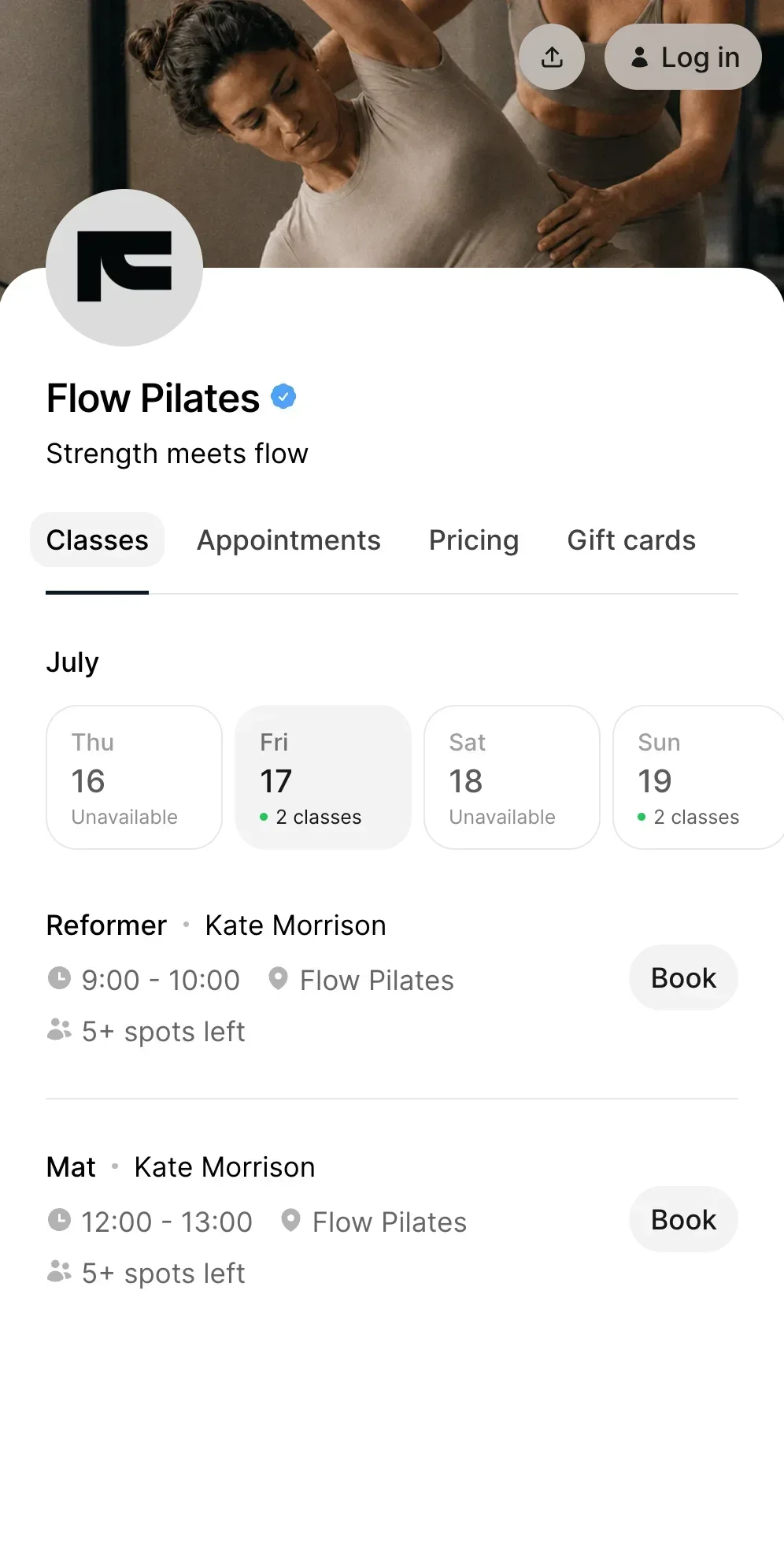
Manage bookings and payments easier
Get a free 7-day trial
No credit card required