
Opening a Pilates studio is exciting, but it is also a serious business decision. Before you sign a lease, buy reformers, hire instructors, or launch your first class, you need a clear plan for how the studio will work financially and operationally.
A strong Pilates studio business plan helps you make those decisions before they become expensive mistakes. It gives you a step-by-step roadmap for your studio concept, target clients, startup costs, pricing, memberships, marketing, booking system, and financial goals.
Pilates demand continues to be strong. ClassPass reported that Pilates was its most-booked workout for the third year in a row in 2025, with a 66% increase in overall reservations from 2024. That is a positive sign for new studio owners, but demand alone does not guarantee success. The studios that grow are usually the ones that plan their pricing, capacity, client experience, and systems before opening.
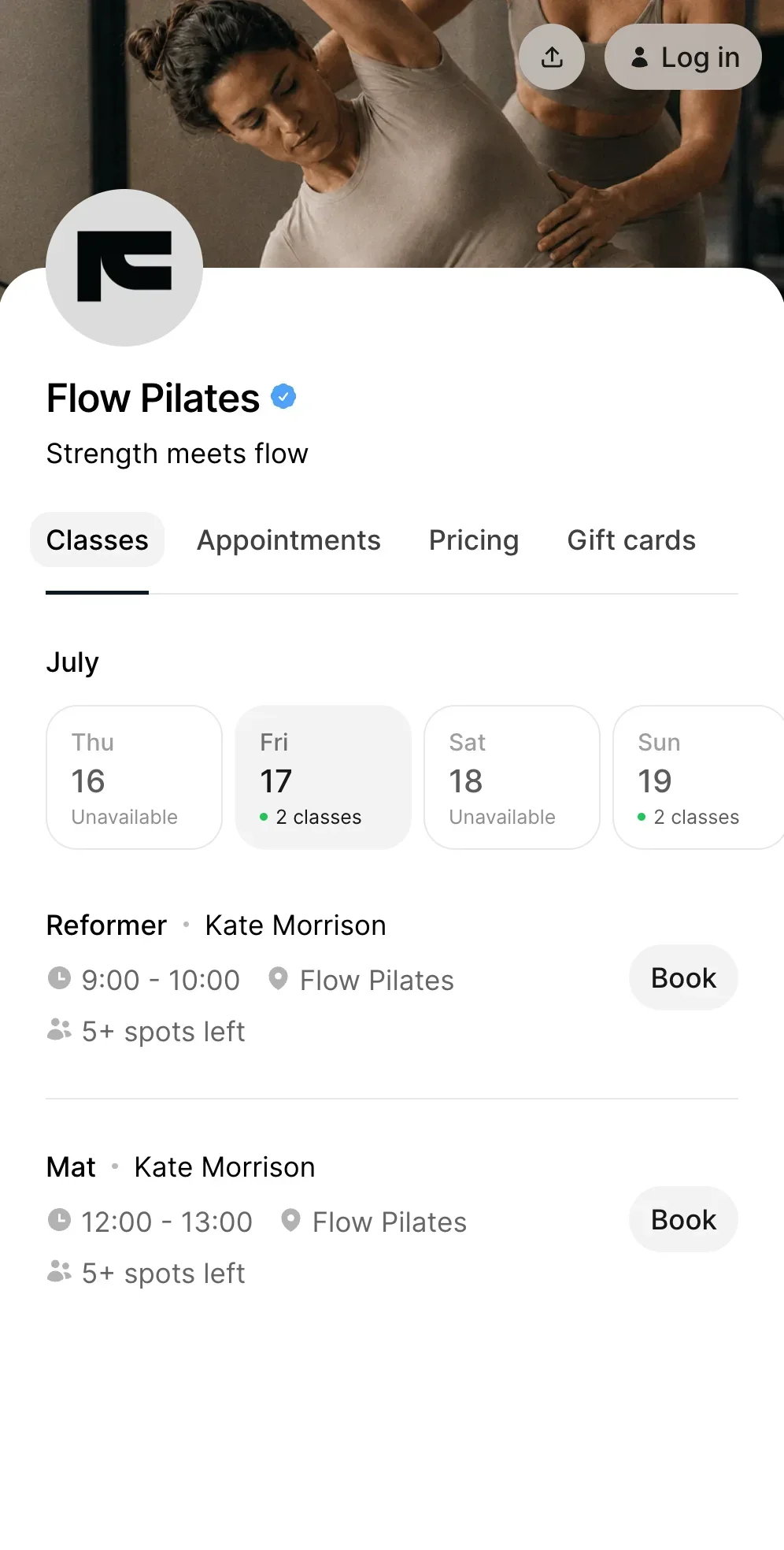
Time2book helps Pilates studios manage bookings, payments, memberships, class packs, clients, waitlists, and analytics in one simple platform. If you are planning a new studio, your business plan should include not only your brand and budget, but also how clients will book, pay, join memberships, and stay connected to your studio.
In this guide, we’ll break down how to create a Pilates studio business plan for 2026 and what to look for before opening your studio.
Step 1: Define Your Pilates Studio Concept
The first step in your Pilates studio business plan is deciding what kind of studio you want to open.
This sounds simple, but it affects almost every decision that comes after it: your location, equipment, pricing, marketing, class schedule, instructor requirements, and client experience.
You might be opening:
- A boutique reformer Pilates studio
- A mat Pilates studio
- A private Pilates appointment studio
- A small group training studio
- A beginner-friendly Pilates studio
- A premium studio for experienced clients
- A prenatal and postnatal Pilates studio
- A hybrid studio with in-person classes and online video content
Try to avoid positioning your studio as “Pilates for everyone.” It is usually stronger to be specific.
For example:
We are opening a boutique reformer Pilates studio for beginners and busy professionals who want small classes, clear instruction, and a calm modern space.
That gives your business plan a much clearer direction than:
We offer Pilates classes for all levels.
Your studio concept should answer three questions:
- Who is the studio for?
- What kind of Pilates experience will you offer?
- Why would someone choose your studio instead of another option nearby?
Once this is clear, the rest of your Pilates studio business plan becomes much easier to build.
Step 2: Research Your Local Market
The next step is understanding your local market. You do not need a long corporate market research report. You need practical information that helps you make better decisions.
Start by looking at Pilates studios, gyms, yoga studios, wellness spaces, and boutique fitness studios near your planned location.
Ask:
- How many Pilates studios are nearby?
- Are they mat, reformer, private, or mixed studios?
- What do they charge for drop-ins, class packs, and memberships?
- How many classes do they offer each week?
- Which class times seem popular?
- Do they serve beginners, advanced clients, athletes, older adults, or wellness clients?
- What do people praise in reviews?
- What do people complain about?
- Are there gaps in the market?
You are not only researching competitors. You are looking for opportunities.
Maybe your area already has advanced reformer studios, but no beginner-friendly Pilates studio. Maybe there are many general fitness options, but no premium small-group studio. Maybe local studios are busy in the evenings, but nobody offers early morning classes for professionals.
Your business plan should summarize what you found and how your studio will fit into the local market.
A simple version could look like this:
| Market question | Your answer |
|---|---|
| Main local competitors | 3 reformer studios, 2 yoga studios, 1 boutique gym |
| Average drop-in price | $25–$35 |
| Common membership price | $120–$220/month |
| Market gap | Beginner-friendly reformer classes with easy online booking |
| Opportunity | Small group classes for professionals before and after work |
This step helps you avoid guessing. It also helps you build a studio that fits real demand, not just your personal taste.
Step 3: Choose Your Target Clients
After researching the market, define your ideal clients.
A Pilates studio can serve different types of people, but your business plan should still have a clear primary audience. This makes your marketing, pricing, intro offer, class names, and schedule much easier to create.
Here are a few examples:
| Target client | What they want | Best offer |
|---|---|---|
| Beginners | Confidence, safety, clear guidance | Intro pack or beginner course |
| Busy professionals | Flexible booking and efficient classes | Monthly membership or class pack |
| Fitness-focused clients | Strength, tone, and consistency | Reformer membership |
| Postnatal clients | Careful progression and support | Private or small group sessions |
| Older adults | Mobility, balance, and confidence | Private or gentle small group classes |
| Existing Pilates clients | Better teaching and a premium experience | Advanced classes or premium membership |
Your target client profile should include:
- Age range
- Lifestyle
- Fitness level
- Main goals
- Main concerns
- Preferred class times
- Price sensitivity
- Best way to reach them
For example:
Our primary clients are women aged 28–48 who live or work nearby, want low-impact strength training, and prefer small group classes with easy booking. They are willing to pay more for a clean studio, strong instruction, and a personal experience.
This kind of detail helps you build a studio that feels relevant from day one.
Step 4: Decide What Services You Will Offer
Now decide what clients can actually buy. This is one of the most important parts of a Pilates studio business plan because your services shape your revenue.
Most Pilates studios offer a mix of:
- Drop-in classes
- Intro offers
- Class packs
- Monthly memberships
- Private sessions
- Gift cards
- Online video access
For a new studio, it is usually better to start simple. Too many offers can confuse clients and make your admin harder.
A simple launch menu could be:
| Offer | Purpose |
|---|---|
| Intro offer | Help new clients try the studio |
| Drop-in class | Flexible option for occasional clients |
| 5-class pack | Easy first commitment |
| 10-class pack | Better value and upfront cash flow |
| Monthly membership | Predictable recurring revenue |
| Private session | Higher-value personalized support |
Your intro offer deserves special attention. It is often the first step between someone discovering your studio and becoming a regular client. For examples, read our guide to Pilates intro offer ideas.
When planning your services, think about the client journey:
- How does a new client try the studio?
- What do they buy after the intro offer?
- What makes them return every week?
- What offer gives them the best value?
- What offer gives the studio predictable revenue?
A good Pilates studio business plan does not only list services. It explains how those services turn first-time clients into regular members.
Step 5: Set Your Pricing
Once your services are clear, set your prices. Pricing is where many new Pilates studio owners struggle. It can feel uncomfortable to charge premium prices, especially when you are opening for the first time. But your pricing needs to support the actual cost of running the studio.
Your prices should consider:
- Rent
- Equipment
- Instructor pay
- Software
- Insurance
- Marketing
- Taxes
- Cleaning
- Maintenance
- Profit
A common mistake is comparing your studio to a low-cost gym. Boutique Pilates has a different business model. Classes are smaller, the equipment is expensive, and the experience is more personal.
Your pricing plan might include:
| Pricing option | Example use |
|---|---|
| Drop-in | For flexible one-time bookings |
| Intro offer | For first-time clients |
| 5-class pack | For casual but committed clients |
| 10-class pack | For regular clients who want flexibility |
| Monthly membership | For predictable recurring revenue |
| Private session | For personalized training |
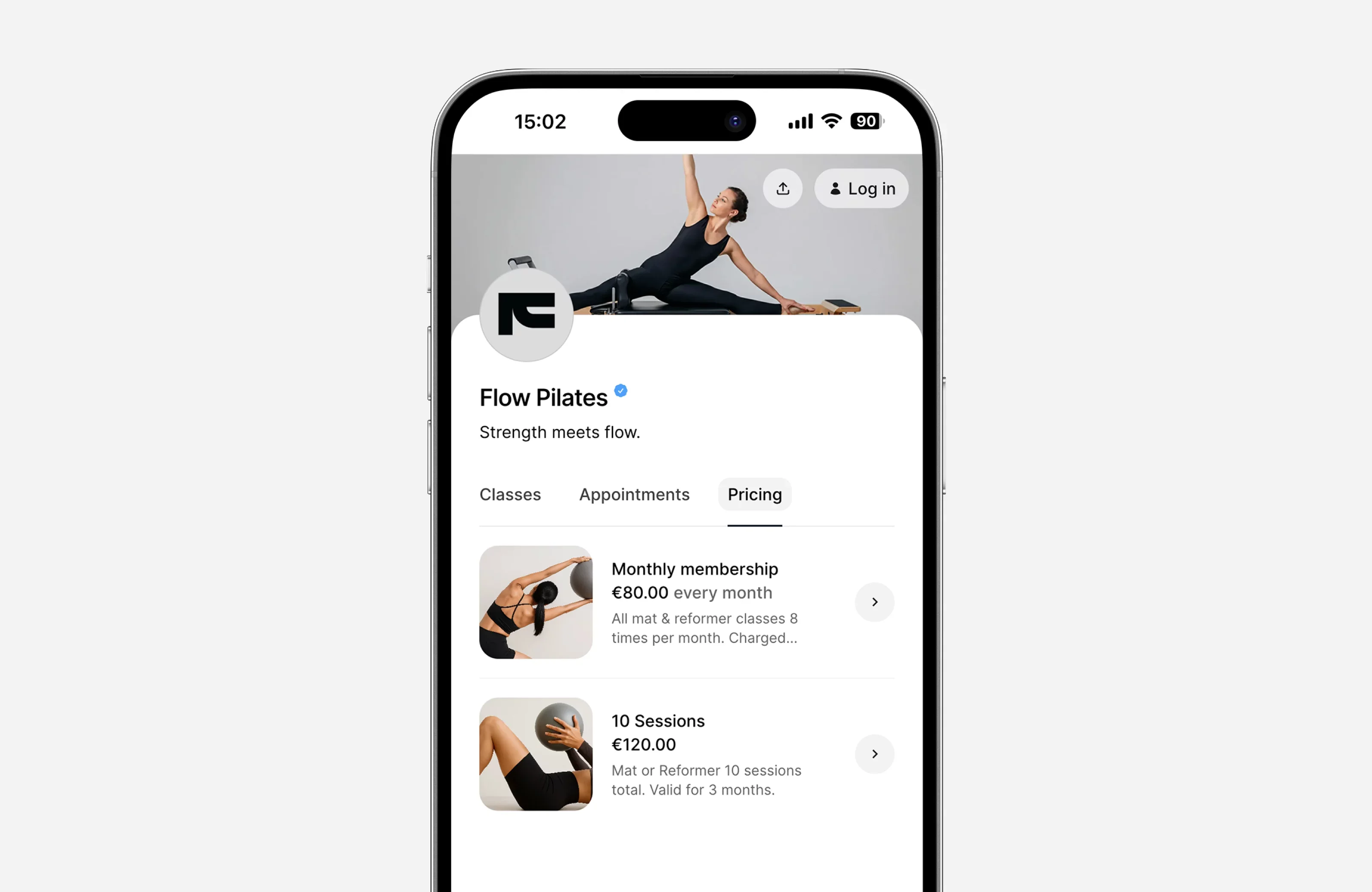
If you want a deeper breakdown, read our guide to Pilates studio pricing strategies. Your business plan should also explain why your pricing makes sense.
For example:
Our pricing is positioned slightly above the local average because classes are limited to 8 clients, instructors are highly trained, and the studio offers a premium reformer Pilates experience with easy online booking and clear membership options.
That is stronger than simply listing prices without context.
Step 6: Estimate Your Startup Costs
Now it is time to calculate what it will cost to open. This step is essential. A Pilates studio can look profitable on paper until you include the real startup costs.
Your startup costs may include:
| Cost category | Examples |
|---|---|
| Rent and deposit | Lease deposit, first month’s rent |
| Equipment | Reformers, mats, props, storage |
| Interior | Flooring, mirrors, lighting, paint, reception |
| Branding | Logo, photography, signage, website |
| Professional costs | Insurance, legal, accounting |
| Software | Booking, payments, memberships, client management |
| Marketing | Launch ads, printed materials, local partnerships |
| Staff setup | Instructor onboarding, training, uniforms if needed |
A mat Pilates studio usually costs less to open because it requires less equipment. A reformer Pilates studio usually needs a larger upfront investment because every reformer adds cost and affects your maximum class capacity.
Before committing to a lease or equipment order, create a full startup budget with a buffer. For a more detailed breakdown, read our guide on how much it costs to open a Pilates studio.
Your Pilates studio business plan should include three versions of your startup budget:
| Scenario | Meaning |
|---|---|
| Lean version | Minimum needed to open |
| Realistic version | Most likely cost |
| Premium version | Higher-end space, equipment, and launch |
This helps you understand what is essential and what can wait.
Step 7: Estimate Your Monthly Expenses
Startup costs are only the beginning. Your studio also needs to cover monthly expenses.
Your monthly expenses may include:
- Rent
- Instructor pay
- Software
- Insurance
- Utilities
- Cleaning
- Marketing
- Accounting
- Internet
- Equipment maintenance
- Payment processing fees
- Loan repayments, if any
Put these into a simple table:
| Monthly expense | Estimated cost |
|---|---|
| Rent | $___ |
| Instructors | $___ |
| Software | $___ |
| Insurance | $___ |
| Utilities | $___ |
| Marketing | $___ |
| Cleaning | $___ |
| Other | $___ |
| Total monthly costs | $___ |
This number is important because it helps you calculate your break-even point.
A beautiful studio is not enough. The studio needs enough bookings, memberships, and private sessions to cover monthly costs and create profit.
Step 8: Calculate Your Break-Even Point
Your break-even point tells you how many paid bookings you need each month to cover your costs.
A simple formula is: Monthly fixed costs ÷ average revenue per booking = bookings needed to break even
For example:
| Metric | Example |
|---|---|
| Monthly fixed costs | $6,000 |
| Average revenue per booking | $25 |
| Break-even bookings needed | 240 bookings/month |
That means the studio needs around 240 paid bookings per month to cover fixed costs. Now turn that into weekly numbers:
| Metric | Example |
|---|---|
| Monthly bookings needed | 240 |
| Weekly bookings needed | Around 60 |
| Reformer capacity | 8 clients per full class |
| Full classes needed | Around 8 full classes/week |
This is a simplified example, but it shows how your numbers connect.
If your studio has 8 reformers, your capacity is limited. You cannot sell 20 spaces in an 8-reformer class. That means your pricing, schedule, and membership strategy must match your real capacity.
Your business plan should include:
- Monthly cost estimate
- Average revenue per booking
- Bookings needed to break even
- Memberships needed to reach stability
- Conservative, realistic, and optimistic scenarios
Do not build your plan only around full classes. Include a conservative version where classes are partly full, especially in the first few months.
Step 9: Plan Your Class Schedule and Capacity
Your schedule is not just an operations detail. It is part of your business model.
A Pilates studio schedule should be designed around demand, instructor availability, class capacity, and client habits.
Think about:
- Morning classes
- Lunchtime classes
- Evening classes
- Weekend classes
- Beginner classes
- Advanced classes
- Private session blocks
- Time between classes
- Cleaning and reset time
- Instructor breaks
For example, if your target clients are busy professionals, early morning, lunchtime, and after-work classes may matter most. If your studio serves postnatal clients, mid-morning classes may work better. If your audience is advanced reformer clients, you may need clearly labelled class levels.
Your business plan should explain:
- How many classes you will offer each week
- How many clients each class can take
- Which class times are expected to be strongest
- Which classes are beginner-friendly
- How private sessions fit into the schedule
Time2book’s class scheduling software for Pilates studios helps studios manage class times, capacity, bookings, cancellations, and waitlists in one place.
This matters because a clear schedule makes it easier for clients to commit. If your schedule changes constantly or requires manual messages, clients are less likely to build a routine.
Step 10: Choose Your Booking and Payment System
Before you open, decide how clients will book and pay.
This step is often underestimated. Many new studio owners start with messages, spreadsheets, bank transfers, and manual tracking. That may work for the first few clients, but it becomes stressful quickly.
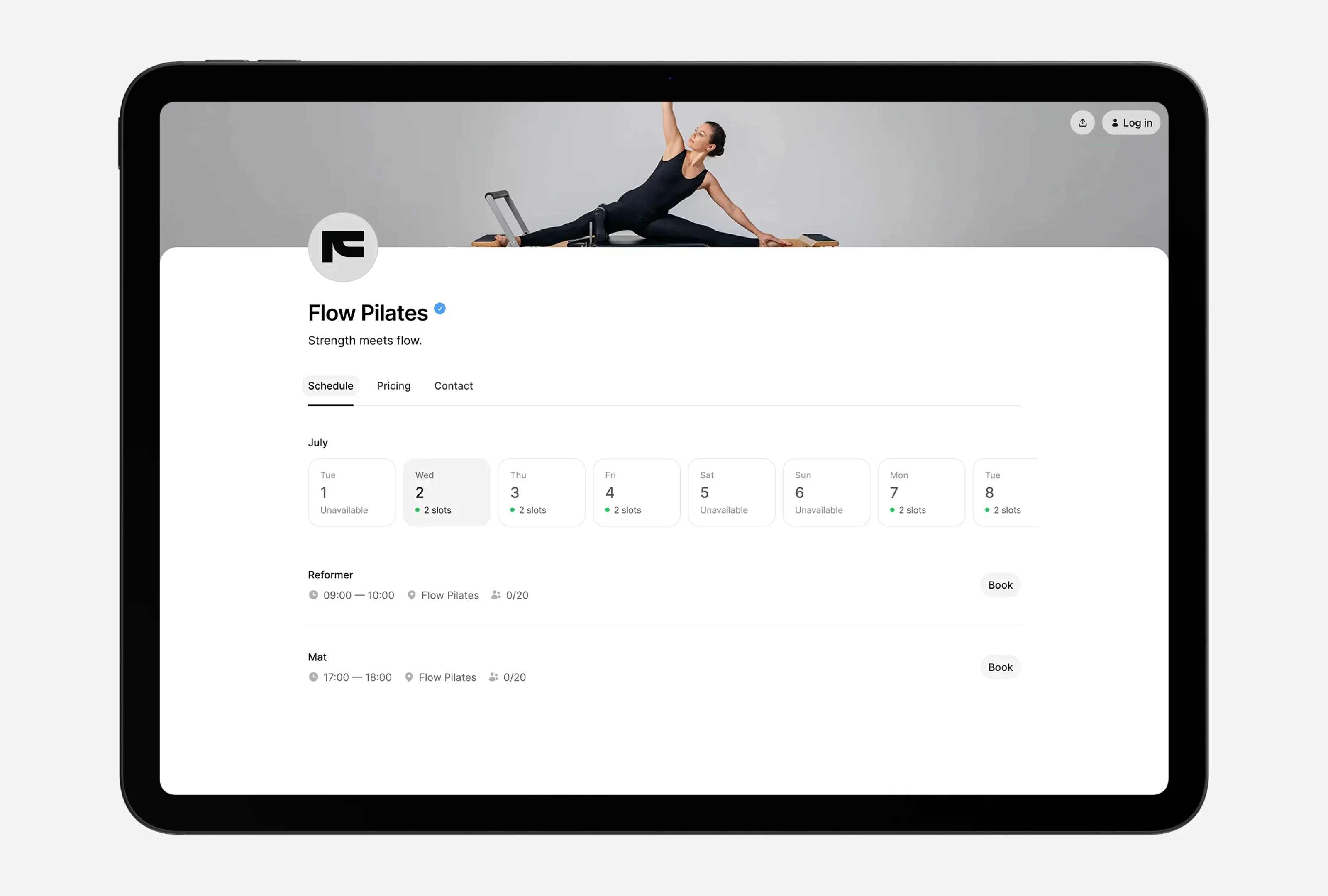
Your Pilates studio business plan should explain how you will manage:
- Online bookings
- Class capacity
- Waitlists
- Cancellations
- Memberships
- Class packs
- Drop-ins
- Private appointments
- Client records
- Payment collection
- Attendance
- Revenue tracking
A simple booking and payment system helps clients book without waiting for a reply. It also helps the studio avoid missed payments, messy spreadsheets, and constant admin.
Time2book’s payments for Pilates studios help studios sell memberships, class packs, and drop-ins online, so clients can book and pay in one flow.
The goal is not just to make your admin easier. It also makes the client experience feel more professional.
A client should be able to:
- View your schedule
- Choose a class
- Buy a pack or membership
- Book their spot
- Receive confirmation
- Manage their booking
The easier this feels, the more likely they are to return.
Ready to get started with Pilates studio software?
Try Time2book free for 7 days.
Step 11: Create Your Studio Rules
Your studio rules protect your time, revenue, and client experience. Without clear rules, you may end up dealing with last-minute cancellations, unpaid bookings, refund confusion, overbooked classes, or clients who do not understand how memberships work.
Your business plan should include policies for:
- Booking window
- Cancellation window
- Waitlists
- Refunds
- Class pack expiry
- Intro offer limits
- Arrival time
- Health and safety expectations
For example:
Clients can cancel up to 12 hours before class. Late cancellations and no-shows will count as used sessions. If a class is full, clients can join the waitlist and will be notified when a spot becomes available.
Clear rules make your studio feel more professional. They also reduce awkward conversations later.
Step 12: Build Your Marketing Plan
Your marketing plan explains how people will discover your studio and become clients. For a new Pilates studio, marketing should start before opening. You want to build interest before the first class goes live.
A simple pre-launch marketing plan could include:
- Create your Google Business Profile.
- Build a simple website or booking page.
- Share behind-the-scenes studio progress.
- Collect emails from interested clients.
- Announce your intro offer.
- Partner with local businesses.
- Invite early clients to a soft launch.
- Ask happy clients for reviews.
- Follow up with intro offer clients.
- Convert regular clients into memberships.
Useful marketing channels include:
| Channel | Why it matters |
|---|---|
| Google Business Profile | Helps local clients find you |
| Local SEO | Helps you rank for Pilates searches in your area |
| Instagram and TikTok | Shows your space, teaching style, and personality |
| Email list | Helps you launch with warm leads |
| Referral program | Encourages clients to invite friends |
| Local partnerships | Builds trust in your area |
| Reviews | Improves local visibility and conversion |
Do not rely only on social media. Social content helps people see your brand, but local search often brings people with stronger intent.
A person searching “reformer Pilates near me” is already looking for a studio. Your business plan should include how you will show up when they search.
Step 13: Plan Your Client Retention Strategy
Getting clients is important. Keeping them is what makes the studio sustainable.
Your Pilates studio business plan should explain how you will turn first-time visitors into long-term clients.
Retention can include:
- A strong intro offer
- Friendly first-class experience
- Follow-up after the first visit
- Clear next-step offer
- Monthly memberships
- Class packs
- Waitlists for full classes
- Progress-based communication
- Personal client notes
- Consistent instructor experience
Think about what happens after someone buys an intro offer.
Do they receive a welcome email? Does the instructor know they are new? Are they guided into the right class level? Do they get a clear recommendation after their first visit? Are they invited to buy a membership before the intro offer ends?
Retention is not one thing. It is the full client journey.
A simple retention flow could look like this:
- Client books intro offer.
- Client attends first class.
- Instructor welcomes them and checks experience level.
- Client receives follow-up.
- Client is encouraged to book their next class.
- Client completes intro offer.
- Client is offered a membership or class pack.
- Client becomes part of the weekly schedule.
This is how a studio grows beyond one-time visits.
Step 14: Track Your Numbers From Day One
Your business plan should include the numbers you will track after opening.
This is where many studio owners fall behind. They know whether classes feel busy, but they do not always know which offers are working, which clients are returning, or which class times are most profitable.
Track:
- Total bookings
- Class attendance
- Revenue
- New clients
- Returning clients
- Membership sales
- Class pack sales
- Intro offer conversions
- Most popular class times
- No-shows and cancellations
- Instructor performance
- Client retention
Time2book’s Pilates studio analytics help studio owners understand bookings, revenue, client activity, and pricing plan performance.
This matters because your first plan will not be perfect. Your numbers will show you what to improve.
For example:
- If intro offer clients do not return, improve onboarding.
- If evening classes are full, add more evening capacity.
- If memberships are not selling, review pricing or benefits.
- If drop-ins are high but retention is low, improve the follow-up flow.
- If one class type is always full, build more around it.
Your business plan should be a living document, not something you write once and forget.
Step 15: Create Your 90-Day Launch Plan
The final step is creating your launch plan.
Your first 90 days are about more than opening the doors. They are about testing your pricing, schedule, client experience, marketing, and retention system.
A simple launch timeline could look like this:
| Timeline | Focus |
|---|---|
| 3–6 months before opening | Business plan, budget, location research, studio concept |
| 2–3 months before opening | Lease, equipment, software, website, branding |
| 1 month before opening | Schedule, pricing, intro offer, email list, local marketing |
| Launch week | Soft opening, founding offer, first reviews |
| First 30 days | Fill intro offers and collect feedback |
| First 60 days | Improve schedule and convert clients |
| First 90 days | Review numbers and adjust pricing, classes, and marketing |
Before launch, prepare:
- Your booking page
- Class schedule
- Pricing plans
- Intro offer
- Studio rules
- Client onboarding process
- Social media content
- Local partnerships
For a practical launch overview, use our Pilates studio startup checklist. The first 90 days will teach you a lot. The goal is to stay flexible while keeping the business financially grounded.
Pilates Studio Business Plan Example
Here is a simple example of how your plan might look when the steps come together.
| Area | Example |
|---|---|
| Studio concept | Boutique reformer Pilates studio |
| Target clients | Beginners and busy professionals |
| Class capacity | 8 reformers |
| Main offers | Intro pack, drop-in, 5-pack, 10-pack, monthly membership |
| Premium offer | Private Pilates sessions |
| Booking system | Online booking with Time2book |
| Payment model | Online payments, memberships, and class packs |
| Marketing focus | Local SEO, Google Business Profile, Instagram, referrals |
| Retention focus | Intro offer follow-up and membership conversion |
| First 90-day goal | Build consistent weekly attendance and convert intro clients |
This example is simple, but that is the point. A good Pilates studio business plan should make the business easier to understand and easier to run.
Mat Pilates vs Reformer Pilates Business Plan
Your steps may look different depending on the studio model.
| Area | Mat Pilates studio | Reformer Pilates studio |
|---|---|---|
| Startup cost | Lower | Higher |
| Equipment | Mats, props, storage | Reformers, towers, chairs, props |
| Class capacity | Easier to scale | Limited by equipment |
| Pricing | Usually lower per class | Usually premium |
| Space needs | More flexible | Requires careful layout |
| Best for | Lower-cost launch and larger classes | Boutique premium model |
A mat Pilates studio may be a better starting point if you want lower startup costs or plan to test demand first.
A reformer Pilates studio may be better if your market supports premium pricing and you have the budget for equipment, training, and a carefully designed space.
Neither model is automatically better. The right choice depends on your budget, target clients, local demand, and long-term goals.
Frequently asked questions about Pilates studio business plan
A Pilates studio business plan is a step-by-step document that explains how your studio will operate, attract clients, generate revenue, and grow. It usually includes your studio concept, target clients, services, pricing, startup costs, monthly expenses, marketing plan, booking system, and financial projections.
Start by defining your studio concept, researching your local market, choosing your target clients, planning your services, setting prices, estimating costs, calculating break-even, and creating a marketing and launch plan.
The goal is not to write a complicated document. The goal is to create a clear roadmap for opening and running your studio.
The cost depends on your location, rent, equipment, interior buildout, insurance, software, and marketing.
A mat Pilates studio usually costs less to open than a reformer Pilates studio. A reformer studio usually needs a larger upfront investment because the equipment is more expensive and class capacity is limited by the number of machines.
A Pilates studio can be profitable, but profitability depends on rent, pricing, class capacity, instructor costs, client retention, and how consistently classes are booked.
Studios with memberships, class packs, strong retention, and simple booking systems usually have a better chance of building predictable revenue.
For many boutique Pilates studios, the best model is a mix of intro offers, class packs, monthly memberships, private sessions, and workshops. This gives new clients an easy way to start, while helping the studio build recurring revenue and long-term client relationships.
Divide your monthly fixed costs by your average revenue per booking. For example, if your monthly fixed costs are $6,000 and your average revenue per booking is $25, you need around 240 paid bookings per month to cover fixed costs.
Yes. It is better to set up your booking, payments, memberships, class packs, cancellation rules, and client records before your first clients start booking. This creates a smoother client experience and helps you avoid manual admin from the beginning.
In the first 90 days, focus on filling your intro offer, collecting feedback, improving your schedule, asking for reviews, converting first-time clients into members, and tracking your numbers. Your first 90 days should help you understand what clients want and what the studio needs to improve.
Final Thoughts
A Pilates studio business plan should not feel like a formal document you write once and never use again. It should be a practical step-by-step guide for building a studio that can actually work.
Start with your concept. Research your market. Define your clients. Plan your services and pricing. Estimate your costs. Calculate your break-even point. Set up your booking and payment systems. Build your launch plan. Then track the numbers and improve as you grow.
The best Pilates studios are not only beautiful spaces. They are well-run businesses with clear pricing, simple systems, strong client relationships, and a plan for long-term retention.
Time2book helps Pilates studios manage bookings, payments, memberships, class packs, waitlists, clients, and analytics in one modern platform. Try Time2book free today and simplify your studio bookings, payments, and client management.