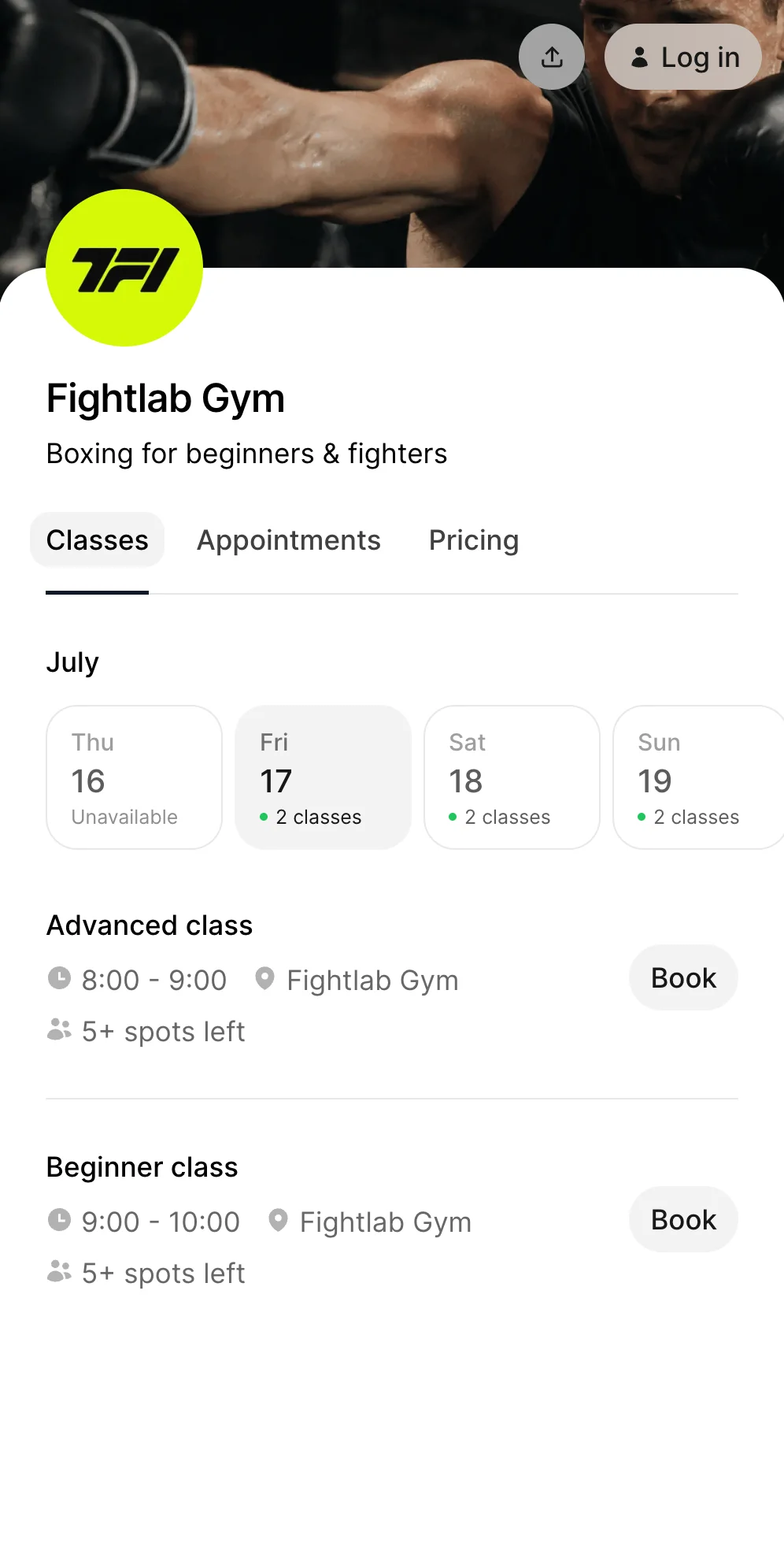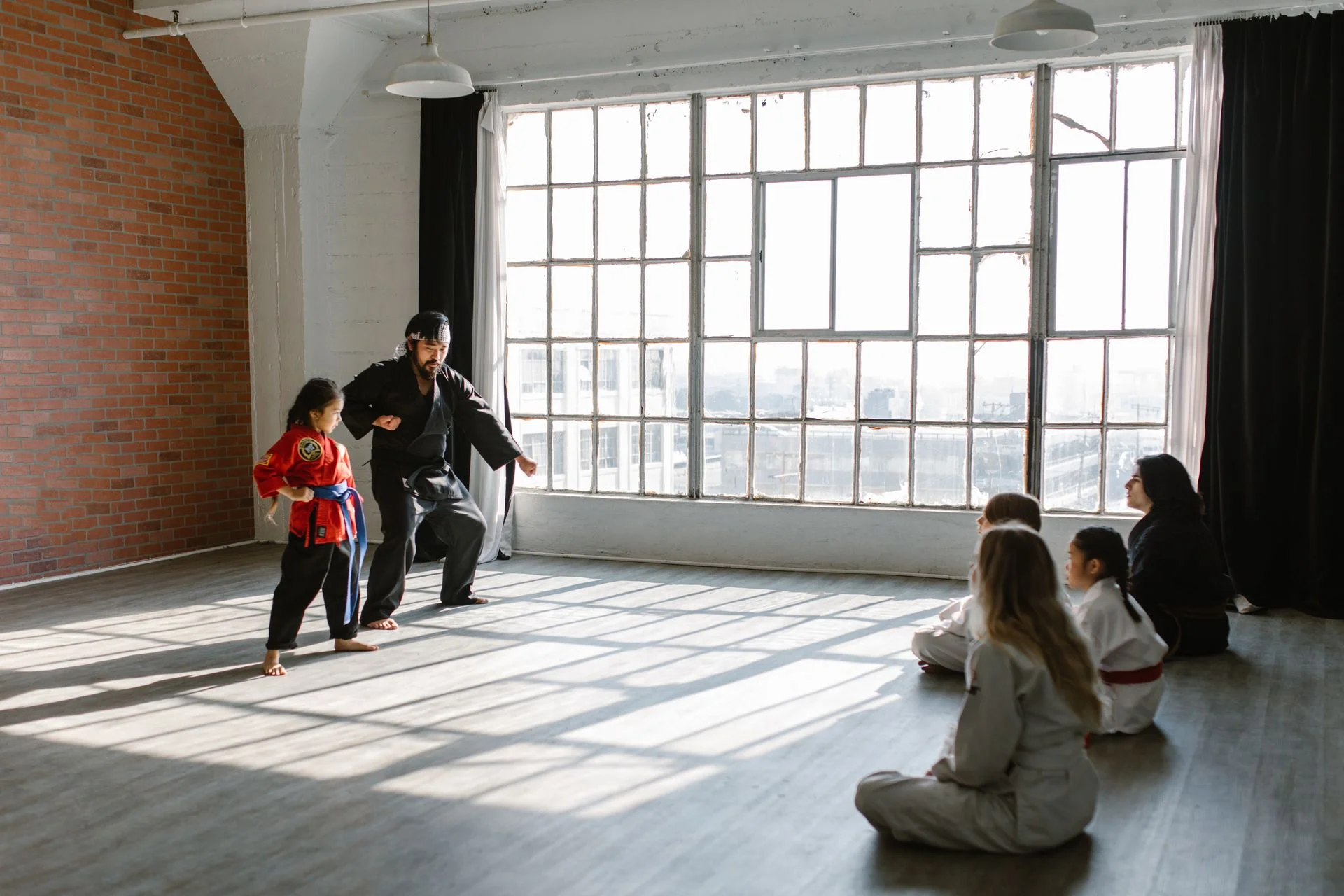

You can run great classes, have experienced coaches, and build a strong community on the mats — but if new students cannot find you, book a trial, or understand how to join, growth becomes harder than it should be.
That is where martial arts marketing comes in.
Marketing your martial arts school is not just about posting on Instagram or running a few ads. It is about creating a simple system that helps people discover your school, trust your coaches, book their first class, and become long-term students.
Whether you run a karate dojo, BJJ academy, taekwondo school, boxing gym, kickboxing studio, or mixed martial arts program, the goal is the same:
Make it easy for the right students to find you, try a class, and keep training.
In this guide, we’ll cover practical martial arts marketing strategies you can use to attract more students, fill your classes, improve retention, and grow your school with less admin.
What you’ll learn
In this guide, we’ll cover:
- How to create a clear offer for new students
- How to make your school easier to find locally
- What your website needs to convert visitors into trial bookings
- How to promote kids’ martial arts classes
- What to post on social media
- How to turn trial students into members
- How referrals, reviews, and follow-ups help you grow
- How booking software can make your marketing work better
Quick takeaways
Before we go deeper, here are the main ideas:
- Your website should make it easy to book a trial class.
- Your Google Business Profile should be complete, active, and full of real photos.
- Each main program should have its own page, not just one generic “Classes” page.
- Beginners need reassurance before they book.
- Parents care about confidence, focus, discipline, safety, and progress.
- Trial students need a clear next step after their first class.
- Referrals work best when they are easy for current students to share.
- Marketing works better when your bookings, payments, and memberships are simple.
What is martial arts marketing?
Martial arts marketing is how your school attracts new students, promotes classes, builds local trust, and turns interest into bookings.
It includes things like:
- Your website
- Google Business Profile
- Local SEO
- Reviews
- Social media
- Trial offers
- Referral programs
- Email and SMS follow-ups
- Paid ads
- Community events
- School partnerships
- Booking and payment systems
But good marketing is not only about getting attention. A lot of schools already get some attention. The real question is: what happens next?
If someone finds your school, can they quickly understand what you offer? Can they see your class schedule? Can they book a trial without messaging you first? Can they buy a membership or class pack easily after the first class?
That full journey matters.
Good martial arts marketing does not stop at “more leads.” It helps turn local interest into booked classes, paid memberships, and long-term students.
1. Start with a clear offer
Before you spend more time on ads, social media, or flyers, make sure your offer is easy to understand.
Many people searching for martial arts classes are not ready to buy a full membership right away. They may be comparing schools, checking prices, looking for kids’ activities, or wondering if they will feel comfortable as a beginner.
That is why a simple intro offer can work so well.
Good martial arts intro offer ideas
| Offer | Best for |
|---|---|
| Free trial class | New students who want to try before joining |
| 2-week beginner pass | Parents comparing schools for their child |
| First month special | Students who are almost ready to commit |
| Beginner course | Adults who feel nervous starting |
| Private intro lesson | Students who want extra confidence |
| Family intro pass | Parents with more than one child |
| Kids trial class | Families looking for a safe first experience |
A strong offer should answer three questions quickly:
- Who is it for?
- What do they get?
- How do they book?
Example offer copy
Try your first martial arts class free. Choose a time, meet the coach, and see if our school is the right fit.
Another version:
Start with a 2-week beginner pass. Perfect for kids, adults, and first-time students.
Keep the offer simple. If people need to call, message, or ask several questions just to understand how to start, some of them will leave before booking.
Quick win
Add one clear intro offer to your homepage this week. Use a simple button like:
- Book a free trial
- Try a beginner class
- Start with an intro pass
- View class schedule
2. Know who you are trying to attract
Not every martial arts student is looking for the same thing. A parent searching for kids’ karate has different questions than an adult looking for BJJ, boxing, kickboxing, MMA, or self-defense classes.
Before creating content or promotions, define your main audience.
Common martial arts audiences
| Audience | What they usually care about |
|---|---|
| Parents | Confidence, focus, discipline, safety, respect |
| Adult beginners | Fitness, stress relief, confidence, feeling welcome |
| Teens | Confidence, structure, friends, progression |
| Women | Self-defense, safety, supportive environment |
| Experienced students | Coaching quality, training partners, progression |
| Families | Schedules, pricing, sibling options, convenience |
Once you know who you are speaking to, your marketing becomes much clearer.
Instead of saying:
Martial arts classes for everyone.
Say something more specific:
Beginner-friendly martial arts classes for kids, teens, and adults. Build confidence, fitness, and discipline in a supportive school.
Specific copy feels more personal. It also helps the right people understand that your school is for them.
3. Make your school easy to find locally
Most martial arts students come from nearby areas. That makes local marketing one of the most important parts of your growth.
When someone searches for:
- martial arts classes near me
- karate classes near me
- BJJ near me
- kids martial arts in [city]
- kickboxing classes in [city]
- self-defense classes near me
Your school should be easy to find, easy to understand, and easy to book.
Start with your Google Business Profile
Your Google Business Profile is often the first thing people see before they visit your website. Make sure it is complete and up to date.
Add or update:
- Business name
- Address
- Phone number
- Website link
- Booking link
- Opening hours
- Class photos
- Instructor photos
- Program details
- Business description
- Reviews
- FAQs
Use real photos whenever possible. Show your training space, coaches, students, kids’ classes, adult classes, belt promotions, and community moments.
People want to see what the school actually feels like before they walk in.
Review request example
After a positive moment, such as a belt promotion or a parent compliment, ask for a review:
Thank you, that means a lot. Would you be open to leaving a quick Google review? It really helps new families find our school and feel confident before their first class.
Good reviews should be specific. A review that says “Great school” is nice, but a review that mentions confidence, beginner support, friendly coaches, or easy booking is much stronger.
Quick win
This week, add 10–20 fresh photos to your Google Business Profile and ask five happy students or parents for reviews.
4. Build pages for each main program
If your website has one general “Classes” page, you may be missing a lot of search traffic.
Different people search for different classes. A parent looking for kids’ karate may never search for “martial arts school.” Someone looking for adult kickboxing may not care about kids’ programs. A beginner interested in Brazilian Jiu-Jitsu wants different information than someone looking for private lessons.
Create separate pages for your main programs.
Program page ideas
- Kids martial arts classes
- Adult martial arts classes
- Karate classes
- Taekwondo classes
- Brazilian Jiu-Jitsu classes
- Kickboxing classes
- Boxing classes
- MMA classes
- Women’s self-defense classes
- Beginner martial arts classes
- Private martial arts lessons
- Summer camps
- Birthday parties
- Family classes
Each page should be written for that specific audience.
What every program page should include
Use this simple structure:
- Who the class is for
- What students will learn
- What beginners should expect
- Class schedule
- Pricing or intro offer
- Photos or videos
- Reviews
- FAQ
- Booking button
For example, a kids’ martial arts page should answer:
- What age groups can join?
- Can beginners start anytime?
- What will children learn?
- Can parents watch?
- What should my child wear?
- How does progress work?
- How do we book a trial?
The more helpful your page is, the less friction there is before booking.
5. Make your website action-focused
Your website does not need to be huge. It needs to be clear.
When someone lands on your site, they should quickly understand:
- What you offer
- Who it is for
- Where you are located
- When classes happen
- How to try a class
- How to join
Website must-haves
Your martial arts website should include:
- Clear headline
- Class types
- Location
- Schedule
- Trial offer
- Pricing or intro offer
- Reviews
- Real photos
- Instructor information
- FAQs
- Booking buttons
Avoid hiding your schedule behind a contact form. Prospects want to know if the class times work before they take the next step.
Strong CTA examples
Use buttons that clearly explain the action:
- Book a free trial
- Try a beginner class
- View class schedule
- Start with an intro pass
- Join kids’ martial arts
- Book your first class
Avoid relying only on vague buttons like:
- Learn more
- Contact us
- Submit
- Get started
Those can work in some places, but your main CTA should be more specific.
Your website should not just explain your school. It should help people take the next step.
Quick win
Open your homepage on your phone. Can someone book a trial class within 10 seconds? If not, make the CTA clearer.
6. Make trial classes easy to book
A trial class is one of the most important parts of martial arts marketing.
Someone may discover your school through Google, Instagram, a referral, or an ad. But the real conversion happens when they book and attend their first class.
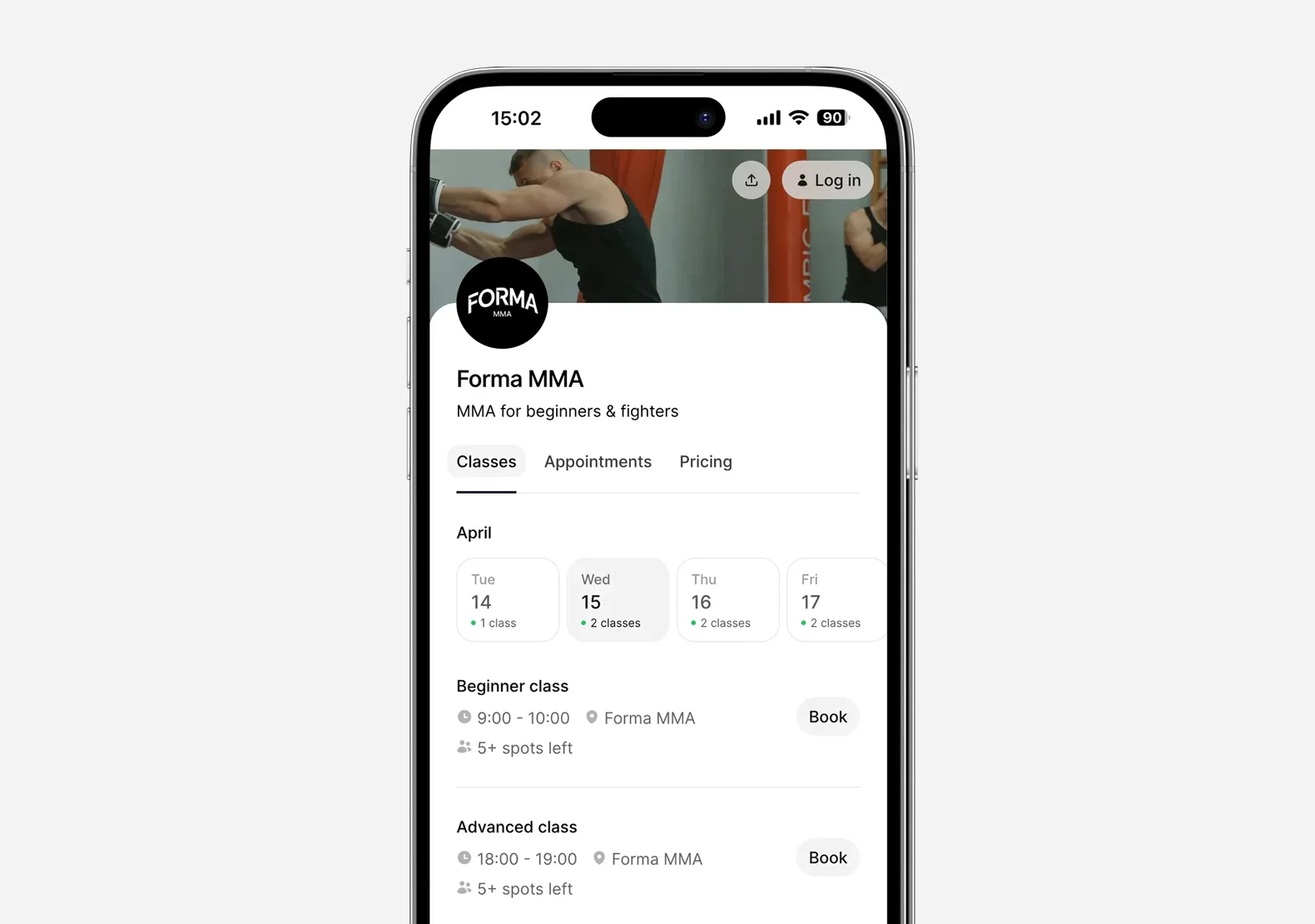
A smooth trial booking flow
A good flow looks like this:
- Visitor lands on your website.
- They choose a class or intro offer.
- They pick a date and time.
- They enter their details.
- They receive a confirmation.
- They get a reminder before class.
- They attend.
- You follow up after the session.
This should feel simple for the student and easy for your team.
If people need to call, message, wait for a reply, or ask manually for your schedule, you may lose them. Many parents and adults search outside working hours. Your booking system should be ready when they are.
Trial class checklist
Before someone arrives, make sure they know:
- Class time
- Location
- What to wear
- What to bring
- Whether they need equipment
- Where to check in
- Whether parents can watch
- What happens after class
Small details reduce nerves, especially for beginners.
7. Turn trial students into members
Getting someone to book a trial is only the first step. The real growth happens when that trial turns into a paid membership, class pack, or beginner program.
A simple follow-up process helps new students understand what to do next. It keeps the experience warm and makes joining feel like a natural next step rather than a sales push.
After-trial follow-up example
Great to have you in class today. If you’d like to continue, most beginners start with our 2x per week membership. You can choose your next class and book online here.
New students usually do not need ten different options. They need one clear recommendation.
Good next-step offers
- Monthly membership
- 4-class pack
- 8-class pack
- Beginner course
- Family membership
- Private lesson pack
- Kids term program
Make the next step simple. For example:
Most beginners start with our 2x per week membership. It gives you a steady routine without overcommitting.
That kind of recommendation helps people decide faster.
Quick win
Create one follow-up message for every trial student. Send it the same day they attend.
8. Promote kids’ martial arts classes clearly
Kids’ martial arts can be one of the strongest growth areas for a school. But parents are not only buying martial arts. They are looking for outcomes.
Parents often care about:
- Confidence
- Focus
- Discipline
- Respect
- Fitness
- Coordination
- Social skills
- Self-control
- Safety
- Positive role models
Your marketing should speak to those outcomes.
Instead of saying:
Kids karate classes every Tuesday and Thursday.
Say:
Kids martial arts classes that help children build confidence, focus, and discipline in a safe, supportive environment.
What parents want to know
A strong kids’ martial arts page or offer should answer:
- What age can children start?
- Can beginners join anytime?
- Is the first class free?
- What should my child wear?
- Can parents watch?
- Are classes grouped by age?
- How big are the classes?
- Are instructors experienced with children?
- How does belt progression work?
- How do we book?
Parents want clarity before they commit. The easier you make that decision, the more likely they are to book.
Content ideas for parents
Create helpful content around questions parents already have:
- Is martial arts good for shy kids?
- What age should my child start martial arts?
- Karate vs taekwondo for kids: what’s the difference?
- What should my child wear to their first class?
- How martial arts helps children build confidence
- What happens in a kids’ martial arts class?
These topics help parents feel more comfortable before booking a trial.
9. Create beginner-friendly content
Many people want to start martial arts but feel nervous.
They may worry that they are:
- Too unfit
- Too old
- Too shy
- Too inexperienced
- Not flexible enough
- Joining too late
- Going to be judged
Good content removes those fears.
Beginner content ideas
Create blog posts, short videos, FAQs, or social posts around topics like:
- What to expect in your first martial arts class
- Do I need to be fit before starting martial arts?
- Can adults start martial arts with no experience?
- How often should beginners train?
- What should I wear to my first class?
- BJJ for beginners: your first month explained
- Kickboxing for beginners: what to know before starting
- What is the best martial art for self-defense?
- How to choose a martial arts school
This type of content can bring search traffic, but more importantly, it helps people feel ready.
A nervous beginner does not need pressure. They need clarity, reassurance, and a simple first step.
10. Use social media to show the real class experience
Social media should help people imagine themselves, or their child, inside your school.
You do not need every post to be polished. In many cases, real content works better because it shows the atmosphere, coaches, students, and community.
Social media content pillars
Use a simple mix:
| Content type | Examples |
|---|---|
| Educational | Technique tips, beginner FAQs, training advice |
| Social proof | Reviews, testimonials, student progress |
| Community | Belt promotions, events, behind the scenes |
| Promotional | Trial offers, intro passes, class reminders |
| Instructor-led | Coach intros, short advice, Q&A clips |
Post ideas for martial arts schools
- Beginner class clips
- Belt promotion photos
- Student progress stories
- Parent testimonials
- Coach introductions
- Class schedule reminders
- Behind-the-scenes moments
- Technique tips
- Before-and-after student progress
- Competition highlights
- Kids’ class moments
- “What to expect” videos
Simple video ideas
Film short clips like:
- “3 things to know before your first class”
- “What kids learn in martial arts besides technique”
- “One beginner mistake and how to fix it”
- “Meet coach [name]”
- “What happens in a trial class”
- “Why parents choose our kids’ program”
End posts with a clear next step:
Want to try a class? Book your first session online.
Quick win
Film three short videos this week:
- A coach explaining what beginners should expect
- A quick class clip showing the training atmosphere
- A student or parent testimonial
Post them across Instagram, Facebook, TikTok, or YouTube Shorts.
11. Use referrals from current students
Your current students can be one of your strongest marketing channels. Martial arts is naturally community-driven. Students bring friends. Parents talk to other parents. Families recommend schools they trust.
Referral offer ideas
- Bring-a-friend week
- Free class for a friend
- Buddy pass for kids
- Referral discount
- Free private lesson after a successful referral
- Family discount for siblings
- Member challenge with small rewards
Keep the offer easy to explain.
Example referral copy
Bring a friend to class this month. If they join, you both get a free private session.
Another option:
Know someone who would enjoy training? Share your booking link and invite them to try a beginner class.
Referral marketing works best when it feels natural. Your happiest students already like your school. Make it easy for them to invite someone else.
12. Collect and use reviews
Reviews are one of the strongest trust signals for martial arts schools, especially for parents.
People want to know:
- Are the coaches friendly?
- Is the school safe?
- Are beginners welcome?
- Do children enjoy the classes?
- Is the training space clean?
- Is the school organized?
- Is booking easy?
- Do students make progress?
When to ask for reviews
Good moments include:
- After a belt promotion
- After a parent gives positive feedback
- After a student completes their first month
- After a successful event
- After a child gains confidence
- After a student reaches a goal
Review request message
Hi [Name], we’re so happy to see [student name] progressing in class. If you have a minute, would you be open to leaving us a quick Google review? It helps other families find the school and feel confident before their first class.
Where to use reviews
Do not leave reviews only on Google. Use them across your marketing:
- Homepage
- Kids’ martial arts page
- Adult beginner page
- Trial class landing page
- Social media posts
- Email follow-ups
- Ads
- Printed materials
Specific reviews make your school feel safer and more trustworthy.
13. Run local ads with one clear goal
Paid ads can work well, but only when they have a clear goal.
Do not run a general ad that simply says:
Join our martial arts school.
Make the action specific.
Better ad offers
- Book a free kids’ martial arts trial class
- Start your 2-week beginner pass
- Try Brazilian Jiu-Jitsu this week
- Join our beginner kickboxing program
- Book your child’s first karate class
- Try a women’s self-defense class
The ad should send people to a focused page, not a generic homepage.
Landing page checklist
Your landing page should include:
- Clear headline
- Who the class is for
- What the offer includes
- Class times
- Location
- Photos
- Reviews
- FAQ
- Booking button
For parents, Facebook and Instagram ads can work well because you can promote kids’ programs locally. For high-intent searches, Google Ads can work well because people are already searching for classes nearby.
Start small. Test one offer. Track bookings. Improve from there.
14. Partner with local schools, businesses, and communities
Martial arts schools are local businesses, so local partnerships can be powerful.
You can build relationships with:
- Schools
- Parent groups
- Kids’ activity centers
- Local gyms
- Physiotherapists
- Sports clubs
- Community centers
- Summer camps
- Local events
- Companies
- Youth organizations
Partnership ideas
- Anti-bullying workshops
- Self-defense seminars
- School demonstrations
- Community open days
- Kids’ confidence workshops
- Fitness challenges
- Charity events
- Birthday parties
- Holiday camps
- Corporate self-defense classes
The goal is not just to hand out flyers. The goal is to create real local connections that introduce people to your coaches, your space, and your community.
Quick win
Choose one local partner this month and offer a simple free workshop or intro session.
15. Use email and SMS follow-ups
People get busy. Someone may book a trial and forget. A parent may ask a question but not decide right away. A trial student may enjoy class but need a small reminder to join.
Follow-ups help you stay connected.
Useful follow-up messages
- Booking confirmation
- Class reminder
- Trial follow-up
- Membership offer
- Welcome message
- Missed class check-in
- Renewal reminder
- Low session reminder
- Re-engagement message
Trial reminder example
Your trial class is booked for [day] at [time]. Wear comfortable clothes, bring water, and arrive 10 minutes early. We’re excited to welcome you.
After-trial example
Thanks for joining us today. It was great to have you in class. If you’d like to continue, you can start with our beginner membership and book your next class here.
Inactive student example
We haven’t seen you in class for a little while. Hope everything is okay. You’re always welcome back when you’re ready.
These messages do not need to feel pushy. Done well, they make students feel seen and supported.
16. Track what actually brings students in
Marketing becomes easier when you know what is working. You do not need to track every possible number, but you should understand where students come from and what happens after they show interest.
Metrics worth tracking
- Website visits
- Trial bookings
- Trial attendance
- No-shows
- Trial-to-member conversion
- Membership purchases
- Class attendance
- Most popular class times
- Revenue by membership
- Referral sources
- Cancellations
- Student retention
Start with three simple questions:
- Where are new students coming from?
- How many trial students become paying members?
- Which classes or memberships are growing?
These answers help you make better decisions.
For example:
- If many people book trials but do not attend, improve reminders.
- If people attend trials but do not join, improve your follow-up.
- If kids’ beginner classes get the most interest, create more content and ads around that offer.
- If a membership is selling well, promote it more clearly.
More marketing is not always the answer. Sometimes the fastest growth comes from fixing the gaps in your current booking and follow-up flow.
17. Make bookings, payments, and memberships simple
Marketing brings people in, but your systems help them stay.
If your class schedule, bookings, payments, and memberships are hard to manage, growth can quickly become messy. More students should not mean more manual messages, payment chasing, and admin work.
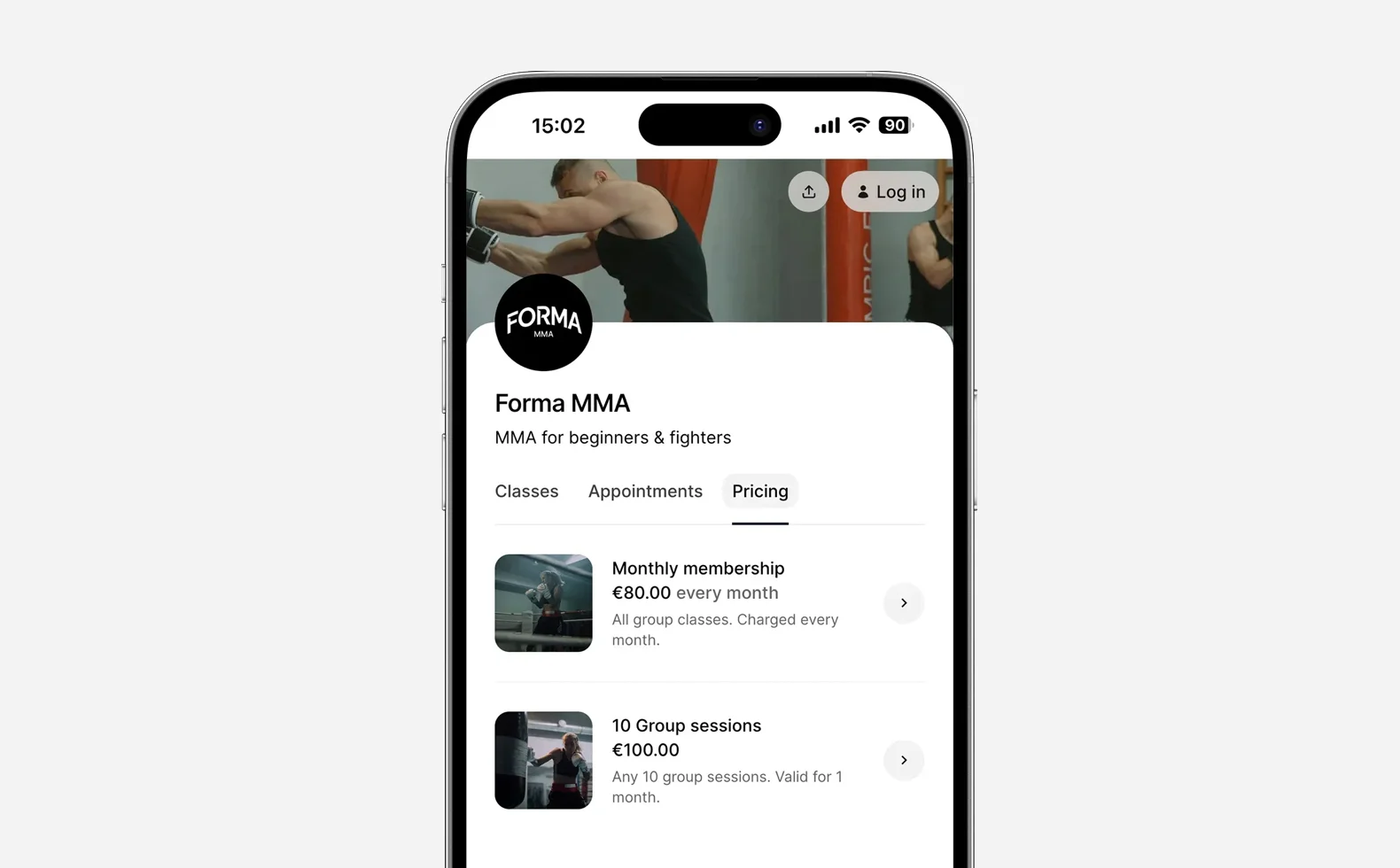
Students should be able to:
- View available classes
- Book online
- Pay online
- Buy memberships or class packs
- Manage their bookings
- Receive confirmations and reminders
Your team should be able to:
- See who is booked
- Track attendance
- Manage client profiles
- Sell memberships
- Accept payments
- View plan performance
- Understand which classes are growing
This is where martial arts booking software can help.
With Time2book, martial arts schools can manage class schedules, online bookings, memberships, payments, and client profiles in one simple system. Students get a smoother way to book, and your team gets less admin.
Bookings, payments, and clients — handled.
18. Build a simple weekly marketing routine
One reason marketing feels overwhelming is that schools try to do everything at once. A simple weekly routine is easier to keep.
Example weekly routine
| Day | Marketing task |
|---|---|
| Monday | Post class schedule or trial offer |
| Tuesday | Share a beginner tip or short video |
| Wednesday | Ask one student or parent for a review |
| Thursday | Follow up with trial students |
| Friday | Post a student story or belt promotion |
| Saturday | Film 3–5 short clips for next week |
| Sunday | Check bookings, trials, and membership sales |
You do not need a full marketing team. You need a rhythm that you can actually maintain.
Simple rule
If it helps people trust your school, book a class, or keep training, it is worth doing.
Martial arts marketing checklist
Use this checklist to see what to improve first.
Website
- Clear homepage headline
- Visible class schedule
- Booking button above the fold
- Trial offer
- Program pages
- Reviews
- Photos
- FAQs
- Mobile-friendly layout
Local search
- Complete Google Business Profile
- Correct address and phone number
- Booking link added
- Fresh photos
- Reviews requested regularly
- Local keywords on website
- Program pages for key classes
Trial flow
- Easy online booking
- Confirmation message
- Reminder before class
- Clear arrival instructions
- Friendly first-class experience
- Same-day follow-up
- Simple membership offer
Retention
- Memberships or class packs
- Booking reminders
- Attendance tracking
- Missed class follow-ups
- Progress milestones
- Renewal reminders
- Student check-ins
Final thoughts
Martial arts marketing does not need to be complicated. The best strategy is usually simple: help local people find your school, make the first class easy to book, create a great experience, and give students a clear path to continue.
Start with the basics. Make your offer clear. Improve your local search presence. Create helpful pages for each program. Show the real class experience. Follow up with trial students. Track what is working.
When your marketing, bookings, payments, and memberships all work together, growth feels smoother for everyone.
Your students book like a breeze. Your team stays organized. Your school has more time to focus on what really matters: teaching great classes.
Frequently asked questions about Martial arts marketing
Start by making your school easy to find locally. Update your Google Business Profile, collect reviews, create program pages on your website, promote a clear trial offer, post real class content on social media, and follow up with every new lead or trial student.
The best way to get more students is to create a clear beginner offer, make it easy to book online, and follow up after the first class. You can also use referrals, local SEO, social media, school partnerships, and local ads to bring more people into your trial flow.
The best strategy is a simple local growth system: attract people through search, reviews, social media, and referrals, then turn interest into trial bookings and trial students into members with a clear follow-up process.
Focus on the outcomes parents care about, such as confidence, focus, discipline, respect, fitness, and social skills. Create a dedicated kids’ martial arts page, show real class photos, collect parent reviews, and offer an easy trial class for new families.
A free trial class can work well because it lowers the barrier for new students. It gives parents and beginners a chance to meet the instructor, see the training space, and understand the class before committing to a membership.
Yes. A website helps people find your school, understand your classes, view your schedule, read reviews, and book a trial. It also gives you a place to rank for local searches like “martial arts classes near me” or “kids karate in [city].”
Post beginner class clips, student progress, belt promotions, instructor tips, parent testimonials, schedule reminders, and behind-the-scenes moments. The goal is to show the real experience inside your school and make new students feel welcome.
Make it easy for students to book classes, stay consistent, and understand their progress. Use reminders, follow-ups, memberships, class packs, progress milestones, and personal check-ins to keep students engaged.
Time2book helps martial arts schools manage class schedules, online bookings, memberships, payments, and client profiles in one place. It gives students a smooth way to book and helps schools reduce admin.