One of the most common questions people ask before starting Pilates is simple: how often should you do Pilates?
The honest answer is: it depends on your goal, your current fitness level, and the type of Pilates you are doing. A beginner doing gentle mat Pilates does not need the same weekly routine as someone taking challenging reformer Pilates classes four times a week.
For most people, the best starting point is 2 to 3 Pilates sessions per week. That is enough to build consistency, learn the movements, improve core control, and start feeling changes without overwhelming your body. If your goal is faster strength, flexibility, posture, or body composition results, you may eventually build up to 3 to 4 sessions per week.
Pilates fits well into general exercise recommendations because it can support strength, mobility, balance, posture, and muscular endurance. Global health guidelines also recommend adults include muscle-strengthening activities on at least 2 days per week, alongside regular aerobic activity.
In this guide, we’ll break down how often you should do Pilates a week, how often beginners should start, how often to do reformer Pilates, and how long it usually takes to see results.
Quick Answer: How Often Should You Do Pilates?
For most people:
| Goal | Recommended Pilates Frequency |
|---|---|
| Beginner learning the basics | 1 to 2 times per week |
| General fitness and consistency | 2 to 3 times per week |
| Seeing visible results | 3 to 4 times per week |
| Reformer Pilates | 2 to 4 times per week |
| Recovery, mobility, or low-impact movement | 1 to 3 times per week |
| Advanced practice | 4 to 5 times per week, with varied intensity |
The best answer for most readers is:
Do Pilates 2 to 3 times per week if you are starting out. Increase to 3 to 4 times per week if you want faster results and your body is recovering well.
More is not always better. Pilates is low-impact, but it still challenges your muscles, joints, coordination, and nervous system. The goal is not to do as many classes as possible. The goal is to create a rhythm you can repeat every week.
How Often Should You Do Pilates a Week?
A good weekly Pilates routine usually sits between 2 and 4 sessions per week.
Two sessions per week is enough to start building the habit. Three sessions per week is often the sweet spot for noticeable progress. Four sessions per week can work well for people who recover easily, enjoy the practice, and want stronger results.
Here is a simple way to think about it:
1 time per week
Once a week is a good start if you are completely new, returning after a break, recovering from an injury, or testing whether Pilates fits your lifestyle.
You can still benefit from one weekly class, especially if it is taught well and you focus on technique. But progress may be slower because there is a long gap between sessions.
2 times per week
Two Pilates sessions per week is one of the best starting points for beginners. It gives your body enough repetition to learn the movements while leaving plenty of recovery time.
This frequency works well if your goals are:
- better posture
- stronger core muscles
- improved flexibility
- less stiffness
- better body awareness
- building a sustainable habit
It also aligns well with general strength-training guidance, which recommends strengthening major muscle groups at least 2 days per week.
3 times per week
Three times per week is often the best balance for results.
At this frequency, Pilates becomes regular enough for your body to adapt. You repeat the movements often, improve control faster, and build strength without needing to train every day.
For many people, 3 Pilates classes per week is the ideal answer to “how often should you do Pilates to see results?”
4 times per week
Four sessions per week can work well if you already have some experience, your sleep and recovery are good, and you are not constantly sore.
This is a good frequency for people who want more visible changes in:
- muscle tone
- strength
- posture
- flexibility
- confidence in movement
- reformer Pilates progress
The key is variety. Doing four intense reformer classes every week may be too much for some people. A better approach could be two harder sessions, one technique-focused session, and one mobility or slower mat session.
5+ times per week
You can do Pilates five times per week, but it should be planned carefully.
This frequency works better when the sessions vary in intensity. For example:
- 2 challenging reformer classes
- 1 mat Pilates class
- 1 mobility-focused class
- 1 short home session
Doing intense Pilates every day can lead to fatigue, poor form, and overuse. Pilates rewards control, not exhaustion.
How Often Should You Do Pilates to See Results?
Most people should aim for 3 times per week if they want to see and feel results.
You may feel some benefits after just a few classes. Many beginners notice better posture awareness, improved breathing, and less stiffness early on. But visible or measurable results usually require several weeks of consistency.
A realistic timeline looks like this:
| Timeline | What You May Notice |
|---|---|
| After 1 to 2 weeks | Better body awareness, posture reminders, less stiffness |
| After 3 to 4 weeks | Improved control, stronger core engagement, better movement quality |
| After 6 to 8 weeks | More noticeable strength, flexibility, and posture improvements |
| After 8 to 12 weeks | Clearer progress in endurance, tone, confidence, and consistency |
Research on Pilates has found support for improvements in flexibility, dynamic balance, and muscular endurance, although results depend on the person, program, and consistency.
For rehabilitation-focused Pilates, one 2024 scoping review found support for an intervention period of around 8 weeks, with twice-weekly 60-minute sessions in the context studied. That does not mean every person needs that exact plan, but it supports the idea that Pilates results usually come from consistent practice over weeks, not one-off sessions.
So, if the keyword question is “how often should you do Pilates to see results?”, the best answer is:
Do Pilates 3 times per week for at least 6 to 8 weeks. Beginners can start with 2 times per week, then increase once the movements feel more natural.
How Often Should I Do Pilates as a Beginner?
If you are a beginner, start with 1 to 2 Pilates sessions per week.
That may sound low, but it is a smart way to begin. Pilates requires control, breathing, alignment, and coordination. In the beginning, your body is learning how to move differently. Starting too aggressively can make you sore, frustrated, or inconsistent.
A beginner-friendly routine could look like this:
| Week | Frequency | Focus |
|---|---|---|
| Weeks 1 to 2 | 1 to 2 sessions per week | Learn breathing, alignment, basic core control |
| Weeks 3 to 6 | 2 sessions per week | Build consistency and confidence |
| Weeks 7 to 12 | 2 to 3 sessions per week | Add challenge and improve strength |
| After 12 weeks | 3+ sessions if desired | Progress based on goals and recovery |
As a beginner, your goal is not to “feel destroyed” after every class. Your goal is to leave feeling like you learned something, moved better, and could come back again.
Beginner signs you are doing enough Pilates
You are probably at the right frequency if:
- you feel challenged but not constantly sore
- your form improves week by week
- you look forward to classes
- you recover well between sessions
- you can stay consistent for several weeks
Beginner signs you may be doing too much
You may need to reduce frequency or intensity if:
- you are sore before every class
- your lower back, neck, or hips feel irritated
- your form gets worse during sessions
- you feel tired instead of energized
- you start skipping classes because it feels too much
For beginners, consistency beats intensity. Two good classes per week are better than five rushed classes followed by burnout.
How Often Should You Do Reformer Pilates?
For reformer Pilates, most people do well with 2 to 4 sessions per week.
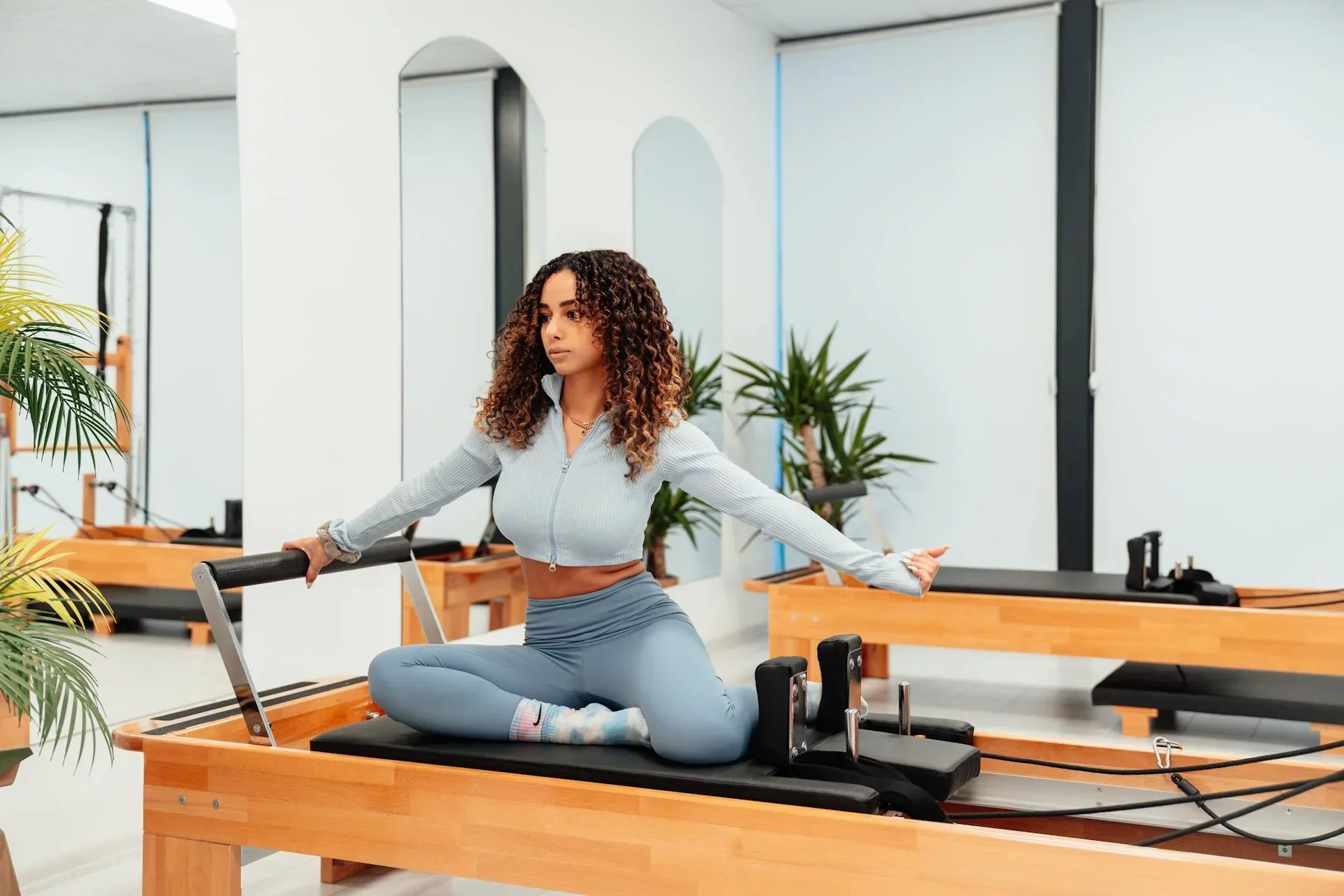
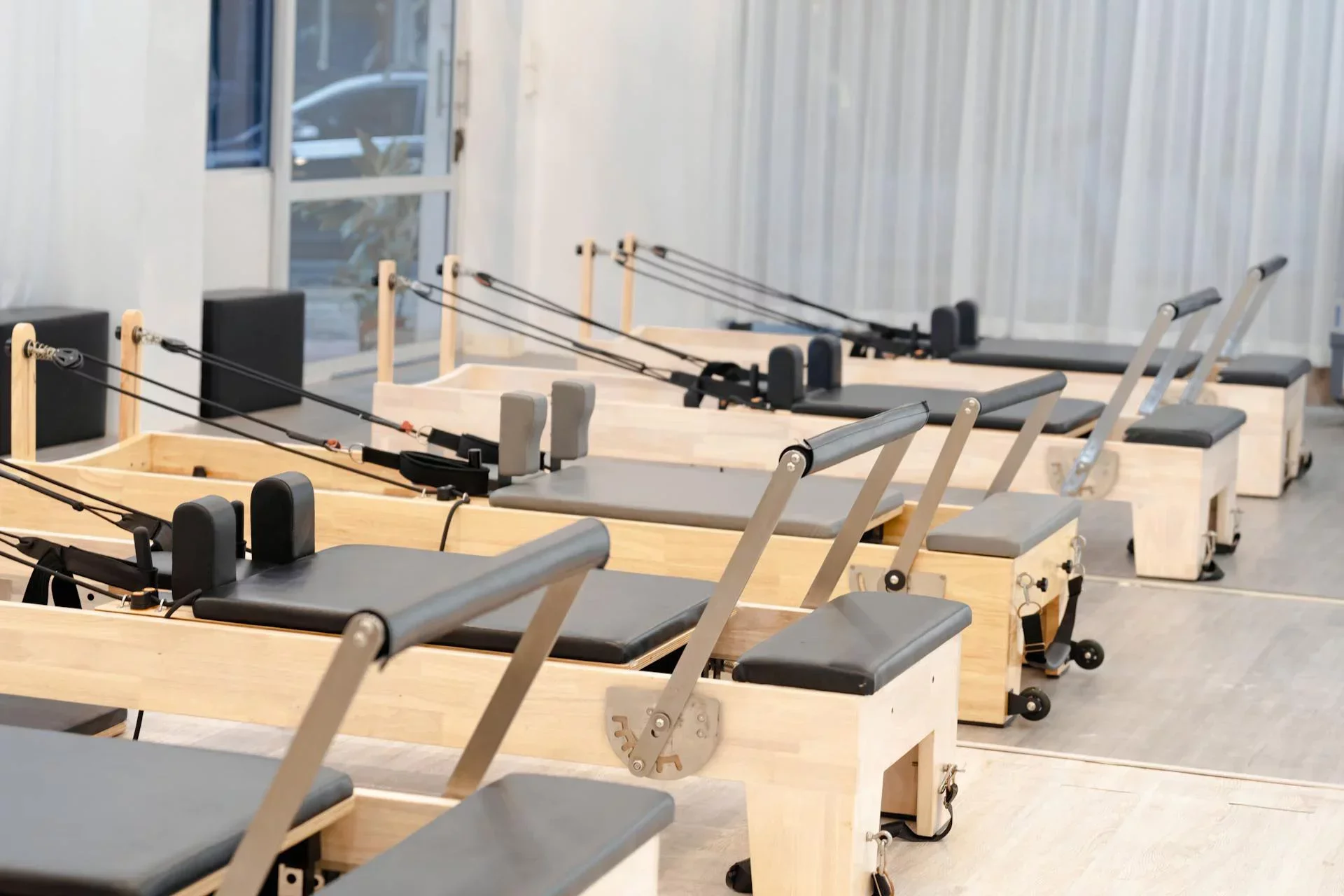
Reformer Pilates can feel different from mat Pilates because the machine uses springs, straps, pulleys, and a moving carriage. It can be gentle and supportive, but it can also be very challenging depending on the class style.
A good reformer Pilates frequency:
| Experience Level | Recommended Reformer Frequency |
|---|---|
| Complete beginner | 1 to 2 times per week |
| Beginner after first month | 2 times per week |
| Intermediate | 2 to 3 times per week |
| Advanced | 3 to 4 times per week |
| Very experienced | 4+ times per week with varied intensity |
If you are asking “how often should you do Pilates reformer?” or “how often should you do reformer Pilates?”, the safest general answer is:
Start with 1 to 2 reformer Pilates classes per week. Build to 2 to 3 classes per week for steady progress. Move to 4 only if your body recovers well and the sessions vary in intensity.
Reformer Pilates can build strength, control, and stability, but your muscles still need time to recover. This is especially true if your classes include stronger resistance, faster transitions, or athletic-style sequences.
How Many Times a Week Should You Do Pilates?
For most people, 2 to 3 times a week is enough.
But the right number depends on what you want Pilates to do for you.
If your goal is general health
Do Pilates 2 times per week and combine it with walking, cycling, swimming, or another form of cardio.
Pilates is excellent for strength, mobility, control, and posture, but most people still benefit from aerobic movement. Health guidelines generally recommend adults do at least 150 minutes of moderate-intensity activity per week, or 75 minutes of vigorous-intensity activity, plus muscle-strengthening activity.
If your goal is posture
Do Pilates 2 to 3 times per week.
Posture changes require awareness and repetition. Pilates helps because it trains core control, spinal movement, shoulder positioning, and pelvic alignment. A 2024 systematic review on Pilates and posture reported that Pilates interventions were associated with gains in core strength, spinal strength, and related postural muscles.
If your goal is flexibility
Do Pilates 2 to 4 times per week.
Pilates can improve flexibility because it combines stretching, strength, breath, and controlled range of motion. You do not need to force deep stretches every day. Regular, controlled movement is usually more sustainable.
If your goal is strength
Do Pilates 3 to 4 times per week.
For strength, you need enough challenge and enough recovery. Reformer Pilates can be especially useful here because spring resistance can make exercises more progressive.
However, if your goal is significant muscle growth, Pilates may not fully replace traditional resistance training. It can be a strong foundation, but many people benefit from combining Pilates with weight training.
If your goal is weight loss
Do Pilates 2 to 4 times per week, but combine it with nutrition and cardio.
Pilates can support weight loss by building consistency, improving strength, and helping you move more comfortably. But weight loss usually depends more on total activity, food intake, sleep, and lifestyle.
For this goal, Pilates works best as part of a broader weekly plan.
Example:
- 2 to 3 Pilates sessions
- 2 to 3 walks or cardio sessions
- simple nutrition structure
- enough sleep and recovery
Can You Do Pilates Every Day?
Yes, you can do Pilates every day, but not every session should be intense.
Daily Pilates can work if you vary the type of session. A short mobility-focused mat routine is very different from a hard reformer class. The risk is not Pilates itself. The risk is repeating high-intensity work without recovery.
A daily Pilates week might look like this:
| Day | Session Type |
|---|---|
| Monday | Reformer Pilates |
| Tuesday | Gentle mat Pilates |
| Wednesday | Rest or walk |
| Thursday | Reformer Pilates |
| Friday | Short core session |
| Saturday | Mobility Pilates |
| Sunday | Rest |
That is a very different plan from doing seven intense reformer classes in a row.
So, how often can you do Pilates? Technically, quite often. But a smarter question is: how often can you do Pilates while still recovering, improving, and enjoying it?
For most people, the best long-term answer is still 2 to 4 quality sessions per week.
Mat Pilates vs Reformer Pilates: Does Frequency Change?
Yes, frequency can change depending on whether you are doing mat Pilates or reformer Pilates.
Mat Pilates
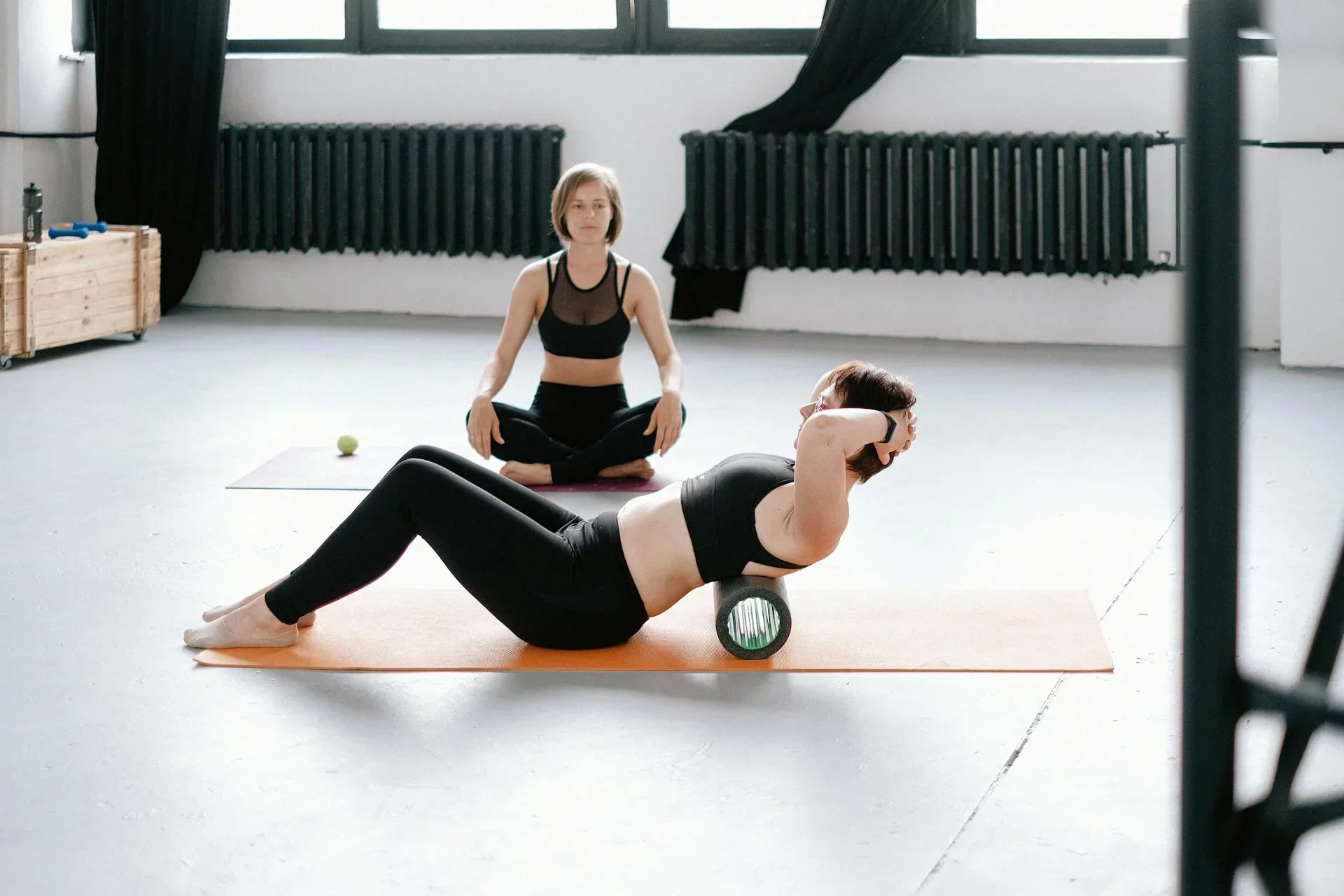
Mat Pilates can be easier to do more often because it usually uses body weight and minimal equipment. You can do short mat sessions at home, even 10 to 20 minutes at a time.
Good frequency:
- beginners: 1 to 2 times per week
- general fitness: 2 to 3 times per week
- experienced: 3 to 5 times per week, depending on intensity
Reformer Pilates
Reformer Pilates often feels more structured and more intense because of spring resistance and machine-based movement. It may require more recovery, especially for beginners.
Good frequency:
- beginners: 1 to 2 times per week
- steady progress: 2 to 3 times per week
- advanced: 3 to 4 times per week
Best combination
A strong weekly routine could combine both:
| Day | Workout |
|---|---|
| Monday | Reformer Pilates |
| Wednesday | Mat Pilates |
| Friday | Reformer Pilates |
| Sunday | Gentle mobility or stretching |
This gives you consistency without relying on the same class type every time.
What Happens If You Only Do Pilates Once a Week?
Doing Pilates once a week is still valuable, especially if you are new or very busy.
You can improve awareness, learn technique, reduce stiffness, and build a positive movement habit. But results will usually come slower compared with 2 or 3 sessions per week.
Once a week works best when:
- you are just starting
- you are using Pilates as a complement to other training
- you have a busy schedule
- you are recovering from injury
- you are working with a skilled instructor
To make once-a-week Pilates more effective, add small movement habits between classes. Even 10 minutes of simple core, mobility, or breathwork at home can help you retain what you learned.
What Happens If You Do Pilates 3 Times a Week?
Doing Pilates 3 times a week is one of the best routines for many people.
It gives you enough repetition to improve without making Pilates feel like a daily obligation. You have regular exposure to the movements, but also enough recovery between sessions.
With 3 weekly sessions, many people notice:
- better core strength
- improved posture
- more control during movement
- better flexibility
- stronger glutes, hips, and shoulders
- less stiffness
- better confidence in class
This is why 3 times per week is often the best answer for people who ask, “how often should you do Pilates to see results?”
What Happens If You Do Pilates 4 Times a Week?
Doing Pilates 4 times a week can bring faster progress, but it depends on recovery.
This frequency is best for people who:
- already know the basics
- are not constantly sore
- sleep well
- eat enough to support training
- vary class intensity
- enjoy Pilates as a major part of their fitness routine
A good 4-day Pilates schedule might look like this:
| Day | Session |
|---|---|
| Monday | Reformer strength class |
| Tuesday | Mat Pilates or mobility |
| Thursday | Reformer class |
| Saturday | Full-body Pilates class |
This kind of structure gives the body different challenges across the week.
How to Know If Your Pilates Routine Is Working
Your Pilates routine is working if you notice progress in how you move, not just how you look.
Good signs include:
- you can control exercises better
- you feel more stable
- your posture feels easier to maintain
- your breathing improves
- your hips, spine, and shoulders move more freely
- you feel stronger in daily life
- you recover well between sessions
Pilates is not only about visible abs or muscle tone. Many of the best results are functional. You feel better when sitting, walking, lifting, training, or doing everyday tasks.
How to Build a Weekly Pilates Schedule
Here are a few practical weekly Pilates schedules depending on your goal.
Beginner Pilates schedule
| Day | Plan |
|---|---|
| Monday | Pilates class |
| Tuesday | Walk |
| Wednesday | Rest |
| Thursday | Pilates class |
| Friday | Rest |
| Saturday | Walk or gentle mobility |
| Sunday | Rest |
Best for: beginners, consistency, learning form.
Pilates schedule for results
| Day | Plan |
|---|---|
| Monday | Reformer Pilates |
| Tuesday | Walk or light cardio |
| Wednesday | Mat Pilates |
| Thursday | Rest |
| Friday | Reformer Pilates |
| Saturday | Walk, strength, or mobility |
| Sunday | Rest |
Best for: visible results, strength, posture, steady progress.
Pilates and strength training schedule
| Day | Plan |
|---|---|
| Monday | Strength training |
| Tuesday | Pilates |
| Wednesday | Walk or rest |
| Thursday | Strength training |
| Friday | Pilates |
| Saturday | Cardio or mobility |
| Sunday | Rest |
Best for: strength, body composition, balanced fitness.
Reformer Pilates schedule
| Day | Plan |
|---|---|
| Monday | Reformer Pilates |
| Tuesday | Rest or walk |
| Wednesday | Reformer Pilates |
| Thursday | Rest |
| Friday | Mat Pilates or mobility |
| Saturday | Reformer Pilates |
| Sunday | Rest |
Best for: reformer Pilates progress without overtraining.
Common Mistakes When Deciding How Often to Do Pilates
Starting too fast
Many beginners go from no Pilates to four classes per week. That can work for some people, but for many it creates soreness and fatigue.
Start with a frequency you can repeat.
Treating every class like a maximum-effort workout
Pilates is about control. A slower, precise class can be more effective than rushing through advanced movements with poor form.
Ignoring recovery
Low-impact does not mean no recovery needed. Your muscles, tendons, joints, and nervous system still adapt between sessions.
Changing the routine too often
Results need consistency. Try to stick with a simple weekly rhythm for at least 6 to 8 weeks before judging whether it works.
Expecting instant visual changes
Pilates can change how you feel quickly, but visible changes usually take longer. Focus on strength, posture, control, and consistency first.
FAQ: How Often Should You Do Pilates?
Most people should do Pilates 2 to 3 times per week. Beginners can start with 1 to 2 sessions per week, while people looking for faster results may build up to 3 to 4 sessions per week.
A good weekly Pilates frequency is 2 to 4 times per week. Two sessions are enough for consistency, three sessions are ideal for steady results, and four sessions can work well for more experienced clients.
To see results, aim for 3 Pilates sessions per week for at least 6 to 8 weeks. You may feel better earlier, but strength, posture, flexibility, and visible body changes usually require consistent practice.
Most people should do reformer Pilates 2 to 3 times per week. Beginners can start with 1 to 2 classes per week. More experienced clients can do 3 to 4 sessions per week if they recover well.
As a beginner, start with 1 to 2 Pilates classes per week. Once you feel comfortable with the basics, increase to 2 to 3 sessions per week.
For general fitness, 2 to 3 times per week is enough. For faster progress, 3 to 4 times per week may be better, especially when combined with walking, cardio, or strength training.
Yes, but daily Pilates should include varied intensity. You can do gentle mat Pilates or mobility work more often, but intense reformer classes every day may be too much for many people.
Yes. Pilates twice a week is enough to build consistency, improve technique, and support strength and mobility. For more noticeable results, many people eventually increase to three times per week.
Final Thoughts: So, How Often Should You Do Pilates?
For most people, the best answer is simple:
Start with 2 Pilates sessions per week. Build to 3 sessions per week if you want stronger results. Try 4 sessions per week only when your body is ready and recovering well.
Pilates works best when it becomes a consistent part of your week, not a short burst of motivation. Whether you choose mat Pilates, reformer Pilates, or a mix of both, the key is to find a schedule you can repeat.
For Pilates studios, this is also a useful way to guide clients. Clear beginner plans, 2-class-per-week memberships, and 3-class-per-week progress plans can help clients understand what to book and how to stay consistent.
Try Time2book free today and make it easy for clients to book Pilates classes, purchase memberships, and stay consistent with their weekly routine.