Personal trainer advertising has never been easier — and never been more competitive.
In 2026, almost anyone can launch Facebook ads, boost Instagram posts, or run Google Ads in a few clicks. Yet many personal trainers still struggle to turn attention into consistent bookings and revenue.
The problem isn’t effort. And it’s not talent.
Most personal trainers don’t fail at advertising because their ads are bad. They fail because their system isn’t built to convert paid traffic.
Modern clients expect speed, clarity, and convenience — especially on mobile. If someone clicks your ad and can’t instantly understand your offer, see availability, and book without friction, they leave.
In this guide, you’ll learn:
- What personal trainer advertising really means in 2026
- How to advertise yourself as a personal trainer without wasting money
- Where to advertise personal training (and where not to)
- Personal training ads examples that actually convert
- The most common personal trainer advertising mistakes
- Why booking and payments are the real bottleneck
And how a modern booking platform like Time2book connects advertising directly to revenue.
What Personal Trainer Advertising Really Means in 2026
Most trainers think advertising means “running ads.” But personal trainer advertising is the full journey from discovery to payment:
- Where people find you
- What they see first
- How confident they feel
- How fast they can take action
Ads are only step one. If the rest of the journey is slow, confusing, or manual, advertising becomes expensive very quickly.
Advertising vs marketing (and why trainers confuse them)
- Marketing builds trust over time (content, social media, referrals)
- Advertising captures intent right now (paid traffic)
A healthy business needs both — but advertising only works if your marketing foundation is solid.
That foundation includes:
- Clear positioning
- Clear pricing
- Clear availability
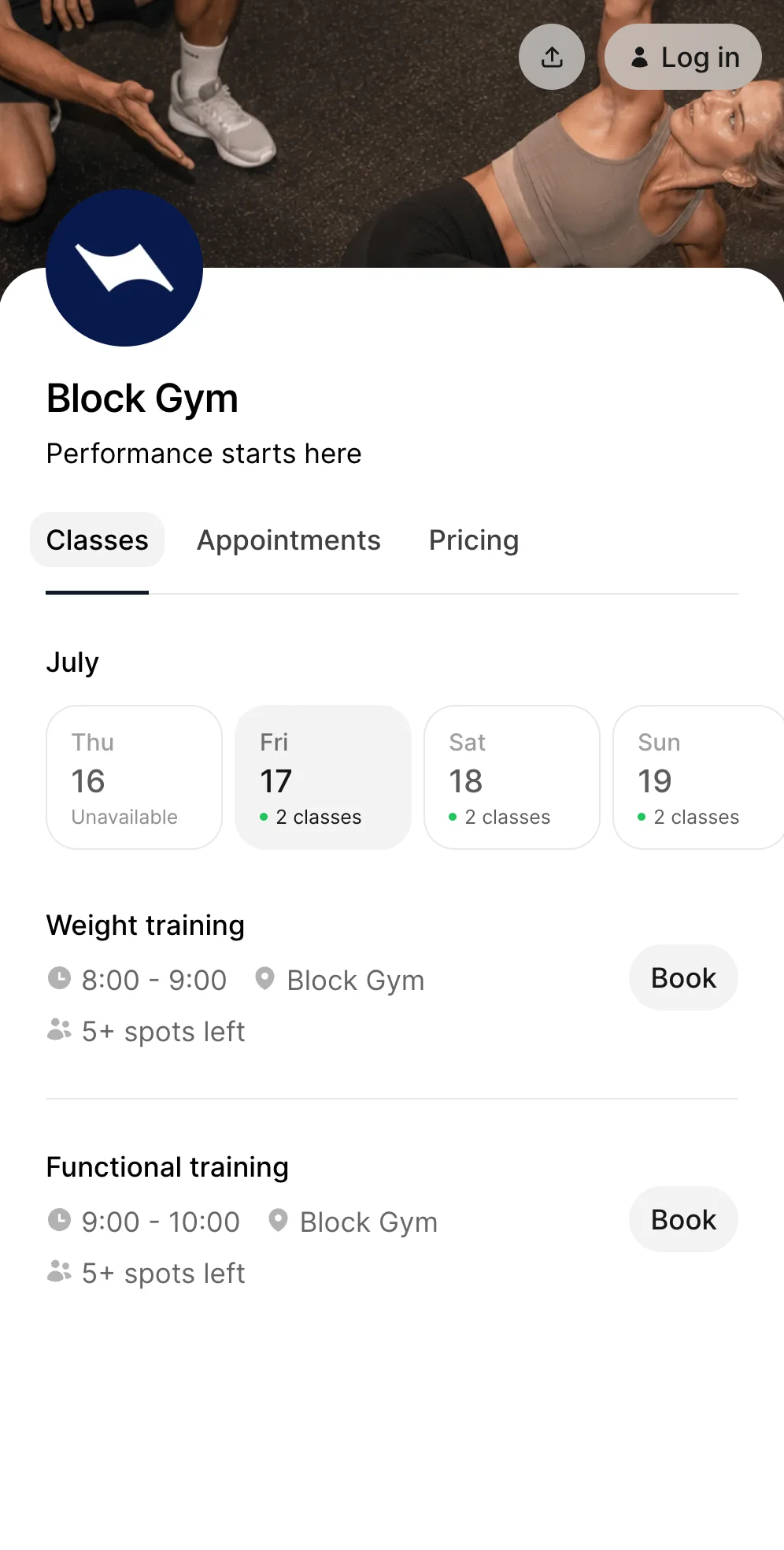
- A professional booking experience
Without these, ads amplify confusion instead of conversions.
Before You Advertise: Fix These 3 Things First
This is where most personal trainers lose money. They run ads before fixing the fundamentals.
1. Your booking experience must be mobile-first
Over 80% of personal trainer advertising traffic comes from mobile devices.
If someone clicks your ad and:
- Can’t immediately see available times
- Has to DM you
- Has to fill out a form and wait
They leave. Advertising doesn’t buy attention for minutes. It buys attention for seconds.
A modern booking experience should:
- Load instantly on mobile
- Show real availability
- Allow booking without back-and-forth
2. Pricing must be clear (or at least framed)
“Hiding prices to qualify leads” is one of the most damaging myths in personal training advertising.
When someone clicks an ad, they’re asking:
- Is this for me?
- Can I afford it?
- Can I book now?
Completely hiding pricing increases drop-off — especially on paid traffic.
Clear pricing:
- Filters out unqualified leads
- Builds trust
- Speeds up decisions
3. Payment must be frictionless
Interest fades fast. Every extra step — typing card details, creating accounts, waiting for replies — lowers conversions.
This is why Apple Pay and Google Pay dramatically outperform manual checkout for ad traffic.
Where to Advertise Personal Training in 2026
Not all channels perform equally. Most personal trainers try to be everywhere — and end up effective nowhere. Here are the channels that actually work.
Facebook & Instagram Advertising for Personal Trainers
Facebook and Instagram ads are interruption-based. People aren’t searching for you — you’re appearing in their feed.
Best use cases
- Local personal trainers
- Intro offers
- Transformations
- Limited availability
What works
- Simple messaging
- One clear offer
- One clear call to action
What doesn’t
- Sending traffic to a homepage
- Sending people to Instagram profiles
- Asking users to DM you
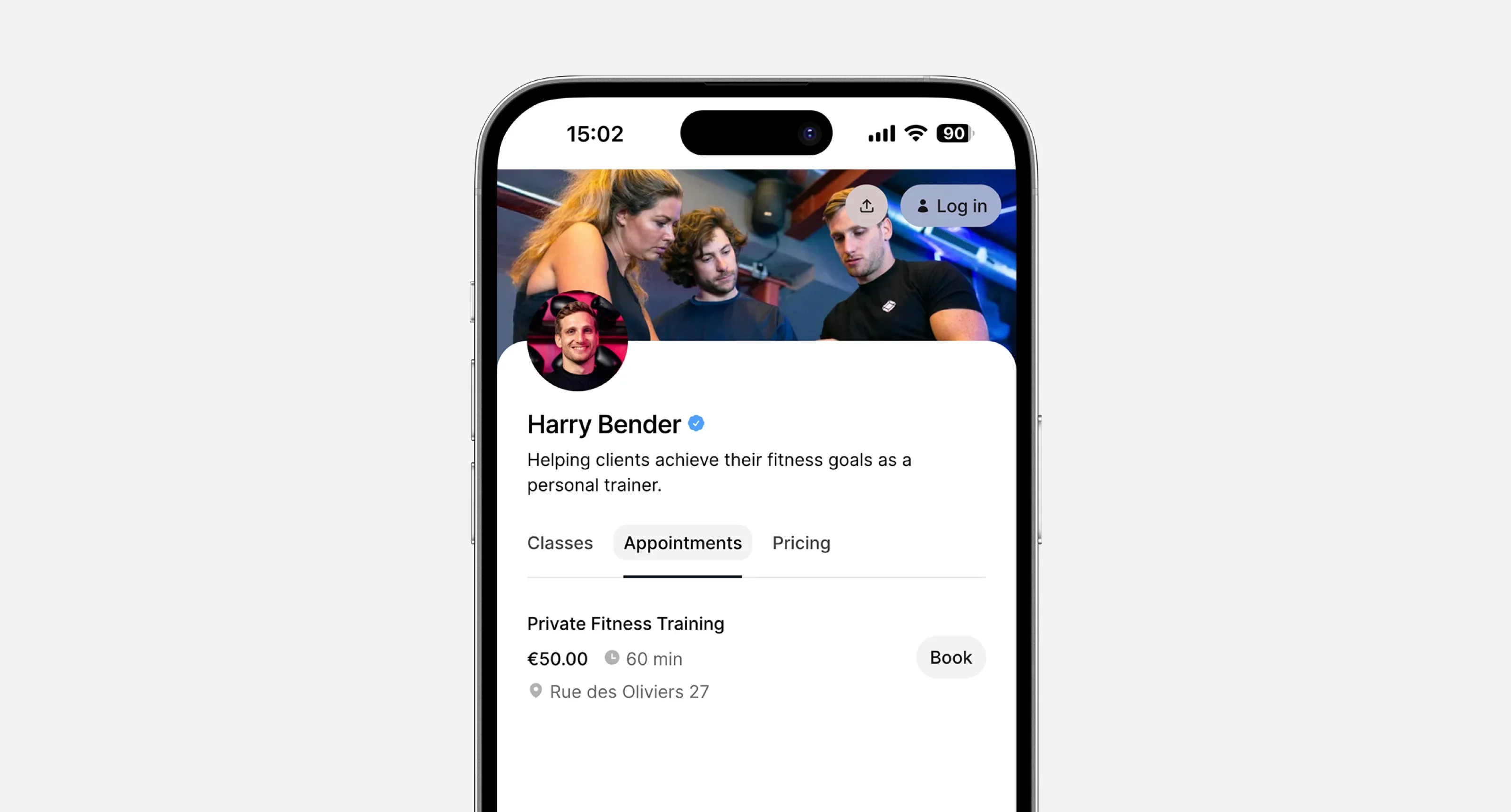
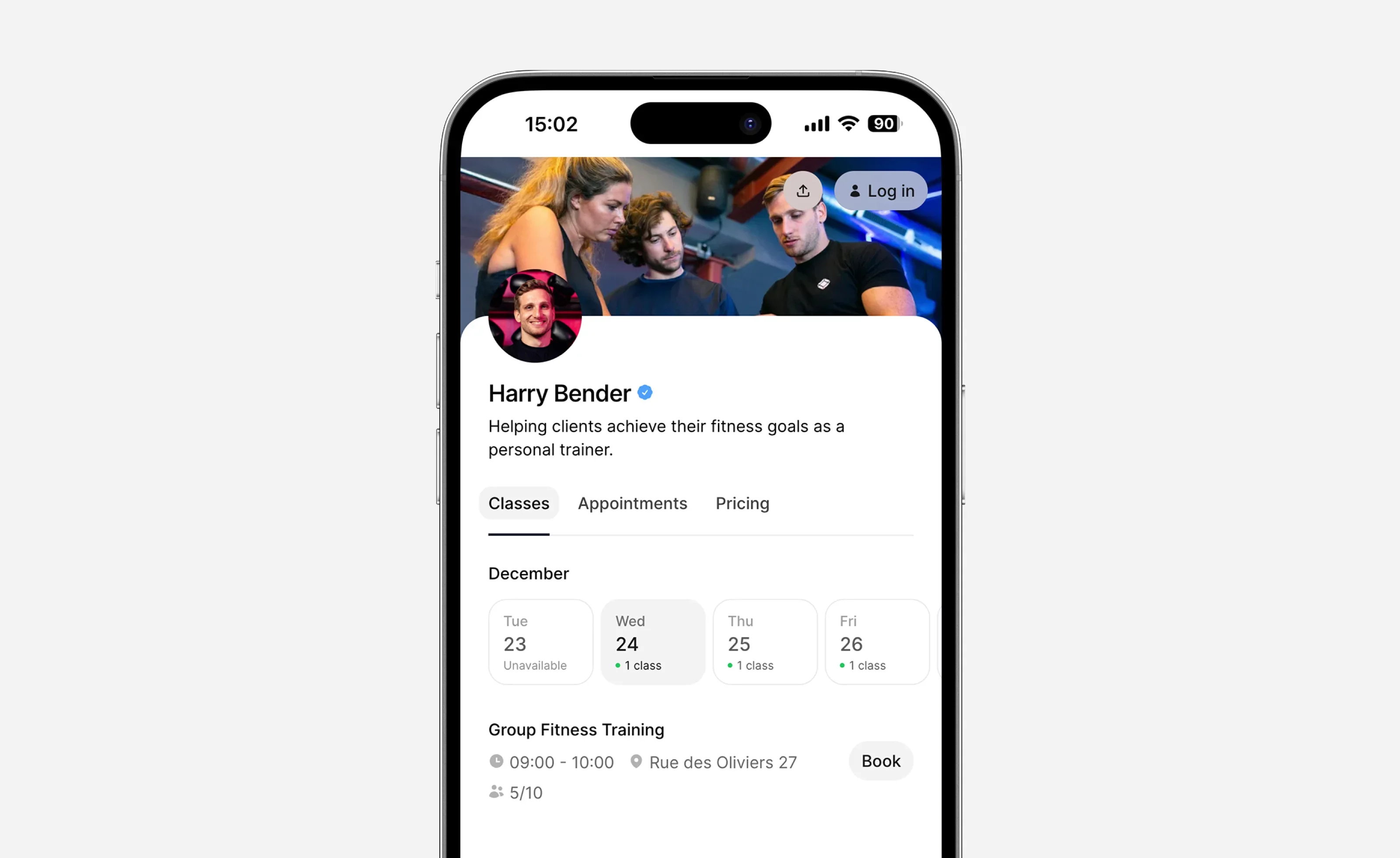
The correct flow is simple: Ad → direct booking page
Not:
- A website with multiple options
- A link-in-bio with six links
- A contact form
Facebook users are scrolling casually. If booking isn’t immediate, motivation disappears. If you want a deeper breakdown of paid ads strategy, targeting, and real-world setups, we cover that in detail here: Ads for Personal Trainers.
Google Ads for Personal Trainers
Google Ads capture intent, not attention.
Someone searching:
- “personal trainer near me”
- “personal training prices”
- “book personal trainer online”
…is already close to buying.
Why Google Ads fail for trainers
Because traffic is still sent to:
- Generic homepages
- Slow websites
- Contact pages
This wastes high-intent clicks.
The correct Google Ads mindset
Google users want confirmation, not persuasion.
They want to know:
- Are you available?
- Is this professional?
- Can I book now?
A clean booking page answers all three instantly.
Other Places to Advertise Personal Training
Google Maps & local SEO
For local trainers, Google Maps is one of the highest-converting channels:
- Reviews build trust
- Location adds relevance
- Booking links remove friction
Referrals (with structure)
Referrals still work — but only when booking is easy.
If referrals have to:
- Ask how to book
- Ask about prices
- Wait for replies
Momentum dies.
Personal Training Ads Examples That Actually Convert
Good ads don’t convince harder — they remove friction.
Example 1: Intro offer
“New to training? Book your first 1-on-1 session this week.”
Why it works:
- Clear audience
- Clear action
- No over-explaining
Example 2: Niche-based
“Busy professionals in [city]: structured training, no guesswork.”
Why it works:
- Specific target
- Simple promise
- Easy next step
Example 3: Capacity-based
“Only 3 personal training spots available this month.”
Why it works:
- Scarcity
- Urgency
- Encourages immediate booking
All of these fail if the next step isn’t instant booking.
Personal Trainer Advertising Tips That Save Money
1. One ad, one goal
Don’t mix awareness, education, and booking in one ad.
Choose one.
2. Stop sending traffic to conversations
Ads should generate bookings, not DMs.
Conversations are slow and expensive.
3. Optimize after the click
Improving booking speed often increases ROI more than changing creatives.
4. Mobile experience beats everything
If it doesn’t feel effortless on a phone, ads underperform.
Why Booking Is the Missing Link in Coaching Advertising
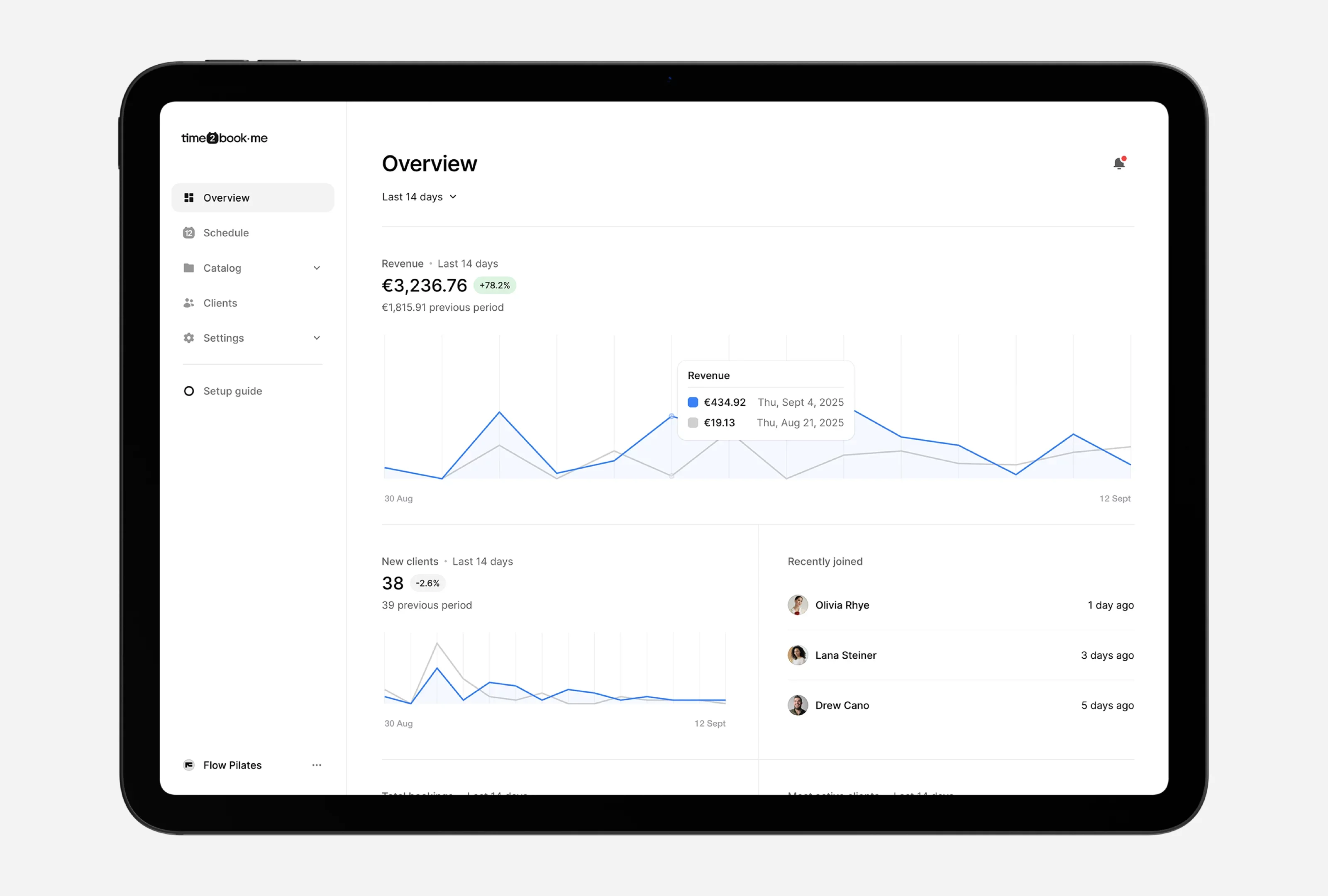
Most trainers think booking software is an admin tool. In reality, it’s a sales tool.
A fast booking system:
- Captures impulse interest
- Reduces drop-off
- Increases show-up rates
- Makes revenue predictable
This is where Time2book fits naturally into personal trainer advertising.
How Time2book Turns Advertising Into Booked Sessions
Time2book is built for businesses that rely on paid traffic and mobile users.
With Time2book:
- Clients see availability instantly
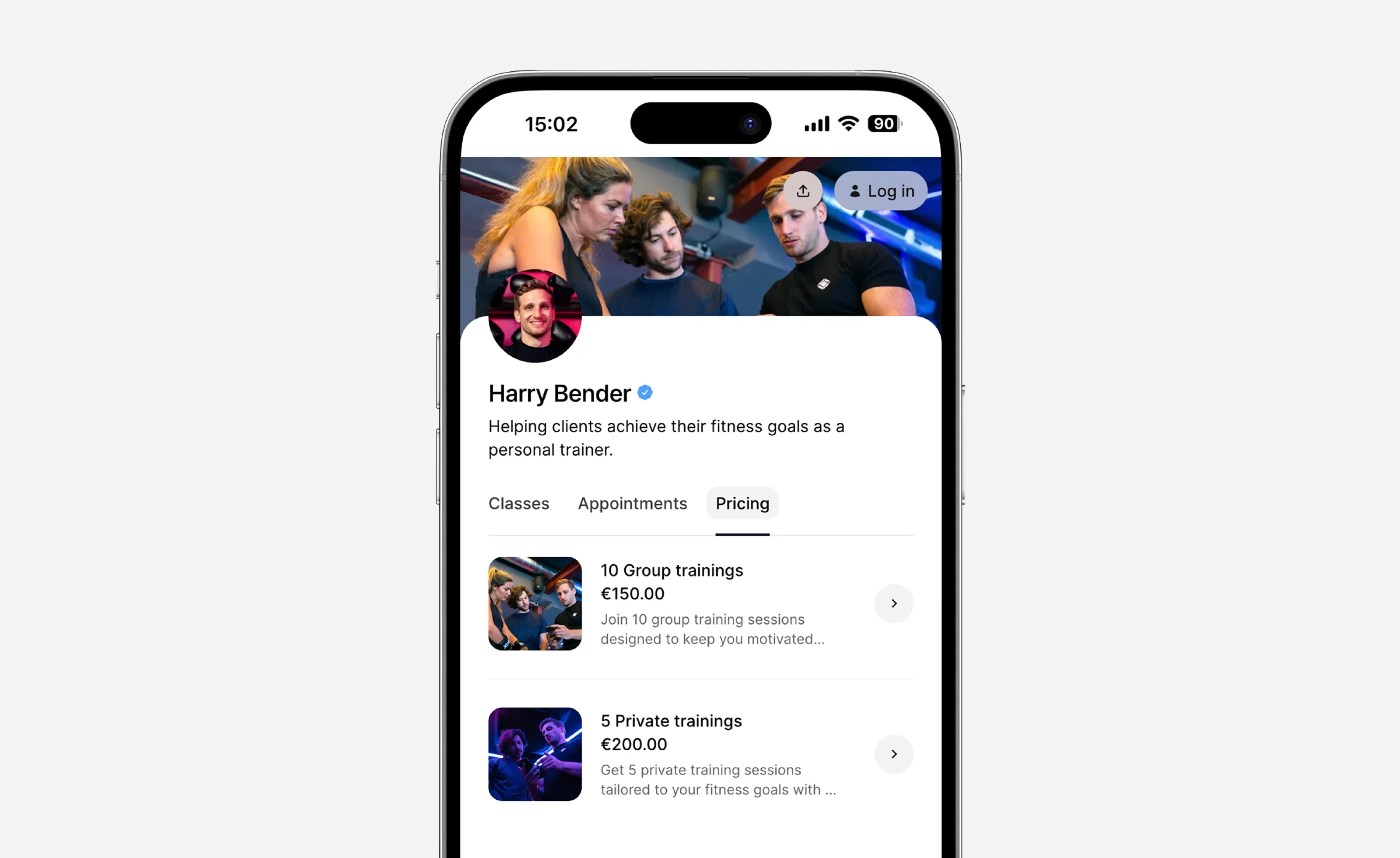
- Prices are clear upfront
- Booking and payment take under one minute
- Apple Pay and Google Pay remove checkout friction
- Confirmation is instant
Instead of ads creating conversations, they create confirmed sessions. Ads don’t need to work harder — the system does.
Common Personal Trainer Advertising Mistakes
These mistakes don’t just reduce performance — they waste money.
- Running ads before fixing booking UX
- Sending traffic to social profiles
- Hiding pricing completely
- Treating ads as lead generation instead of sales
- Ignoring mobile checkout speed
Ads don’t fix broken systems. They expose them.
Frequently Asked Questions
The best personal trainer advertising combines paid ads with instant online booking. Facebook and Google ads perform best when clients can book and pay immediately.
Google Search, Google Maps, Facebook, and Instagram are the most effective channels when paired with a fast booking experience.
Yes — but only when booking is immediate. Facebook users are mobile-first and impatient.
They serve different purposes. Google captures demand, Facebook creates it. Both require a strong booking system to convert.
Final Thoughts: Advertising Only Works If Booking Is Easy
Personal trainer advertising doesn’t fail because of platforms or targeting.
It fails because:
- Booking is slow
- Pricing is unclear
- Payment is complicated
- Mobile experience is poor
If you want advertising to work in 2026, your system must allow clients to:
- See availability instantly
- Understand pricing clearly
- Book and pay in under one minute
That’s exactly what Time2book is built for. Better booking converts better ads. Try Time2book and turn clicks into confirmed sessions.